
Preventing root rot is rarely a matter of giving plants tiny, timid sips of water. In low light environments, potting mix holds moisture far longer than usual, creating stagnant, low oxygen conditions that encourage root decay. Successful care relies on understanding the physiological link between light intensity and transpiration, extending the time between thorough waterings, and ensuring proper root zone aeration.
The Physics and Physiology of Indoor Low Light
Low light is a measurable constraint on plant metabolism rather than just a subjective room mood. While direct outdoor sunlight often exceeds 10,000 foot candles (fc), low light indoor spaces typically fall between 50 and 250 fc (roughly 500 to 2,700 lux).
Distance and Transpiration
Light intensity decreases exponentially as distance from a window increases. A plant placed 6 feet away from a window receives only a small fraction of the photosynthetically active light available directly on the window sill.
Water uptake is primarily driven by transpiration. Solar energy signals leaf stomata to open, releasing water vapor and pulling fresh moisture up through the root system. As documented in foliage care resources from the University of Florida IFAS Extension, reduced light causes stomata to remain closed or only partially open. As a result, water uptake drops drastically, leaving soil wet for extended periods even if the ambient room temperature feels warm.
Root Zone Hypoxia and Pathogen Risks
Root rot is not caused by water alone, but by oxygen deprivation combined with opportunistic soil pathogens.
When potting mix remains waterlogged, moisture fills the air filled macro pores between soil particles. Over extended periods of saturation:
- Oxygen Depletion: Dissolved oxygen levels in the root zone drop rapidly as roots and micro organisms consume available oxygen without replenishment.
- Cell Damage: Hypoxic conditions force root cells into anaerobic respiration, weakening tissue walls and causing nutrient leakage.
- Pathogen Activation: Common soil borne oomycetes such as Pythium and Phytophthora produce motile spores that thrive in free water. Attracted to organic compounds leaking from stressed root tips, these pathogens invade the root tissue, turning it soft and necrotic.
Mixing coarse amendments such as perlite, pumice, or fine orchid bark into potting soil preserves air channels even when the medium is damp.
Substrate Aeration and Container Materials
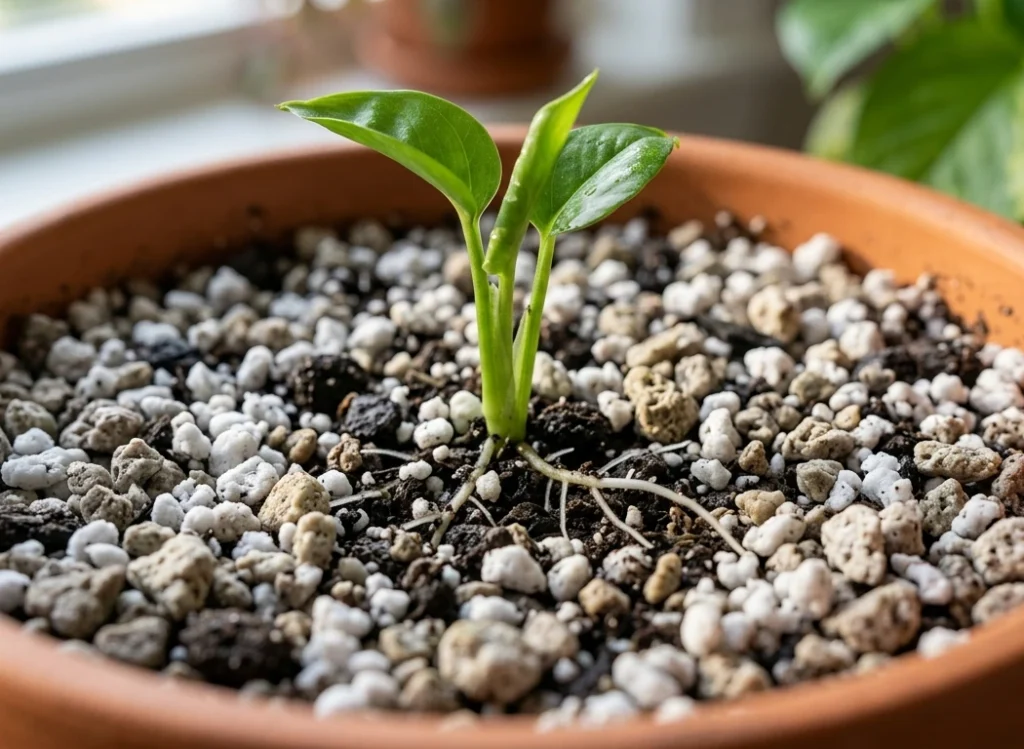
Different potting substrates retain water and air in varying proportions:
- Standard Peat/Coir Mixes: Hold high amounts of water but pack tightly over time, lowering oxygen movement.
- Perlite / Pumice Blends: Increase air filled porosity, allowing excess water to drain quickly while retaining adequate moisture.
- Coarse Bark Mixtures: Create large macro pores ideal for moisture sensitive plants that require rapid dry down.
Terracotta vs. Plastic Pots
Container porosity directly changes how fast the root zone dries:
- Plastic and Glazed Ceramic: Non porous walls block evaporation from the sides. Drying occurs strictly through top surface evaporation and plant transpiration, extending dry down times in low light.
- Unglazed Terracotta: Porous clay allows water vapor to pass through the container walls. This lateral evaporation speeds up drying and improves oxygen access to the roots.
Diagnostic Cues: Overwatering vs Active Root Rot
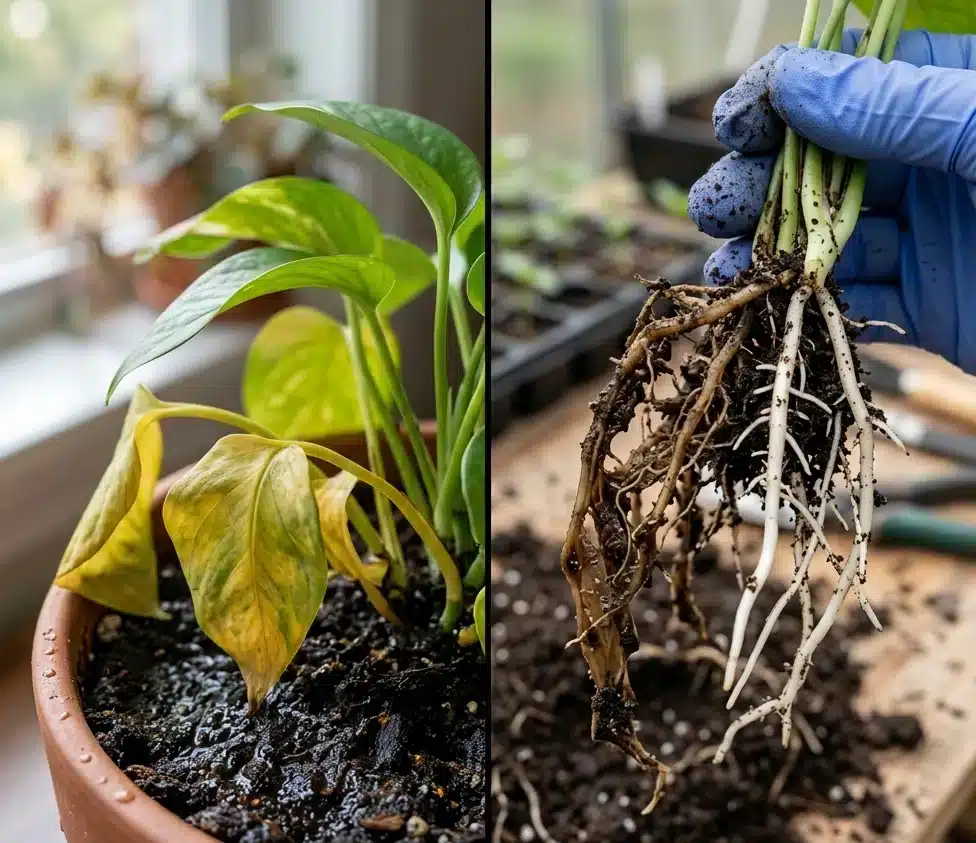
Catching moisture stress early allows for simple routine adjustments before severe tissue damage occurs.
- Early Overwatering: Soil stays damp longer than expected. Lower leaves turn soft or pale yellow, but the plant remains upright and roots under the surface remain firm and light colored.
- Active Root Rot: Soil stays cold and heavy for weeks, often emitting a stale or sour odor from the drainage holes. Foliage shows widespread yellowing or black leaf tips.
- Paradoxical Wilting: A plant with advanced root rot will often droop even when the soil is completely wet. Because decayed roots can no longer absorb moisture, the upper leaves suffer from dehydration despite sitting in damp earth.
Watering Approach by Plant Category
Applying a single watering schedule across all houseplants often leads to rot. Adjust your approach based on plant structure:
- Drought Tolerant (Snake Plant, ZZ Plant): Store water in fleshy leaves, thick stems, or tubers. Allow the potting mix to dry out substantially throughout the container before watering again.
- Moderate Dry (Pothos, Heartleaf Philodendron): Feature semi fleshy stems and adaptable root systems. Let the upper half of the potting mix dry thoroughly between waterings.
- Moisture Loving (Peace Lily, Anthurium): Possess broad leaves and fine to medium roots. Prefer light background moisture; water when the top 1 to 2 inches of soil feel dry.
- Moisture Sensitive (Calathea/Goeppertia, Ferns): Have thin leaves and delicate roots. Require a highly aerated mix that stays evenly damp without becoming waterlogged.
Rehabilitation Protocol for Root Rot
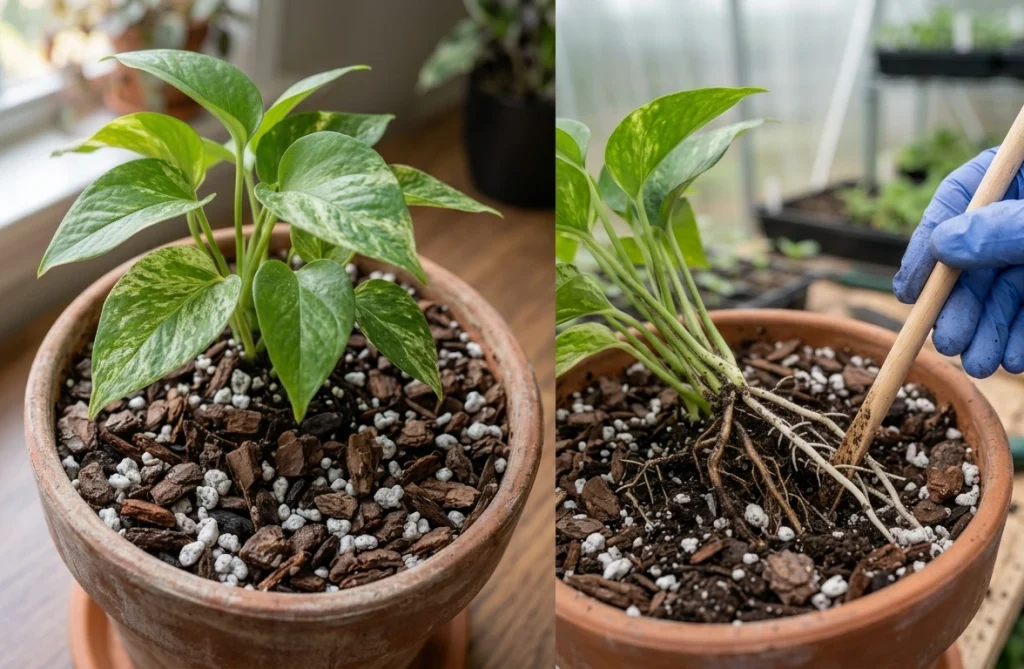
If a plant shows severe wilting and decayed roots, take the following steps to save it:
- Unpot and Rinse: Remove the plant from its container and gently wash away old, saturated soil under lukewarm water.
- Prune Necrotic Tissue: Using clean shears disinfected with isopropyl alcohol, cut off soft, dark, or foul smelling roots back to firm, healthy tissue.
- Repot in Fresh Substrate: Use a clean pot with functional drainage holes and fresh, well aerated soil containing a generous proportion of perlite or coarse bark.
- Pause Fertilizer: Do not fertilize a recovering plant. Damaged root tips cannot process fertilizer salts, which can scorch fragile new growth. Keep the plant in a warm area away from cold drafts until new growth appears.
Diagnostic Techniques: Novice vs. Experienced Methods
- Surface Touch Test (Novice): Inserting a finger 1 to 2 inches into the soil provides a basic indicator for topsoil moisture, though it may miss deep saturation at the bottom of the pot.
- Pot Weight Assessment (Experienced): Lifting a container when dry versus right after a deep watering offers an accurate measure of moisture left at the base. Irrigate only when the pot feels light.
Houseplant Care Toolkit
Smart diagnostic calculators for optimal plant health
Recognized Extension & Scientific References
- University of Florida IFAS Extension (EDIS): Cultural Guidelines for Commercial Production of Interiorscape Foliage Plants series.
- Penn State Extension: Houseplant Care and Interior Plantscaping Guidelines.
- Iowa State University Extension and Outreach: Guide to Selection and Care of Houseplants.