
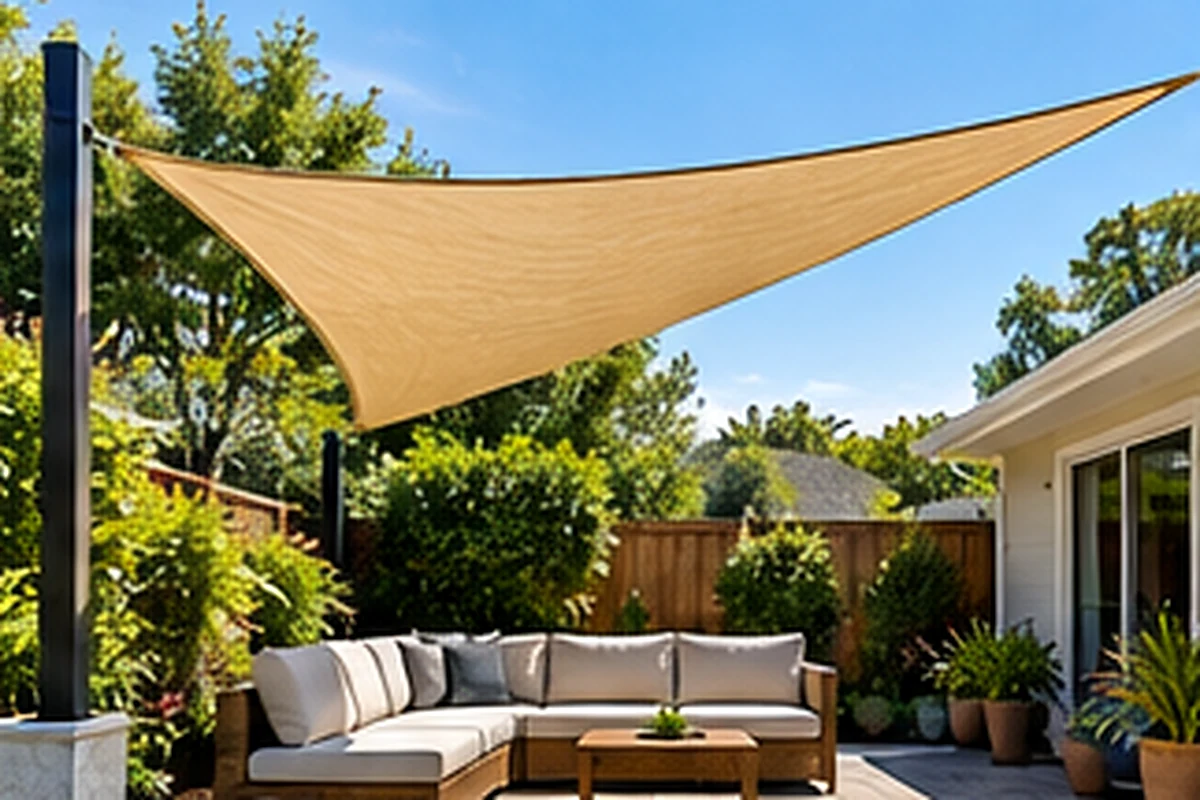
A patio umbrella might be enough for afternoon shade, but what if you want to keep your outdoor furniture dry during summer rain? The right patio cover depends on more than just appearance—it also needs to suit your specific space, local weather conditions, and budget. Whether you want a quick weekend DIY setup or a permanent structure, this guide breaks down 15 practical patio covering ideas with real-world safety rules, cost expectations, and installation requirements.
1. Quick Comparison: Which Outdoor Cover Is Right for You?
Before narrowing down specific materials, evaluate your space based on two driving factors: whether you need intense UV sun protection or reliable rain defense. Not all covers keep you dry, and failing to account for wind exposure and proper slope can lead to structural damage or sagging.
Interactive Patio Coverage & Needs Calculator
Use this calculator to estimate your patio footprint and receive general recommendations based on patio size and whether your priority is shade or rain protection. It does not assess structural safety, actual shadow movement, wind loading or local permit compliance.
WordPress: Paste the calculator HTML below into a Custom HTML block. A ready-to-paste copy is also provided as a separate .html file. Markdown previewers may display the code without running it.
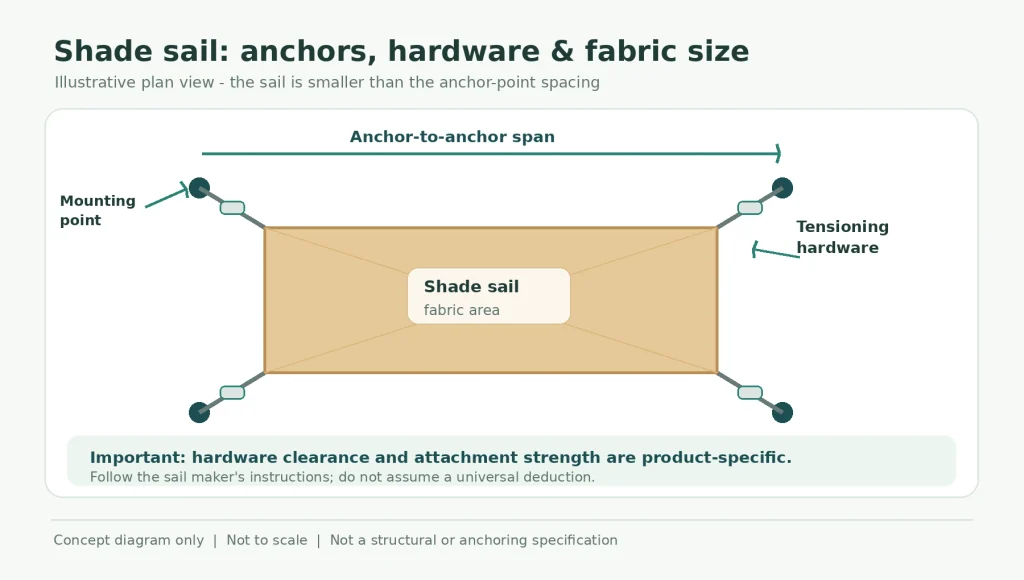
For example, a 12 × 16 ft patio covers 192 sq ft. The size of the patio is not necessarily the size of the shade sail or roof you need: tensioning hardware, roof overhang, drainage and the position of the sun can change the design. For shade sails, consult the Coolaroo installation guidance and the exact sail manufacturer’s instructions.
Patio Cover Comparison Table
| Cover Type | Sun Protection | Rain Protection | Est. DIY Materials | Est. Professional Installation (Total) |
|---|---|---|---|---|
| Shade Sail | Excellent | Varies by fabric; mesh is not rainproof | $30–$150 | $300–$800 |
| Cantilever Umbrella | High | Limited; mainly for sun | $100–$500 | Usually self-assembled |
| Retractable Awning | High | Depends on model; retract in unsuitable weather | $200–$800 | $1,000–$3,500 |
| Slatted Wood Pergola | Partial | None without an additional roof | $800–$2,500 | $2,500–$6,000 |
| Hardtop Gazebo | Excellent | Good when correctly specified and installed | $1,200–$3,500 | $2,500–$5,500 |
| Solid Patio Roof | Excellent | Good with properly designed roof and flashing | $2,000–$5,000 | $4,500–$12,000+ |
Cost note: These are broad U.S. planning estimates, not guaranteed product quotes. The Angi patio-cover cost guide supports the general professionally installed patio-cover range; it does not validate every individual product price shown above. Materials-only prices and specific product ranges should be checked with current retailers or local installers before purchase. Amounts vary by size, product grade, location, anchoring and site preparation.
2. Five Budget-Friendly & DIY Outdoor Covering Ideas
If you are working with a modest budget, renting, or wanting to establish seasonal shade without digging heavy concrete footings, these flexible setups offer fast results.
1. Shade Sails: Affordable Shade for Open Patios
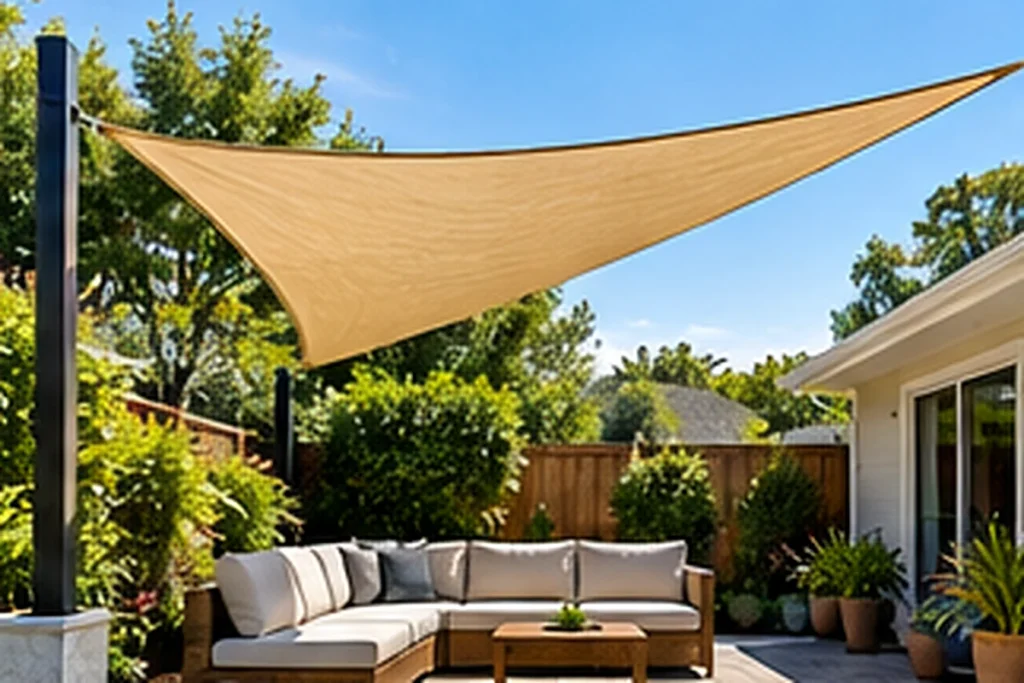
Shade sails excel over open decks or irregular outdoor seating layouts where vertical posts would feel intrusive. Achieving a clean, taut look relies entirely on proper corner geometry and hardware allowance. Before purchasing, measure from post-to-post and consult the Coolaroo Shade Sail Planning Guide or the guide supplied with your exact sail for hardware and tensioning clearance.
While breathable woven HDPE mesh catches less wind than solid vinyl, it still experiences significant wind loads during storms and demands heavy-duty anchoring points. If using water-resistant polyester fabric, pitch at least one corner significantly lower than the others so rainwater drains off instead of pooling in the center.
Estimated cost: $30 – $150 for sail and hardware kits; $300 – $800 if hiring a contractor to install heavy-wall steel or timber posts in concrete.
2. Cantilever Umbrellas: Flexible Overhead Shade Without a Center Pole
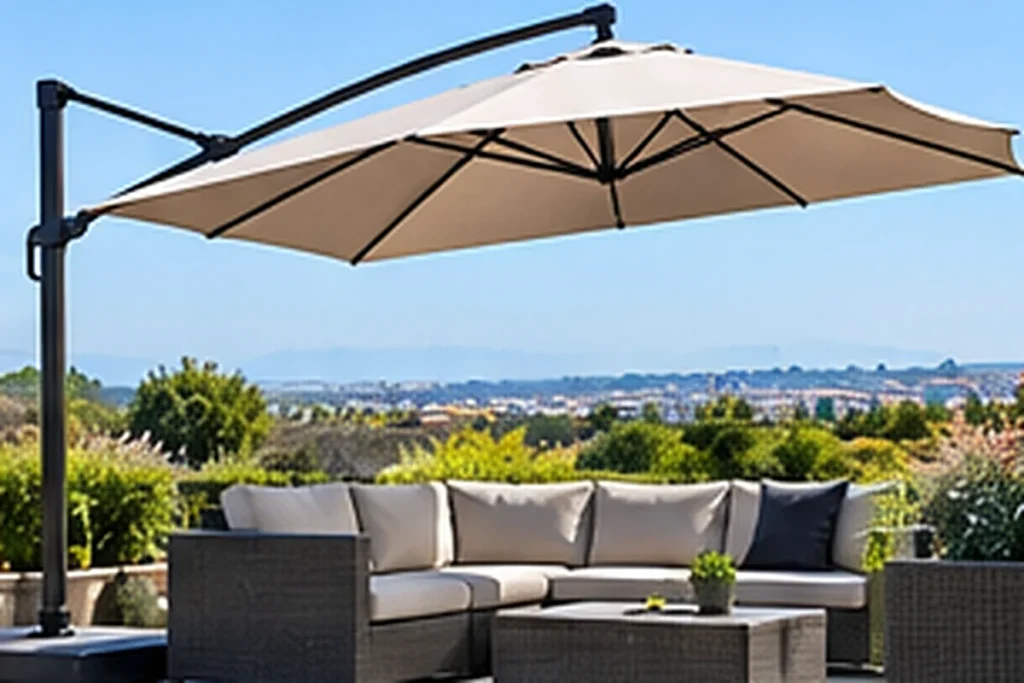
For dining tables or conversation sets without a central pole hole, cantilever umbrellas provide moveable overhead shade. Look for powder-coated aluminum frames featuring 360-degree foot-pedal rotation and vertical tilt settings. Because the extended arm acts as a lever in breezy conditions, verifying base weight is critical. A patio umbrella base weight chart with manufacturer-specific examples helps explain why center-pole and cantilever umbrellas of similar sizes can require very different ballast configurations. Check the manufacturer’s manual—for example, the Treasure Garden AKZ Plus instructions show how base requirements change by size. Smaller 10-foot offset umbrellas may use 120–200 lb base plates, while larger 11-to-13-foot models can require substantially more—some Treasure Garden AKZ Plus sizes specify 400 lbs of sand or water counterweight to ensure stability. Always fold the canopy completely down when not in use.
Estimated cost: $100 – $500 for the umbrella unit (weighted base plates often sold separately for $50 – $150).
3. Pop-Up Canopies: Easy Shelter for Temporary Events
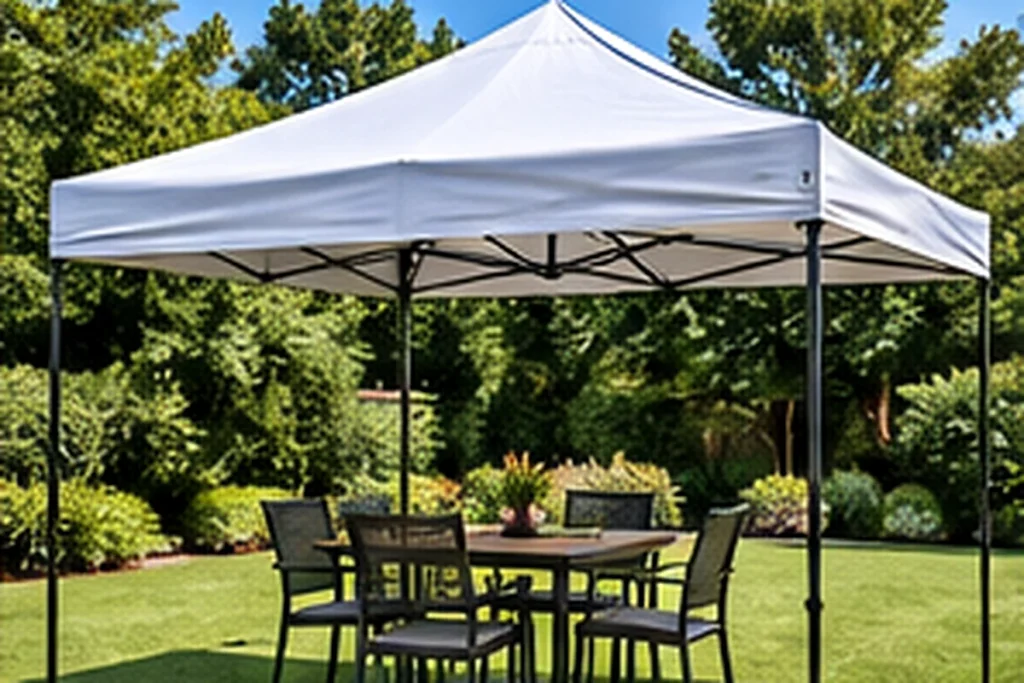
Pop-up canopies serve as ideal temporary shelters for weekend gatherings or seasonal shade. Focus on heavy-gauge aluminum or powder-coated steel frames with push-button toggle leg adjustments. Securing the legs is critical regardless of the weather forecast: consult your canopy manufacturer’s instructions for anchoring—on grass surfaces, heavy steel stakes driven into the earth are effective, while concrete patio slabs require sandbags or heavy leg weights designed specifically for your frame’s leg diameter.
Estimated cost: $80 – $300 for commercial-grade portable kits.
4. Retractable Awnings: Sun Shade on Demand
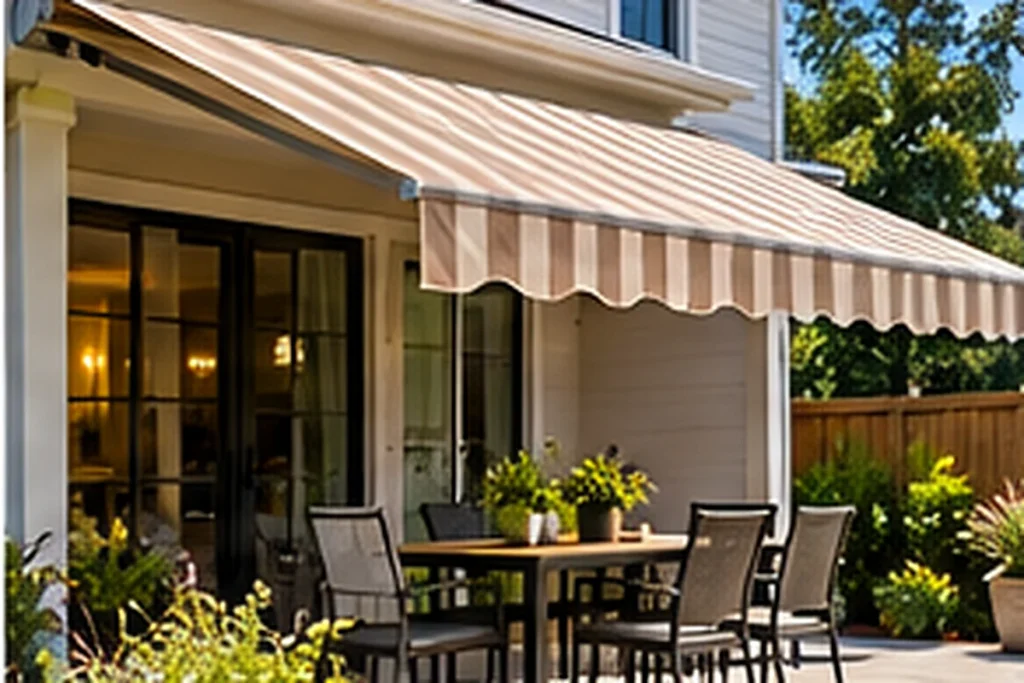
Mounting a retractable awning over a patio door provides flexible, on-demand shade that preserves natural winter indoor light when retracted. Installation requires anchoring directly into solid wall studs or header beams to support the heavy leverage load. Check your vertical mounting clearance before buying—while standard setups aim for 8 feet, the SunSetter measuring guide lists 7 ft 6 in for most models and 7 ft for its 1000XT, with details depending on the model and mounting method. Most retractable awnings are designed primarily for sun protection; follow the specific model’s wind and rain limits, and retract them when weather exceeds those limits.
Estimated cost: $200 – $800 for manual DIY kits; $1,000 – $3,500+ for motorized units with professional mounting.
Beyond the initial purchase and installation costs, retractable awning lifespan is worth considering. The fabric, motor, and frame can wear out at different rates, so understanding their maintenance and replacement needs can help you estimate long-term ownership costs.
5. DIY Fabric Pergola Canopies: Customizable Slide-on-Wire Shade
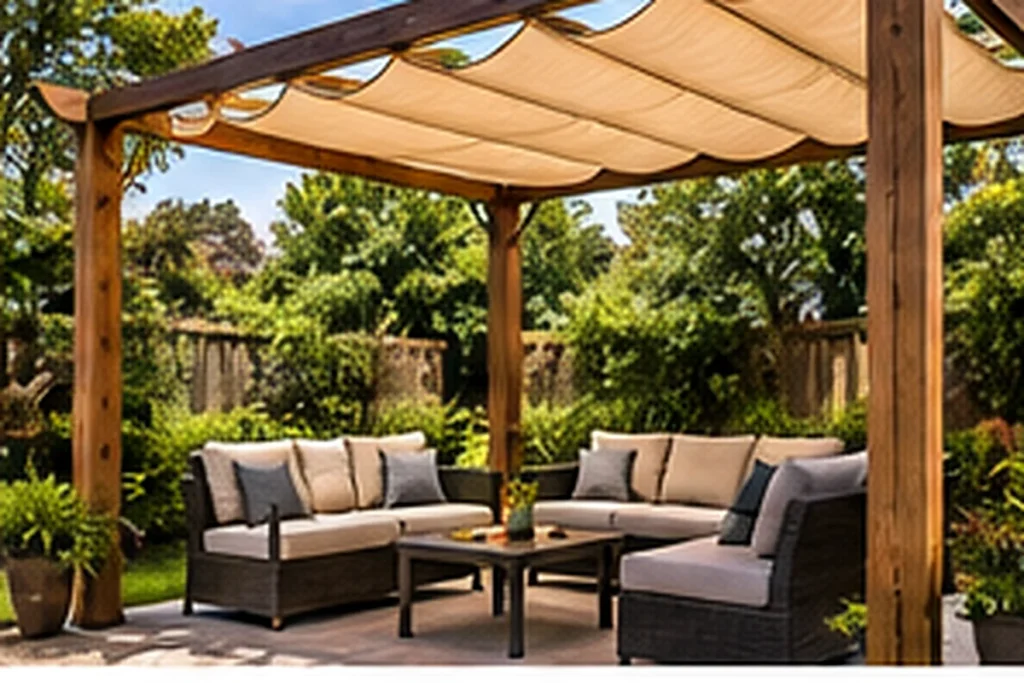
If you already have an open-slat wooden structure, adding a slide-on-wire canopy creates customizable shade. This setup uses stainless steel aircraft cables stretched across the pergola rafters, supporting outdoor acrylic fabric panels (such as Sunbrella shade fabric) on marine-grade carabiners. Installing small turnbuckles at cable ends allows you to re-tighten the lines seasonally, keeping the fabric gliding smoothly without sagging.
Estimated cost: $150 – $450 for stainless cables, hardware, turnbuckles, and fabric panels.5 Mid-Range Patio Covering IdeasPrefabricated mid-range structures offer a permanent architectural presence and better weather resistance for homeowners looking beyond umbrellas without committing to a fully custom roof build.
3. Five Mid-Range Patio Covering Ideas
Prefabricated mid-range structures offer a more architectural presence and potential weather protection for homeowners looking beyond umbrellas without committing to a fully custom roof build.
6. Slatted Wood Pergolas: Classic Architectural Style
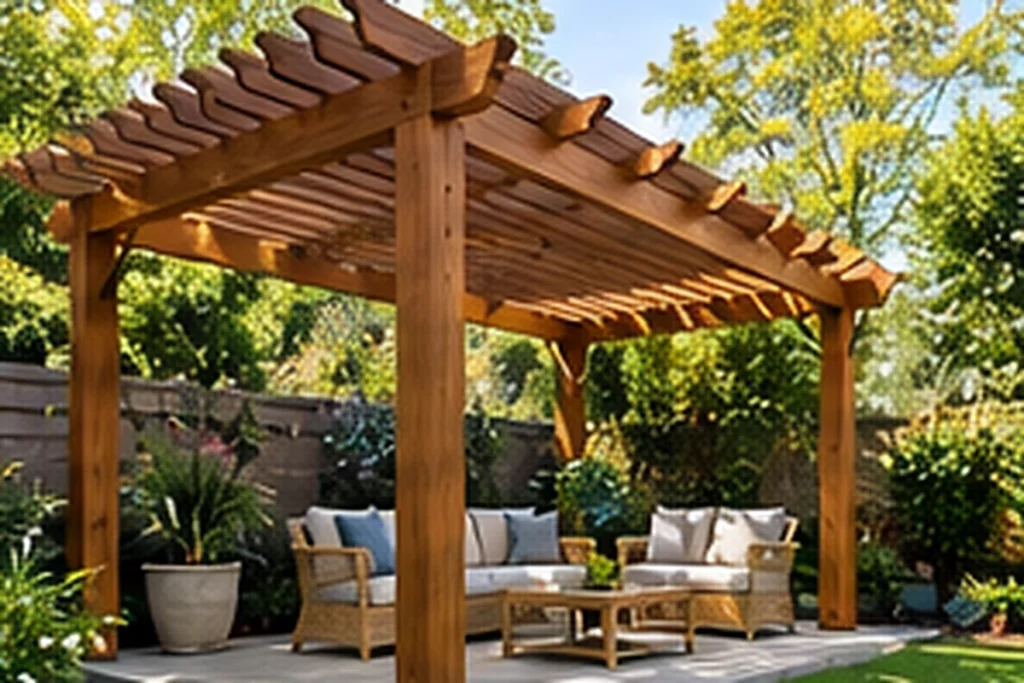
A wooden pergola defines an outdoor room with classic architectural framing. Rather than following a rigid 2-year maintenance rule, your sealing schedule depends on timber species, finish type, and climate exposure; Oregon State University Extension explains how wood responds to moisture. Naturally rot-resistant woods like Western Red Cedar or Redwood can go longer between clear sealer applications, whereas pressure-treated pine requires regular staining to prevent checking and warping under intense UV exposure or high humidity. Slatted roofs provide filtered sunlight, but require secondary polycarbonate or canvas covers if you need rain protection.
Estimated cost: $800 – $2,500 for prefab wood kits; $2,500 – $6,000 for custom timber builds.
7. Vine-Covered Trellises: Natural Cooling with Plants
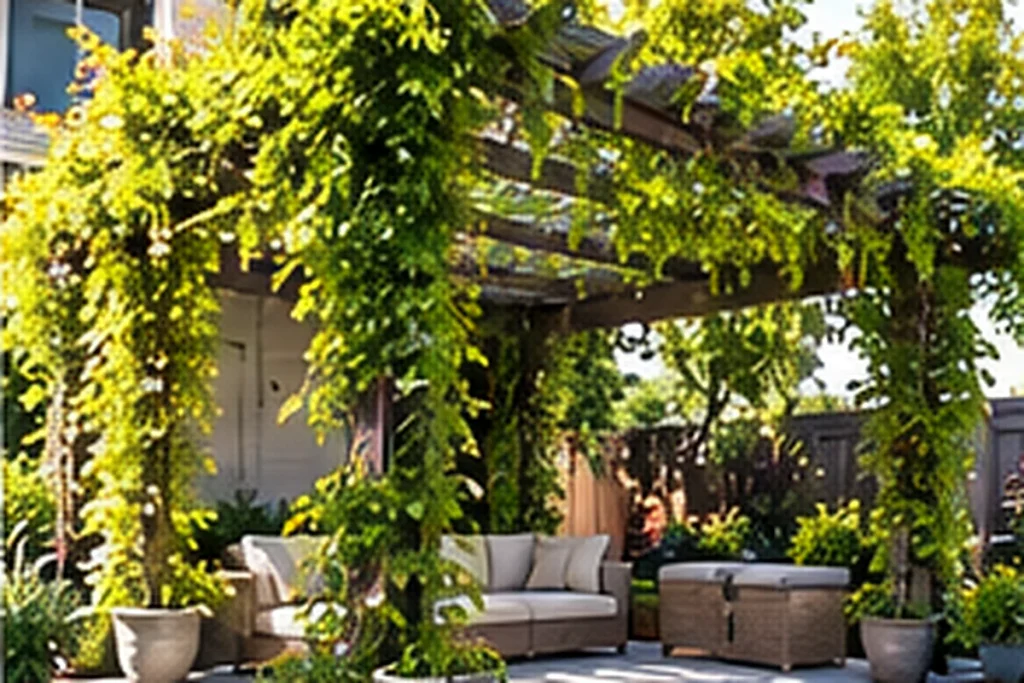
Training climbing vines like wisteria, grapevines, or climbing hydrangea over a sturdy trellis provides dense, natural cooling shade. Plants lower local ambient temperatures through natural transpiration, but mature vines can become heavy. The University of Minnesota Extension recommends sturdy supports for grapevines on arbors and pergolas. Ensure your support posts and rafters are built from heavy-duty rot-resistant timber or powder-coated metal, and plan for annual pruning to keep tendrils from growing under house siding or gutters.
Estimated cost: $300 – $1,000 for trellis structures plus $50 – $150 for vine plantings.
8. Soft-Top Gazebos: Outdoor Dining Free From Bugs
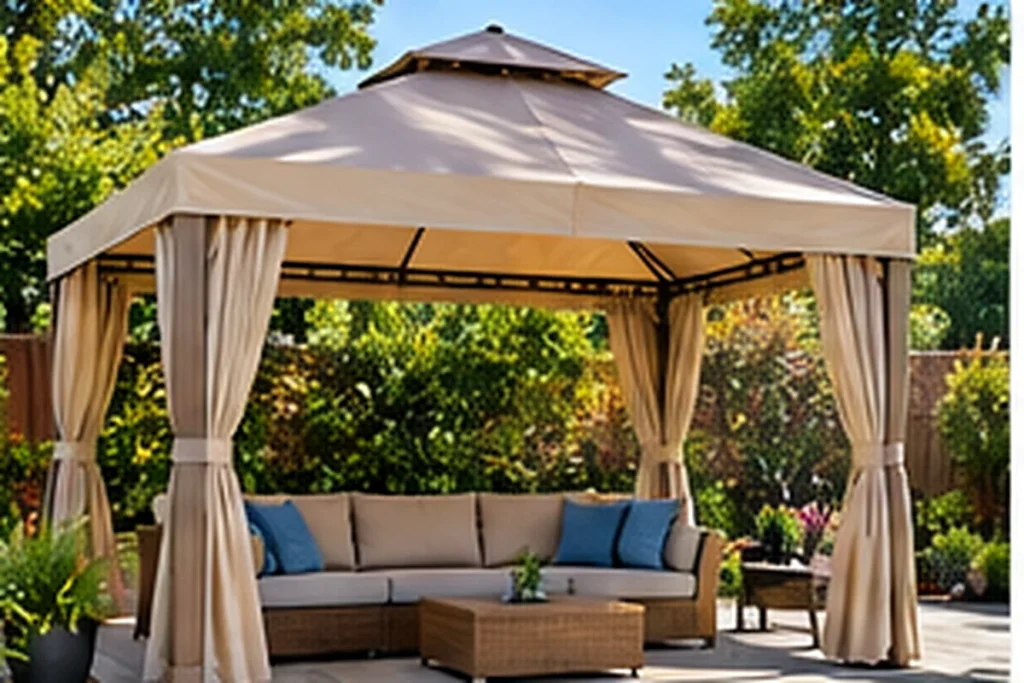
Soft-top gazebos pair powder-coated steel or aluminum frames with heavy-duty polyester tops and zippered mesh bug screens, creating a bug-free dining space. Look for dual-tier vented roof caps that allow rising heat and wind gusts to escape. Check manufacturer winter care guidelines—in cold climates subject to heavy snowfall, many soft-top covers and netting must be taken down and stored indoors to prevent tears from accumulated snow weight.
Estimated cost: $400 – $1,200 for prefabricated metal frame kits.
9. Polycarbonate Pergola Roofs: Keep the Rain Out Without Losing Light
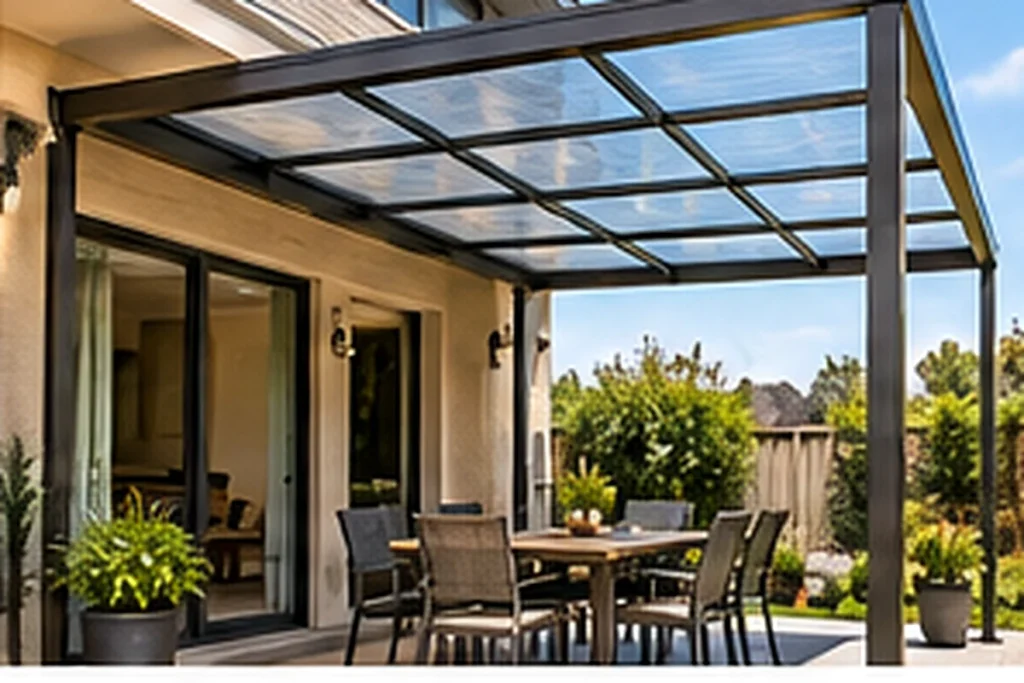
Polycarbonate sheets offer a highly impact-resistant roofing option that repels rain while letting natural sunlight pass through. When selecting panels, compare single-wall corrugated sheets against multi-wall (twin-wall) extruded panels—multi-wall sheets can provide better insulation, while structural suitability still depends on thickness, span and support spacing.
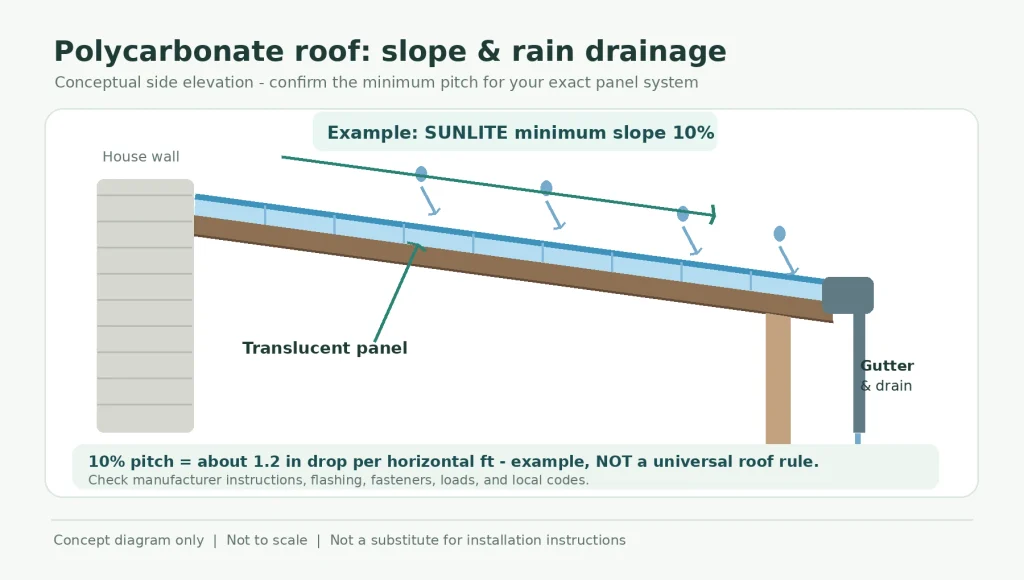
Slope requirement: Never install polycarbonate panels completely flat. While general residential rules often mention a 1/4 inch per foot pitch, always check your specific product manual—Palram’s SUNLITE DIY guide specifies a minimum 10% slope (approximately 1.2 inches per foot) for its multiwall sheets; use the instructions for the actual panel system and check its separate warranty terms.
Estimated cost: $300 – $900 for polycarbonate sheets and specialized gasketed fasteners (excluding underlying timber/metal framing).
10. Corrugated Metal Pergola Roofs: Heavy-Duty All-Weather Shelter
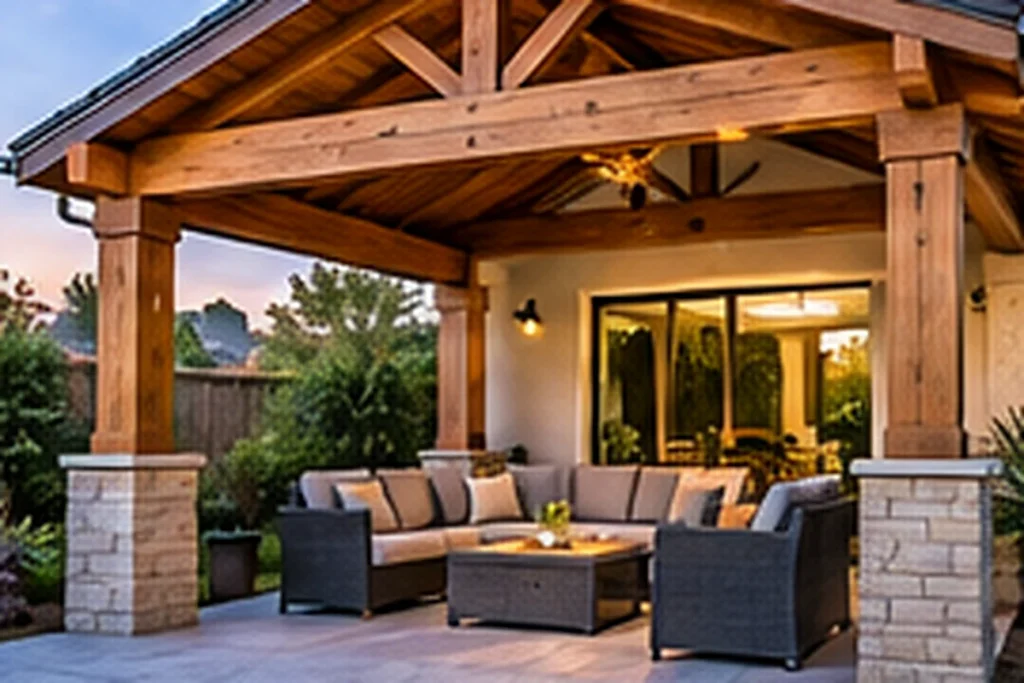
Galvanized steel or aluminum corrugated panels deliver a durable, rustic roof capable of handling heavy rainfall and hail. To mitigate solar heat radiation on hot days, choose light-colored or pre-painted reflective panels; the U.S. Department of Energy explains why roof reflectance matters. Installing metal panels over a solid plywood substrate with underlayment helps dampen the drumming sound of heavy downpours compared to mounting metal directly onto open rafters.
Estimated cost: $400 – $1,200 for metal panels, ridge caps, and flashing.5 Permanent & Premium Patio Roof IdeasThese permanent structures function as sturdy additions to your home, adding functional outdoor living space.
4. Five Permanent & Premium Patio Roof Ideas
These more substantial structures can provide long-term outdoor living space, although installation and maintenance requirements vary considerably.
11. Hardtop Metal Gazebos: Year-Round Protection
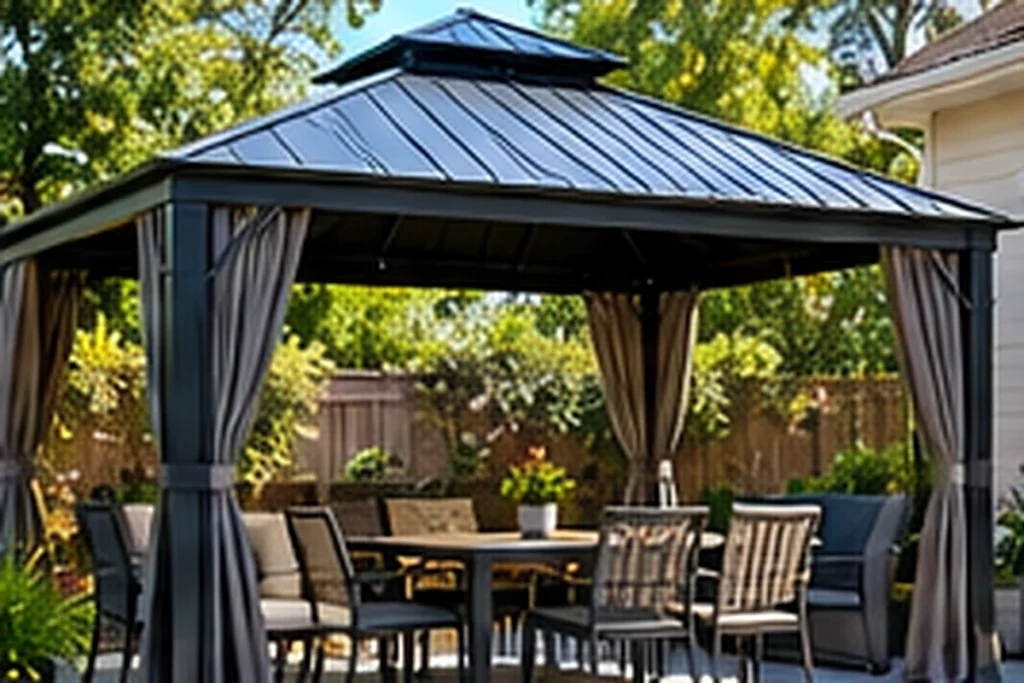
Hardtop gazebos feature rigid aluminum or galvanized steel roof panels supported by heavy aluminum posts. When shopping, check the manufacturer’s specific product documentation for tested Snow Load Ratings (psf) and Wind Speed Ratings to ensure the structure suits your local weather conditions. Follow the product-specific anchoring plan; manufacturers may allow a suitable concrete surface or a properly designed wood deck. The Yardistry gazebo installation guide illustrates different supported surfaces. Never assume loose pavers or an unreinforced deck are adequate.
Estimated cost: $1,200 – $3,500 for high-end prefab kits; $2,500 – $5,500 fully installed.
12. Attached Aluminum Patio Covers: Low-Maintenance Protection
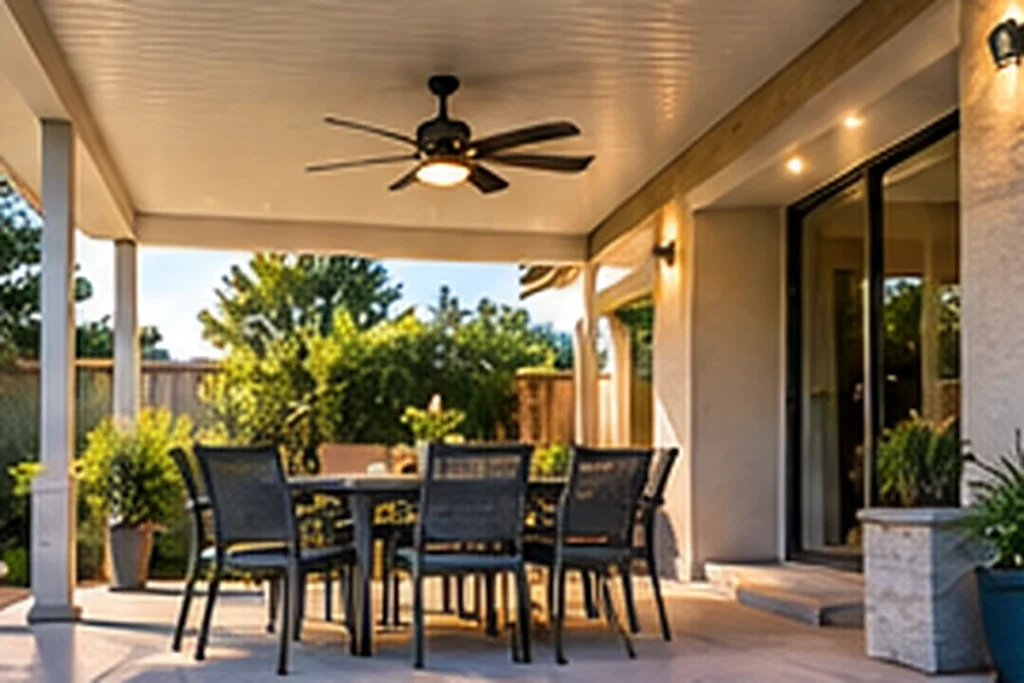
Attaching an aluminum patio cover directly to your house fascia or wall framing creates a clean, permanent shelter. Heavy-gauge aluminum components will not rot, split, or warp like traditional wood framing. Choosing insulated aluminum panels may reduce roof heat transfer and help control condensation under appropriate ventilation and installation conditions that requires minimal maintenance over decades.
Estimated cost: $2,000 – $4,500 for prefab DIY aluminum kits; $4,500 – $9,000 for professional installation.
13. Freestanding Wooden Pavilions: Luxury Outdoor Living Spaces
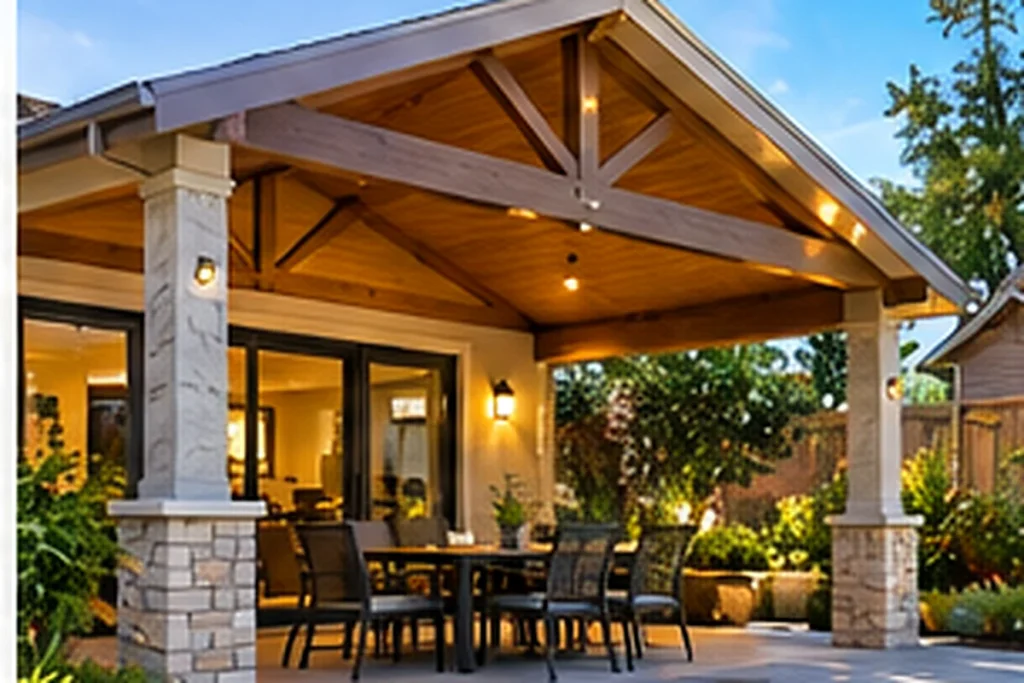
Wooden pavilions feature fully framed, shingled roofs matching your main home’s architectural roofing (asphalt shingles or standing-seam metal). Supported by 6×6 or 8×8 timber posts, they create a comfortable outdoor living space suited for stone fireplaces or full kitchens. Construction typically involves site-specific footings, structural framing and professional carpentry; permit requirements depend on local rules.
Estimated cost: $5,000 – $15,000+ for custom contractor builds.
14. Insulated Patio Roof Panels: A Cooler, Quieter Patio
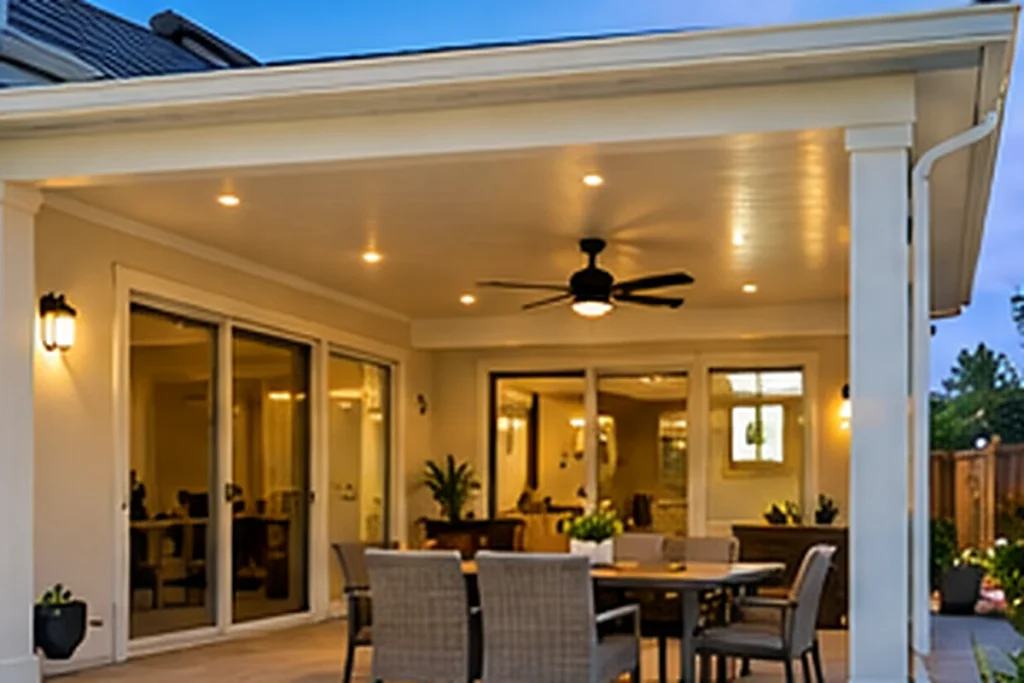
Designed for extreme heat climates, insulated roof panels consist of a dense expanded polystyrene (EPS) foam core bonded between aluminum skins. The insulated core can reduce heat transfer through the roof, improving comfort beneath the cover; performance depends on the whole panel assembly, solar exposure and local climate.
Estimated cost: $3,000 – $8,000 for materials and installation.
15. Adjustable Louvered Pergolas: Smart Motorized Roof Control
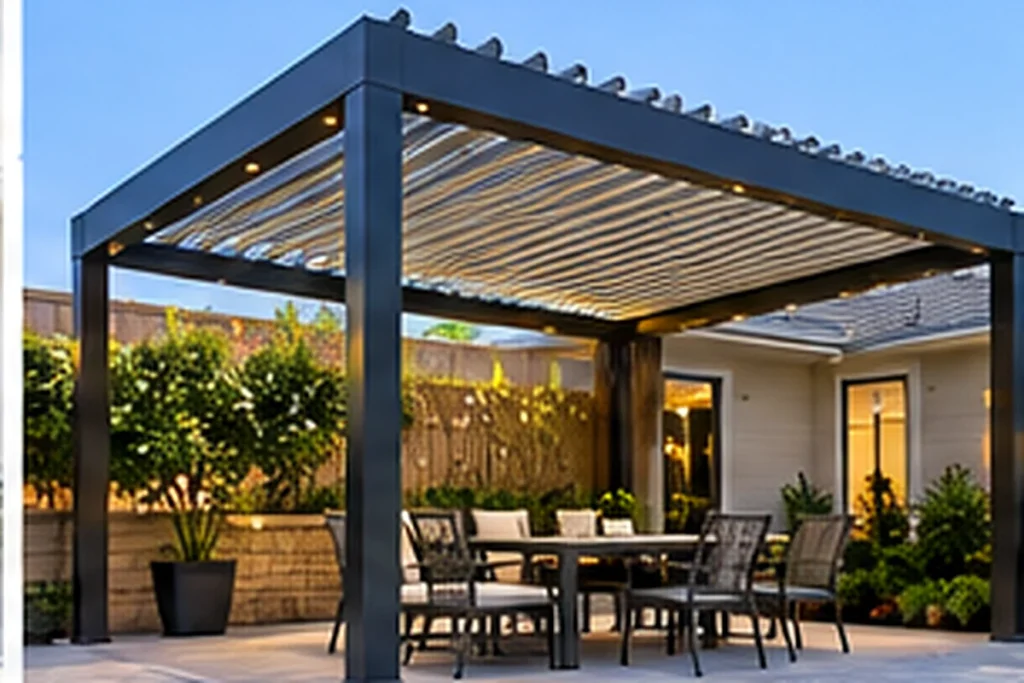
Louvered pergolas offer versatile climate control using motorized aluminum roof blades that adjust on demand. Adjustment ranges vary by model (often between 90° and 135°), allowing you to open them for full morning sun or rotate them shut when rain starts. Some premium systems include integrated gutter channels; for example, StruXure describes its drainage and optional rain-sensor features. Some models can be configured with automated rain sensors that trigger closure when moisture is detected.
Estimated cost: $4,000 – $12,000 for DIY aluminum kits; $10,000 – $25,000+ for custom motorized systems.
5. Best Patio Covers for Different Spaces & Safety Needs
The right choice depends on the layout of your patio, whether you rent or own, and any local safety requirements.
Small Patios, Decks, and Balconies
In compact urban yards or balconies, floor space is premium real estate. Wall-mounted retractable awnings, offset cantilever umbrellas, or slim shade sails can reduce the number of support posts inside the walking area. For balconies, confirm building rules, attachment restrictions and wind exposure before installing anything.
Large Backyards & Multi-Zone Patios
If you have an expansive backyard, a single cover rarely fulfills every need. Multi-zone layouts may pair a weather-rated hardtop gazebo over an outdoor dining table with a flexible shade sail or open pergola near a separate lounging area. Each zone still needs appropriate support, clearance and drainage.
Outdoor Cooking Stations & Grill Zones
Combustible overhead warning: Do not assume a canopy or ventilated gazebo makes overhead grilling safe. In its Weber Spirit safety guidance, Weber advises using its grills outdoors, not under combustible overhead structures, and keeping combustible materials at least 24 inches from the back and sides. Consult the specific grill manual, including any overhead requirements, before planning a cooking station.
Ventilation and clearance: Allow appropriate open-air ventilation and follow grill-specific heat, grease and carbon monoxide precautions. A decorative roof vent is not a substitute for the manufacturer’s installation requirements.
Fire Pit Safety Rules
The U.S. Fire Administration outdoor fire safety guide recommends using fire pits at least 10 ft away from the home and anything that can burn. Do not place an open flame beneath fabric sails, low canopies or combustible wooden roofs. Check local fire restrictions, especially during dry or windy conditions.
6. How Much Does an Outdoor Cover Cost? (2026 U.S. Planning Guide)
Costs reflect both the product itself and installation requirements. A small canopy may be an uncomplicated purchase, whereas an attached roof can require footings, engineered connections, drainage and possibly electrical work.
Materials and Products (DIY)
| Product Group | Approximate Materials / Kit Budget |
|---|---|
| Budget covers: shade sails, umbrellas, pop-up canopies | $30–$500 |
| Mid-range kits: prefabricated pergolas, soft-top gazebos | $400–$2,500 |
| Premium kits: hardtop gazebos, aluminum roof kits | $1,200–$5,000+ |
These are editorial planning estimates rather than retailer-verified average selling prices. Large custom and motorized structures can exceed these ranges.
Professional Labor and Site Preparation
| Installation Work | Illustrative Labor / Site-Prep Budget |
|---|---|
| Basic prefab assembly and anchoring | $500–$1,500 |
| More complex attached roof, concrete or electrical work | $1,500–$5,000+ |
Actual contractor bids depend on site conditions. Do not add these figures automatically to the installed prices in the comparison table; an installed quote may already include labor and materials.
Total Installed Cost Expectations
| Project Type | Approximate Total Cost |
|---|---|
| DIY fabric or canvas setup | $100–$800 |
| Installed mid-range prefab kit | $1,200–$3,500 |
| Professionally installed solid or attached patio cover | $4,500–$12,000+ |
The Angi 2026 patio cover cost report estimates a U.S. national average of approximately $8,500 for professionally installed patio covers, with many projects falling between $4,500 and $12,000. This is a general patio-cover benchmark, not a guaranteed quote for custom attached roofs or every type listed above.
7. What to Check Before Installing an Outdoor Cover
- Permits and HOA approval: Requirements vary by jurisdiction. For example, Portland’s residential outdoor-project guidance exempts certain wall-supported patio covers of 200 sq ft or less from a building permit, subject to zoning and site restrictions. Never assume this applies outside Portland.
- Wind and snow load ratings: Read the specific structure’s approved specifications for local wind and snow exposure. Avoid assuming that a “hardtop” label means every model is suitable for year-round installation.
- Anchoring and supporting surface: Match the connection design to the actual slab, framing or footings. Manufacturer examples, such as Yardistry’s gazebo installation instructions, distinguish concrete and wood-deck mounting conditions.
- Drainage, slope and flashing: Use the roofing manufacturer’s minimum pitch and fastening requirements. For example, Palram SUNLITE DIY multiwall sheets require at least a 10% slope. Route gutters and runoff away from exterior walls and foundations.
8. Which Patio Cover Should You Choose?
For a tight budget and flexible shade: A shade sail or cantilever umbrella may be enough, especially if you have suitable existing mounting points. If you need new posts or concrete footings, the total cost can increase considerably. Renters should obtain approval before drilling into a building.
For dining areas that need rain protection: Compare a weather-rated hardtop gazebo, a polycarbonate pergola roof or a properly detailed solid cover. Choose using actual roof size, fastening, drainage and regional snow/wind ratings—not the product description alone.
For low-maintenance, long-term coverage: Attached aluminum covers and insulated patio roof panels can be worth comparing. Their comfort and moisture performance still depend on design, ventilation and installation quality.
9. Frequently Asked Questions
What is the cheapest way to cover a patio from rain?
A waterproof-rated pop-up canopy or coated waterproof shade sail may be among the lower-cost options for temporary rain shelter. Breathable mesh and ordinary water-resistant fabrics should not be treated as waterproof roofs. Check the product’s rain and wind ratings, anchoring requirements and drainage instructions before use.
Can I leave a shade sail up all winter?
Only if the specific product is rated for your conditions and the manufacturer permits it. Snow and freezing rain can overload fabric and connections. Many residential fabric sails should be removed and stored before winter weather.
Do I need a permit to build a pergola or patio cover?
It depends on your municipality, structure size, attachment method and location on the property. Attached roofs may require permits, but exceptions exist; Portland’s patio-cover rules illustrate why local verification matters. Check with the building department and any HOA before installation.
Reference note: Linked manufacturer documents apply to their specific products, not necessarily every shade sail, awning, panel or gazebo. Costs are approximate U.S. planning figures unless a specific source is cited. Always consult the current product manual and local building/fire authority before installation.


3 thoughts on “15 Outdoor Patio Cover Ideas: From DIY Shade to Permanent Roofs”
Comments are closed.