
At cocktail hours, corporate galas, and wedding receptions, cocktail tables become natural gathering points where guests hold drinks, talk, and network. Designing florals for a compact 24-inch tabletop, however, requires careful spatial planning — a good mini centerpiece is never just “a small vase with flowers,” but a balance of scale, guest comfort, and practical logistics. This guide walks event planners and florists through layout mechanics, flower selection, vessel choice, setup, troubleshooting, and budget.
1. Why Cocktail Tables Need a Different Approach
Sightlines and guest interaction. In the U.S., standard highboy (bar-height) cocktail tables measure 42 inches tall, so guests view arrangements from about 12–20 inches away, often looking slightly down. At that distance, clean finishes and fine texture read better than large, dramatic silhouettes — a mistake many newer designers make is scaling a centerpiece as though it will be seen from across a room, the way a stage or entrance arrangement would be.
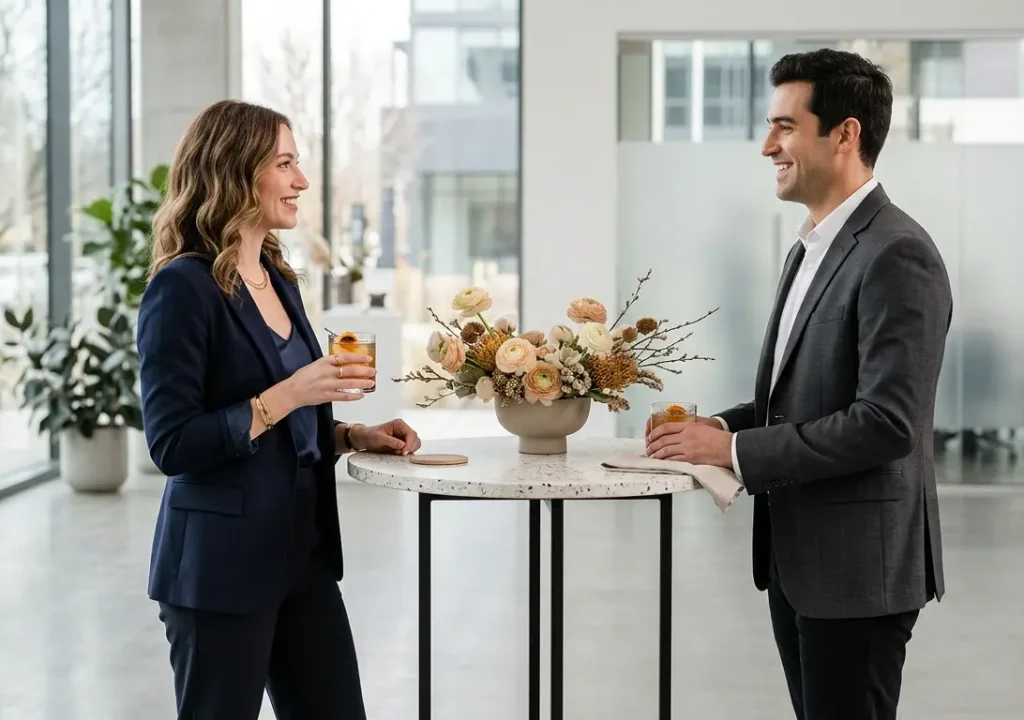
Table space as social infrastructure. Cocktail tables aren’t just surfaces — they’re where conversations happen. An arrangement that’s too wide or too tall functions as a wall between two people trying to talk, which undercuts the entire purpose of a standing reception. Event planners increasingly treat the “negative space” left on the table (for glasses, plates, phones) as part of the design brief, not an afterthought.
Guest flow and dwell time. Because guests circulate between multiple cocktail tables over the course of an hour, consistency across the room matters more than any single table being a showstopper. A repeated, cohesive mini-arrangement across 15–20 tables often reads as more polished than one dramatic outlier.
2. Core Design Guidelines
- Height target: 8–10 inches is a widely used industry benchmark that keeps the tabletop feeling open.
- Footprint: A 4–5 inch vessel base is a reasonable starting point for a 24-inch round or square top, leaving room for glassware and small plates.
- Proportion: A common rule of thumb among floral designers is a roughly 60/30/10 split — 60% focal blooms, 30% textural filler, 10% structural greenery or line elements — though this flexes by style.
- Scent: Because food and drink are consumed at the table, many planners avoid heavily fragrant blooms (Casablanca lilies, tuberose, and similar) in enclosed indoor venues. Lightly scented or unscented options — spray roses, ranunculus, anemones, scabiosa — are safer defaults, especially given how common fragrance sensitivities are among U.S. event guests. Note that fragrance concerns are typically about guest comfort rather than formal allergy risk; genuine flower allergies (as opposed to scent sensitivity) are relatively uncommon but worth asking about for any guest with known pollen allergies, since some open-faced blooms shed more pollen than others.
- Stability: Guests lean on and bump these tables often, so a low center of gravity matters more than height. Favor weighted or wide-based vessels over tall, top-heavy ones.
- Conditioning: Small vessels hold little water, so proper stem conditioning ahead of time (per each variety’s needs) meaningfully extends how the arrangement looks through a multi-hour event.
3. Flower Options and Realistic Vase Life
Vase life figures vary significantly by cultivar, harvest freshness, and cold-chain handling, so treat the ranges below as planning estimates, not guarantees — always confirm with your specific supplier.
| Variety | Season (US) | Typical Vase Life* | Notable Care Note | Role |
|---|---|---|---|---|
| Spray Roses | Year-round | ~5–7 days | Standard rose care | Primary focal |
| Ranunculus | Winter–spring (peak Dec–May) | ~5–10 days (sources vary, low end ~3 in less ideal conditions) | Keep cool; avoid direct sun | Primary focal |
| Anemones | Fall–spring | ~3–8 days | Ethylene-sensitive — petals can shatter without an ethylene inhibitor treatment from the supplier | Graphic accent |
| Mini Carnations | Year-round | ~7–14 days | Very durable, good budget stretcher | Textural filler |
| Sweet Pea | Spring | ~3–5 days | Short-lived; order closer to the event date | Airy movement |
| Astrantia | Summer | ~5–7 days | Holds shape well | Textural filler |
| Craspedia | Year-round | Long-lasting; dries well | Low water dependency | Graphic accent |
| Italian Ruscus | Year-round | 7+ days | Sturdy, reusable in test runs | Structural greenery |
*Ranges compiled from florist supplier care sheets; actual performance depends on handling.
A note on anemones specifically, since they’re a popular but occasionally mishandled focal flower: they’re notably sensitive to ethylene gas (produced by ripening fruit and some other flowers), which can cause premature petal drop. Ask suppliers whether stems were treated with an ethylene-blocking agent at the farm level, and keep them away from fruit displays or catering stations during setup.
4. Color Palette by Lighting
- Daylight/outdoor: Crisp whites, blush, and sage foliage read fresh in natural light.
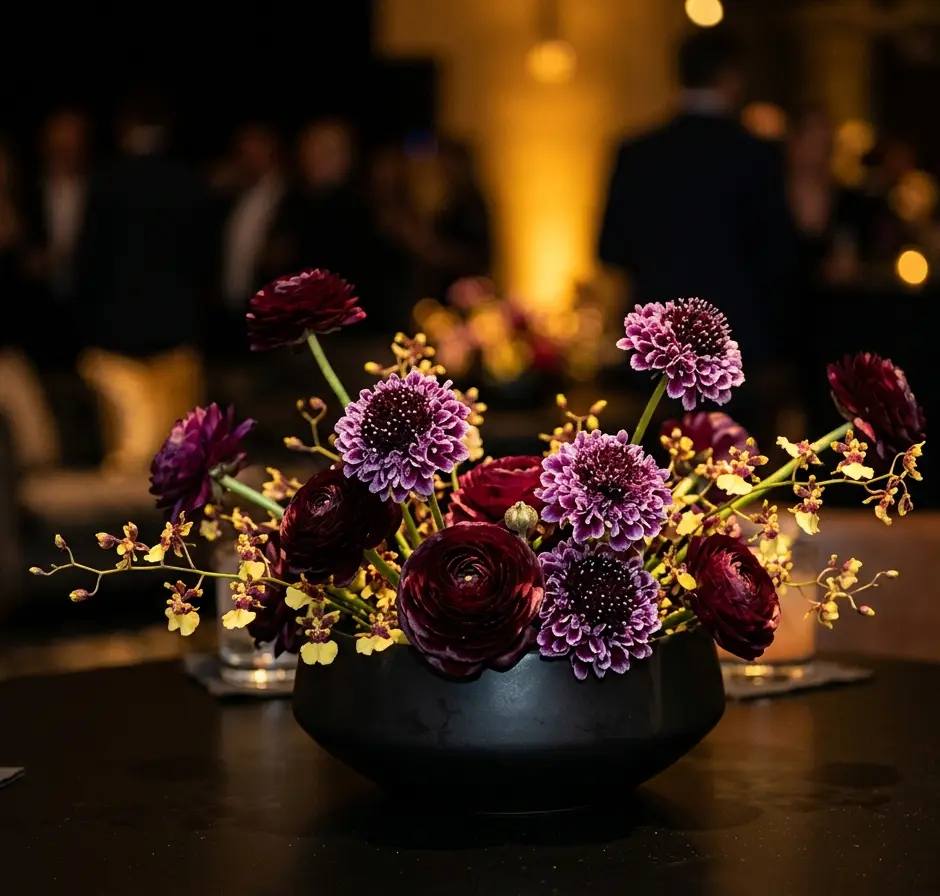
- Warm indoor venue lighting (roughly 2700K–3000K, the standard range for tungsten and most “warm white” event lighting): Pale pastels can wash out. Saturated tones — burgundy, plum, fuchsia, coral — tend to hold up better under warm spot lighting.
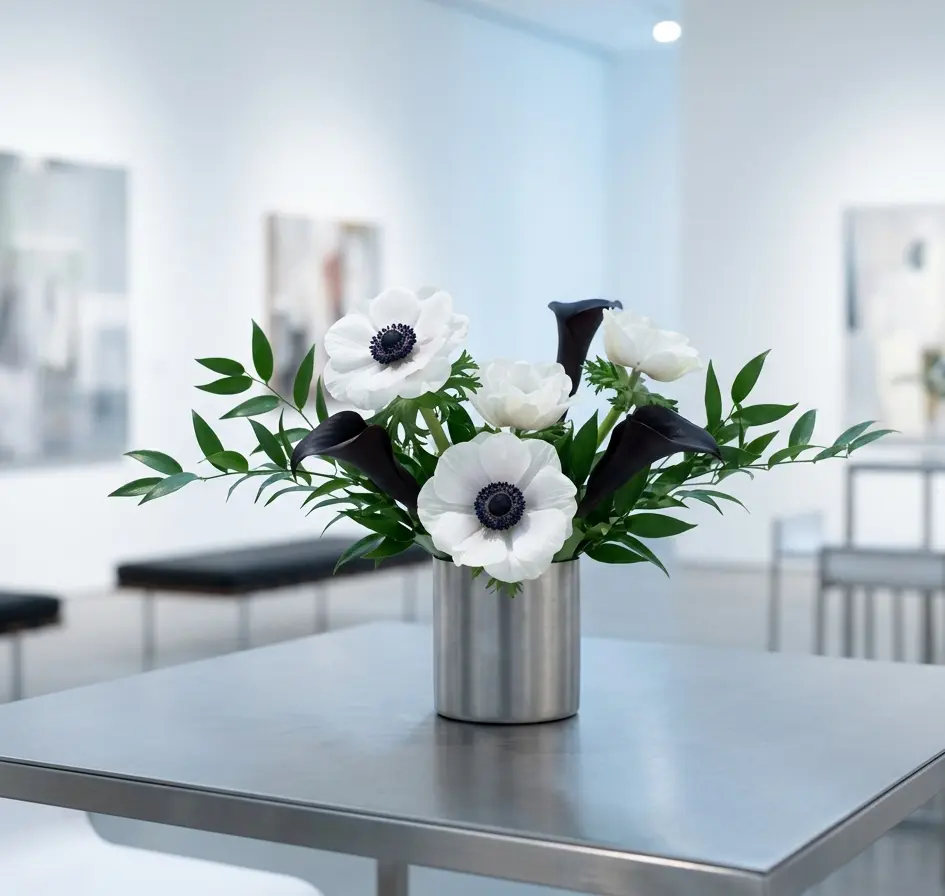
- Bright modern/gallery lighting: Monochromatic pairings (e.g., white blooms with matte black vessels) read cleanly and photograph well, which matters for events with a lot of guest phone photography.
5. Vessel Choices and Materials
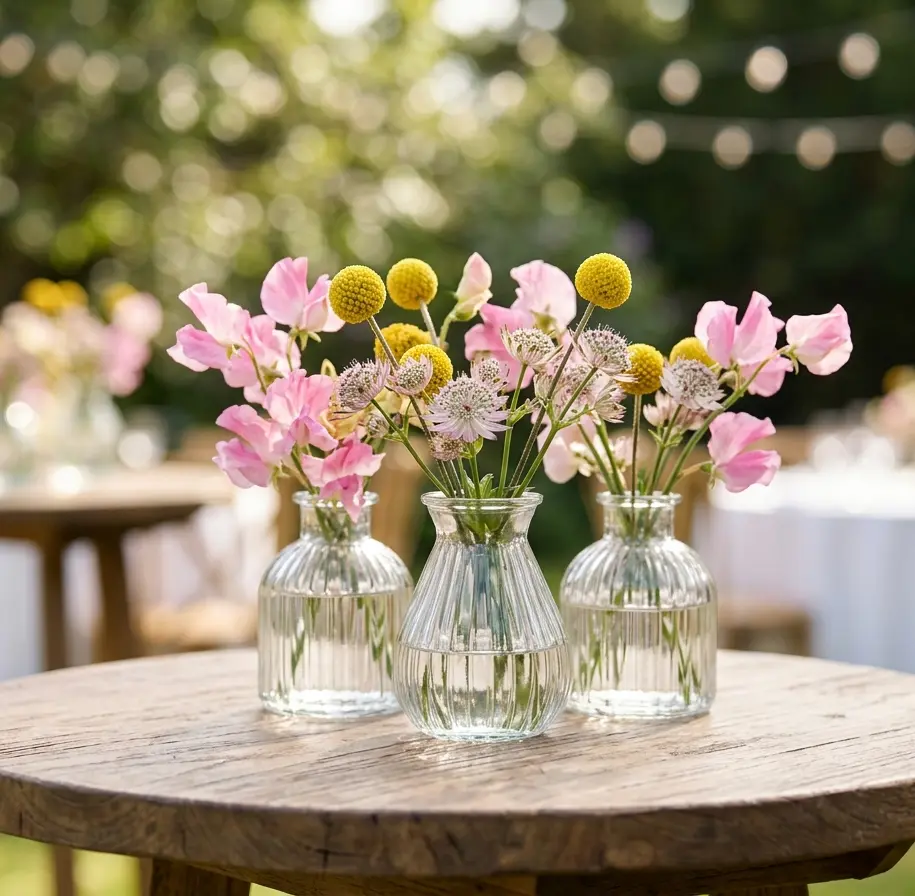
- Bud vase clusters: Three varying-height mini glass vases per table; flexible, and guests can shift them slightly without disrupting the design. This is currently one of the most popular formats for U.S. weddings because it’s both photogenic and budget-friendly.
- Low ceramic bowls (2–3 in.): Low center of gravity, good for garden-style looks; heavier than glass, which helps with stability.
- Weighted metal cups: Added stability, plus a warm metallic accent — good for fall/winter palettes.
- Acrylic or lucite vessels: A lighter-weight, shatter-resistant option some planners prefer for large events or outdoor venues where breakage risk is higher.
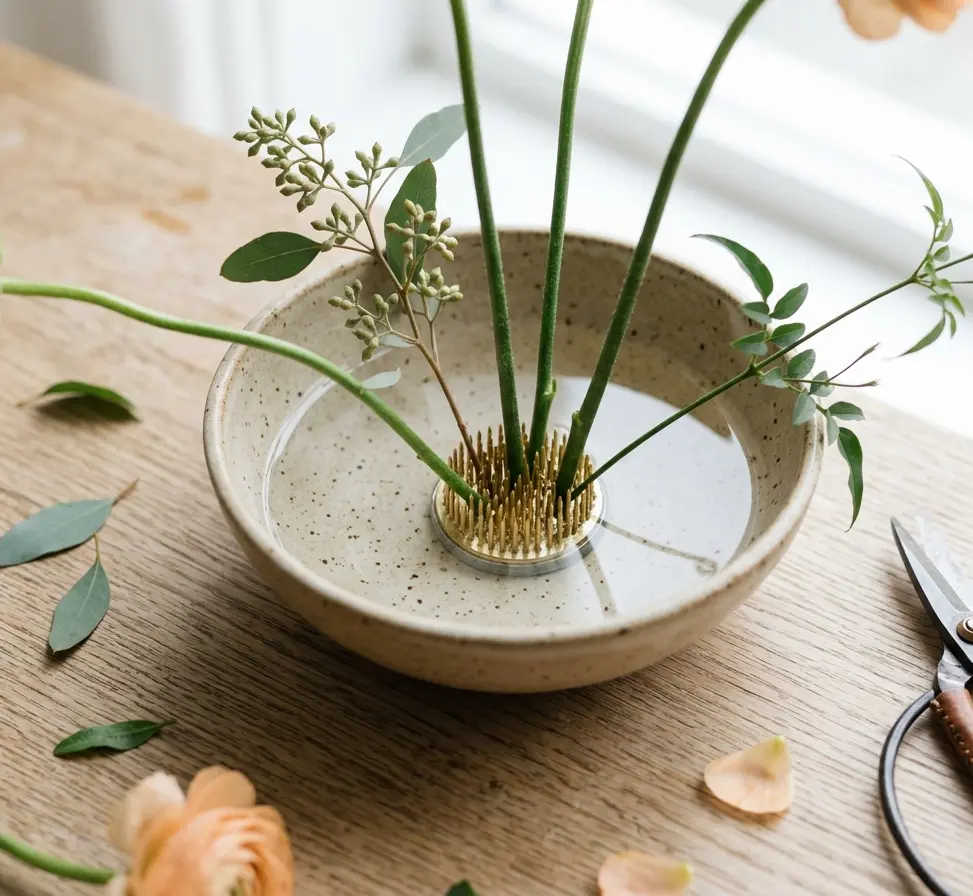
Foam-free mechanics (increasingly standard in the U.S. events industry as florists move away from floral foam for sustainability and environmental reasons — floral foam is a microplastic that doesn’t biodegrade): a mini kenzan pin holder, a shaped chicken-wire cage, or a waterproof tape grid across the vessel opening all support stems without foam.
6. Three Styling Scenarios
A. Luxury Brand Launch — Matte steel cylinder, white anemones, short black calla lilies, minimal ruscus. Clean and architectural; works well under bright, even lighting.
B. Outdoor Garden Wedding — Trio of ribbed glass bud vases, pink sweet peas, yellow craspedia, astrantia. Airy, field-picked feel; order sweet peas as close to the event as the supplier allows given their short vase life.
C. Evening Lounge/VIP — Low matte-black bowl, deep burgundy ranunculus, mini oncidium orchids, purple scabiosa. Moody and dense; pairs well with the warm 2700K–3000K lighting common at evening receptions.
7. On-Site Setup and Timeline
A rough timeline many event florists follow for a mid-size reception (15–25 cocktail tables):
- 2–3 hours before doors open: Deliver vessels with a small amount of water for transit; begin placing and topping off water on-site.
- 1 hour before: Final placement, adhesive clay applied to vessel bases if the venue allows it (always test on a hidden spot first, since some finishes can be damaged), and a walk-through to check sightlines from a standing guest’s height.
- During the event: A florist or venue staffer periodically checks for tipped vessels, wilting blooms, or water levels if the event runs several hours.
- After cocktail hour: Many planners repurpose these arrangements — moving them to the bar, a lounge area, or a registration desk — rather than letting them go to waste.
Touch-up kit essentials: microfiber cloth, a mini water mister, floral shears, tweezers, and removable floral adhesive clay.
8. Troubleshooting Common Problems
- A vessel keeps sliding when guests bump the table. Add adhesive clay to the base, or switch to a heavier ceramic or metal vessel for that specific table if it’s in a high-traffic spot.
- Anemones or other delicate blooms are shattering early. This is usually an ethylene exposure issue — check that stems weren’t stored near fruit or other ethylene-producing flowers before delivery.
- Sweet peas look tired by the reception’s end. Given their short 3–5 day vase life, order them as late as your supplier allows and keep them in a cool space until the last possible moment before setup.
- Water evaporates faster than expected in small vessels. Plan a mid-event top-off pass for any event running longer than 3–4 hours, especially in warm venues.
9. Budget Optimization
Multi-bloom stems (spray roses, mini carnations, spray delphinium) yield more usable blooms per stem than single-bloom premium flowers, which can lower per-table material cost at scale. Modular bud-vase rental sets and repurposing cocktail-hour arrangements into bar or lounge decor afterward both help stretch a florist’s budget across large events. For very large guest counts, many planners also mix in a smaller number of “hero” tables with slightly more elaborate arrangements near entrances or the bar, while keeping the bulk of tables simpler — this concentrates visual impact without inflating cost across every table.
10. Frequently Asked Questions
How many cocktail tables does a typical event need?
A common industry rule of thumb is roughly one cocktail table per 15–20 standing guests, adjusted for venue size and whether seating is also available.
Can I reuse the same vessels for multiple events?
Yes — glass, ceramic, and metal vessels are generally reusable if cleaned properly between events, which is part of why bud-vase rental programs are popular with florists doing high event volume.
Is floral foam necessary for small arrangements?
No. Foam-free mechanics (kenzan pins, wire cages, tape grids) work well at this scale and are increasingly preferred for sustainability reasons.
What’s the biggest mistake planners make with cocktail table florals?
Scaling the arrangement as though it will be viewed from a distance, rather than the close, standing-height view guests actually get — this tends to produce centerpieces that are too tall or too wide for comfortable mingling.
The most successful cocktail table arrangements aren’t necessarily the largest or most elaborate. They’re the ones that stay visually interesting at close range, leave guests room to talk and set down a drink, hold up for the full length of the event, and work with — rather than against — the venue’s lighting.