

Can You Limewash Directly Over Latex Paint?
Generally, no. Traditional limewash performs best on an absorbent, mineral based substrate that provides the surface conditions needed for proper adhesion and curing. Modern interior walls finished with latex or acrylic coatings present a smooth, non porous film that typically limits liquid absorption. Applying traditional limewash directly over existing latex paint can result in poor adhesion, flaking, or chalking over time.
To successfully apply limewash over previously painted walls, you must modify the substrate using a compatible primer or preparation system specified by the limewash manufacturer.
Quick Guide: Limewash Systems Over Existing Latex Paint
| Product / System Type | Application Over Existing Latex Paint | Key Considerations |
| Traditional Limewash | Typically requires a compatible bonding primer or preparation coat | Preparation should provide adequate adhesion and surface profile for the limewash; requirements vary by manufacturer. |
| Mineral Paints with Synthetic Additives | May be compatible with standard primers or properly prepared painted surfaces | Modified formulations may use synthetic binders to improve adhesion to previously painted surfaces. |
| Commercial / Hybrid Limewash Systems | Requires the specific prep coat or primer system specified in the Technical Data Sheet (TDS) | Some systems use an intermediate preparation coat designed to bond to existing paint and provide a compatible surface for the limewash. |
Even within the same product category, one lime based coating may require a bonding primer while another modified mineral wash formulation may be designed for application without one. Always verify the requirements in the manufacturer’s technical documentation.
Surface Adhesion and Substrate Differences
Limewash relies on surface absorption and mechanical adhesion rather than forming the same type of flexible polymer film as conventional latex paint. Because cured latex and acrylic coatings are relatively non porous and provide little suction, applying traditional limewash directly over them can compromise the bond.
Substrate conditions dictate how well the mineral wash sets. On raw masonry or lime plaster, limewash draws directly into the porous structure. On a sealed synthetic paint film, the limewash cannot rely on the same absorption and suction that it would have on raw masonry or lime plaster. Without a dedicated bonding coat or textured base, the lime layer lacks the mechanical key needed to remain stable through ambient temperature and humidity shifts.
Can You Use Regular Primer Under Limewash?
Not necessarily, as limewash product systems utilize different technical mechanisms to bridge the gap between synthetic paint and mineral washes.
Standard drywall primers are designed to seal surfaces uniformly, but they may not provide the surface profile or adhesion characteristics required by some traditional limewash systems. Depending on the specific system you choose, manufacturers rely on three main priming strategies:
- Mechanical Grip Primers: Formulated with fine mineral aggregates (such as sand or limestone dust) that dry into a micro textured, gritty surface, giving traditional limewash a physical profile to cling to.
- Chemical Bridge Prep Coats: Smooth, water based intermediate coatings engineered to adhere chemically to underlying acrylic paint on one side while providing a compatible surface for the subsequent mineral wash.
- Modified Coating Formulations: Lime paints blended with water based synthetic binders that allow the paint itself to bond directly over standard PVA or acrylic drywall primers.
When working over existing latex paint, identify which priming mechanism your specific limewash product uses rather than assuming a conventional drywall primer will be compatible.
Do You Need to Sand Latex Paint Before Limewashing?
Sanding is often required when working over gloss, semi gloss, or satin latex finishes to break the surface tension and improve primer adhesion. Lightly scuff sanding creates micro scratches that allow the bonding coat to grip the underlying paint layer.
When scuff sanding is recommended by your primer manufacturer:
- Clean the wall first using a mild detergent or diluted trisodium phosphate (TSP) substitute to remove surface oils and dust.
- Scuff sand glossy areas lightly using fine to medium grit sandpaper until the sheen is dulled.
- Wipe away all residual dust with a damp microfiber towel before applying any primer.
Safety Note: In homes built before 1978, existing paint layers may contain lead. Avoid sanding or disturbing older paint coats without testing for lead content first, as disturbing lead based paint generates hazardous dust.
What If the Existing Paint Is Peeling or Damaged?
Limewash cannot stabilize a failing sub layer. If the underlying latex paint is peeling, cracking, or blistering, those areas must be addressed prior to priming:
- Scrape away all loose or flaking paint until you reach a firm, well bonded edge.
- Fill deep gouges, cracks, or joint compound repairs with a suitable spackling or joint compound.
- Sand the patched areas smooth and flush with the surrounding wall surface.
- Spot prime repairs before applying the main bonding coat to ensure consistent surface preparation.
Selecting and Applying the Primer Layer
Once the surface is clean, sound, and properly prepared, apply the recommended primer coat according to the product guidelines.
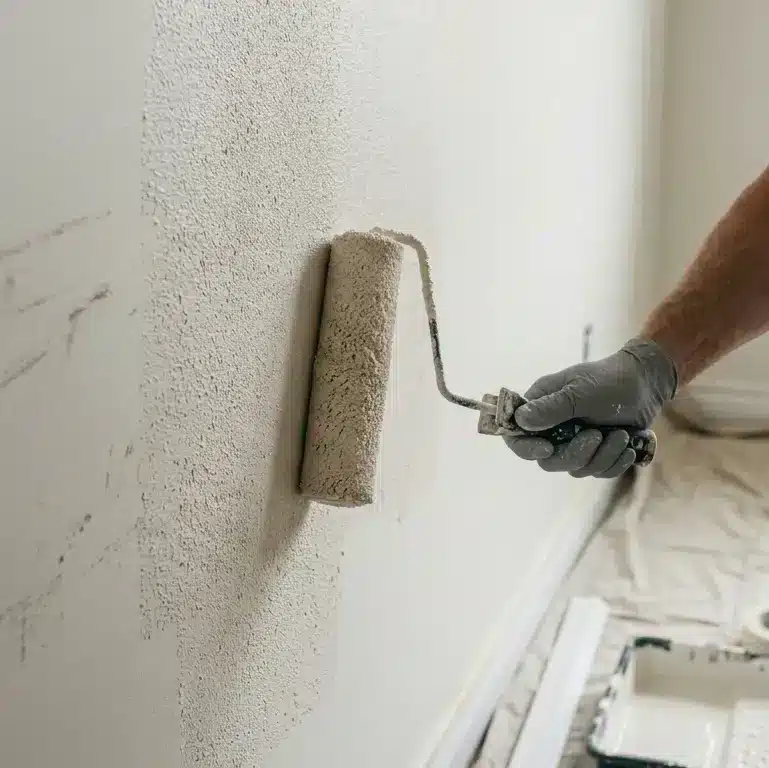
Some limewash bonding primers use fine mineral aggregates or fillers to create a subtle, sand like texture. This texture mimics the physical grip of raw plaster and provides the mechanical key necessary for traditional brush applications.
Apply the primer evenly using a roller or brush. Allow the primer to dry completely according to the manufacturer’s specified recoat window before starting the limewash application. Drying times vary based on ambient room temperature, airflow, and indoor humidity levels.
Application Technique for Traditional Limewash
For traditional brush applied limewash systems, application techniques differ significantly from standard paint rolling.
Brushing Motion and Patterning
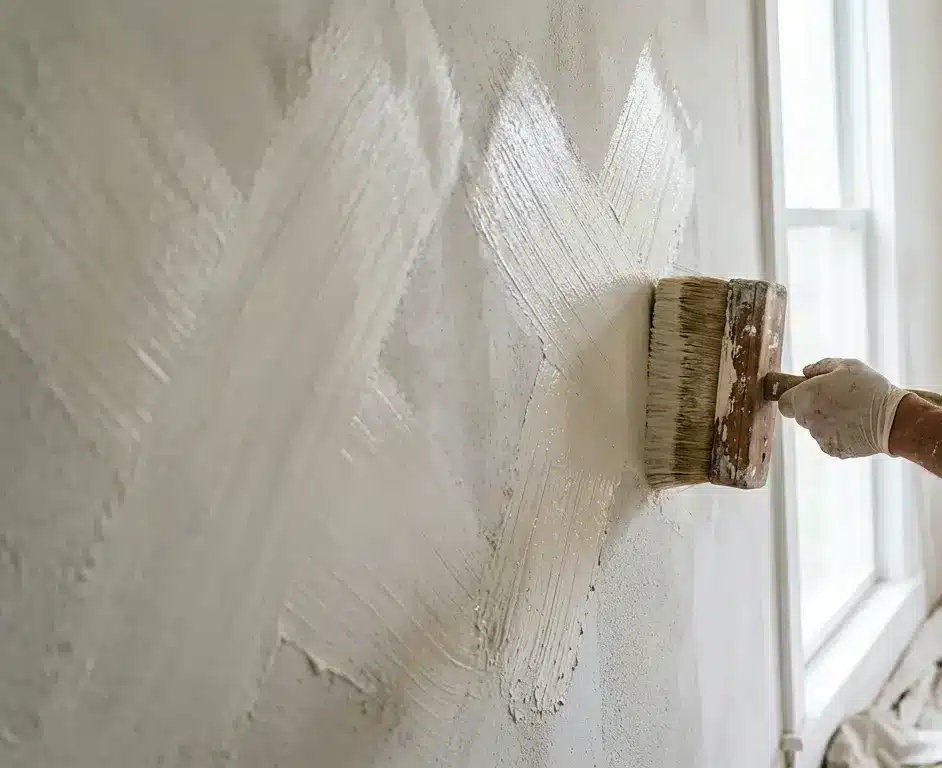
Use a broad, natural bristle block brush. Dip the bristle tips into the thoroughly mixed limewash and apply it using broad, overlapping “X” strokes. This crosshatch technique helps create the subtle tonal variation characteristic of many lime finishes.
Edge Management and Moisture Control
Work continuously across an entire wall section from one corner to the next to maintain a wet edge. Stopping mid wall allows the leading edge to dry, which can create visible lap lines where fresh and setting lime overlap.
In low humidity conditions or over highly absorbent mineral primers, lightly dampening the wall with water before brushing can help control absorption. Rapid drying can interfere with proper curing and may increase the risk of dusting or chalking, particularly when the coating is applied too thinly or under dry environmental conditions.
Layering and Curing

Limewash cures through carbonation, reacting with atmospheric carbon dioxide in the presence of moisture, and dries significantly lighter than it appears when wet in the container.
Applying multiple thin coats helps build color and coverage gradually while allowing each layer to cure properly. Thin applications are generally preferred to heavy coats, which can increase the risk of cracking, flaking, or uneven drying. Allow each coat to dry fully according to the product manufacturer’s specified cure window before applying subsequent layers.



1 thought on “Applying Limewash Over Existing Latex Paint: A Technical Preparation Guide”
Comments are closed.