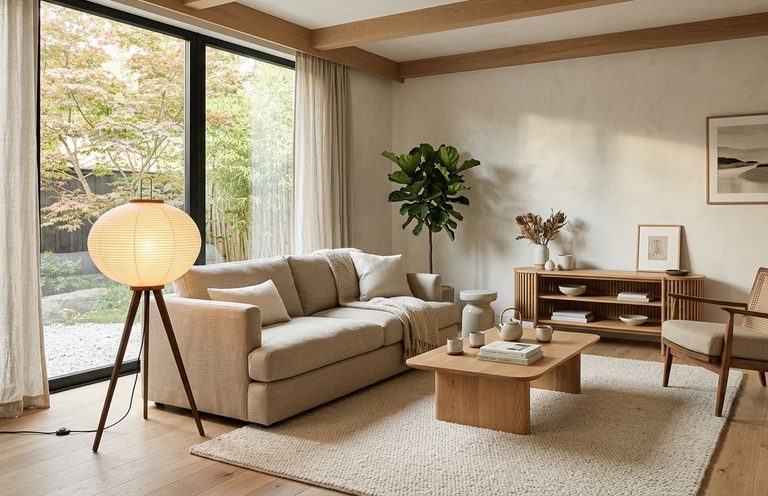
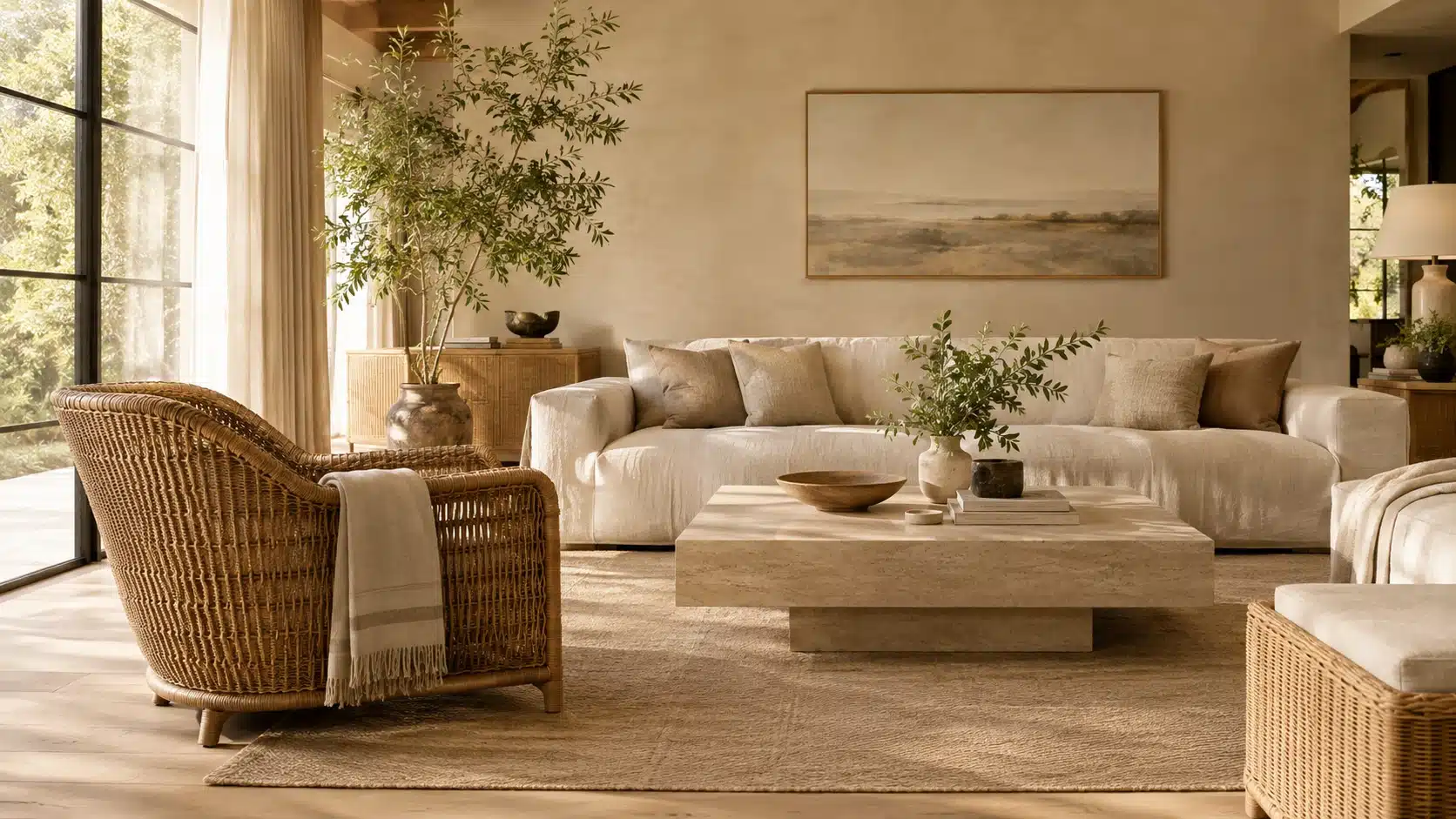
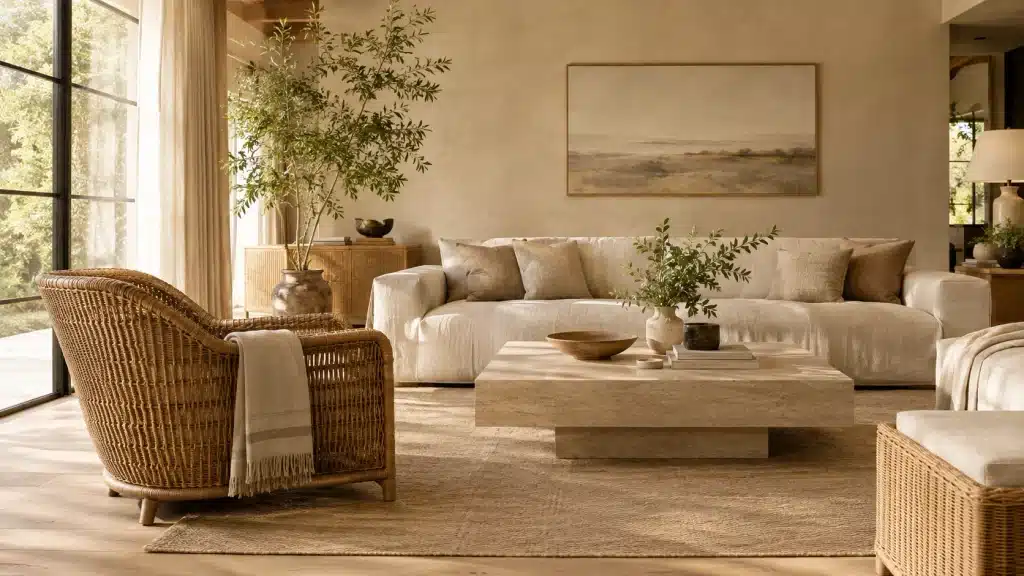
Vietnamese rattan furniture is becoming an increasingly popular choice for modern American homes, offering a seamless bridge between sleek contemporary design and natural warmth. As trends like organic modern, Japandi, and biophilic design continue to shape residential architecture, woven natural rattan brings tactile depth and visual relaxation to spaces dominated by polished concrete, glass, and clean architectural lines. Beyond simple decor, authentic Vietnamese cane furniture reflects generations of artisan craftsmanship reimagined for high-end modern living.
1. Vietnamese Rattan: Material, Craftsmanship, and Heritage
Natural fiber furniture can vary considerably in material quality, construction, and craftsmanship. The unique climate of Southeast Asia, combined with generations of specialized handcrafting, gives Vietnamese rattan furniture a distinct tactile character that synthetic wicker or mass-produced alternatives may not fully offer.
The Tactile Aesthetic of Vietnamese Calamus
Grown in the tropical ecosystems of Vietnam, Calamus and other rattan-producing palms yield a fiber celebrated for its exceptional tensile strength and flexible core. Unlike cold metals, synthetic polymers, or high-gloss plastics that reflect harsh light, raw natural rattan absorbs light softly, introducing a matte texture into a room.
When integrated into modern American interiors alongside cognac leather, wire-brushed white oak, or honed travertine handcrafted rattan provides crucial visual contrast. It softens the hard edges of modern architecture, instantly lowering the visual stiffness of a room and making it feel lived-in and welcoming.

Generations of Weaving Heritage Meet Modern Silhouettes
The soul of Vietnamese woven furniture lies in historic craft communities across Northern Vietnam, particularly within traditional weaving hubs in the greater Hanoi region such as the Phu Vinh craft village. Local artisans utilize techniques passed down through generations, tailoring traditional patterns to suit modern aesthetic sensibilities:
- Cane Webbing (Octagonal Mesh Weave): Thin strips of the rattan’s outer bark are woven into an open geometric lattice. Frequently used on sideboard cabinet doors, headboards, or accent chairs, cane webbing introduces negative space and semi-transparency allowing light and air to pass through without visual clutter.
- Core Weaving (Full-Round Rattan): Utilizing the flexible inner core of the vine to create solid, sculptural forms. This technique brings dramatic dimension to oversized pendant lamps, sculpted lounge chairs, and storage hampers.

2. How to Use Vietnamese Rattan in Modern American Homes
Rattan is one of the most versatile natural materials in interior design. It can anchor a room as a focal furniture piece or act as a subtle texture-layering element that elevates a neutral color palette.
Styling for Japandi, Boho, and Organic Modern Spaces
Whether your home leans toward the minimalist discipline of Japandi, the relaxed elegance of Coastal Modern, or the curated eclecticism of California Boho, natural rattan furniture acts as the connective tissue between understated neutrals and organic elements.
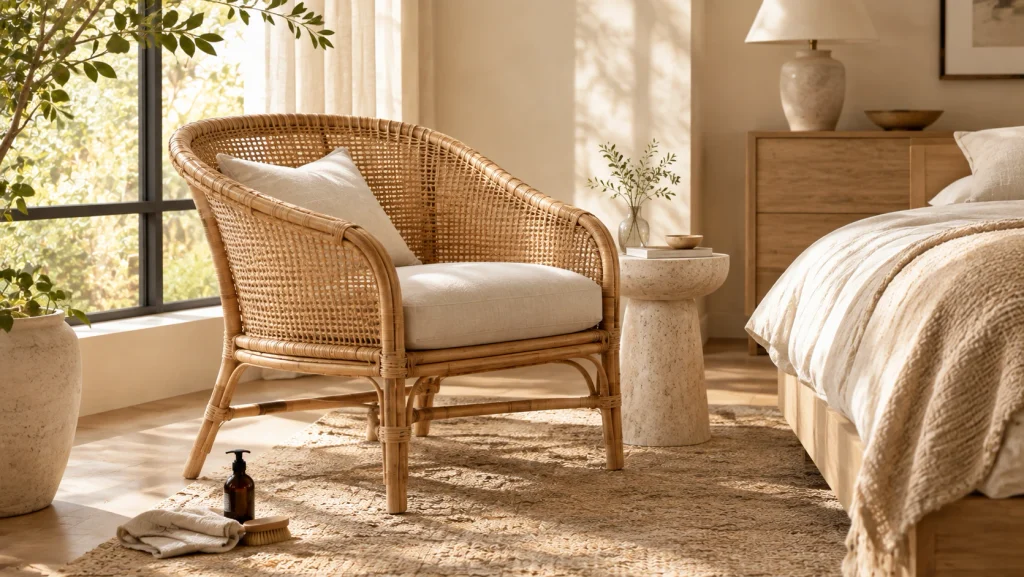
- The Living Room: Pair a tailored fabric sofa with a wide-armed rattan cane accent chair. Layer a textured bouclé throw blanket across the seat and place a matte ceramic vase on a nearby side table. The play between soft fabric, raw ceramic, and woven cane creates rich visual depth without relying on bold colors.
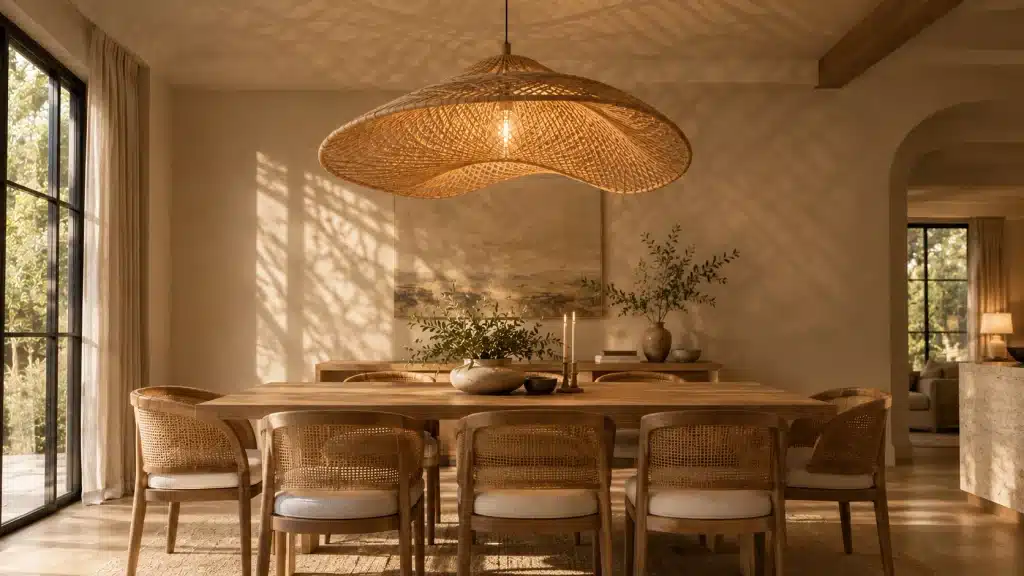
- The Dining Area: Opt for dining chairs featuring rattan woven backrests. Rattan backings offer natural breathability during long gatherings while softening the rigid profile of a heavy wood or stone dining table.

- Material Pairing Guide for Modern Interiors:
- Upholstery: Slubby Belgian linen, textured bouclé, washed cotton canvas.
- Hard Surfaces: Honed travertine, black powder-coated steel, wire-brushed white oak.
- Accent Foliage: Delicate, airy greenery like maidenhair ferns, olive branches, or weeping figs.
Sculpting Light and Shadow: The Rattan Pendant Light
Lighting is a transformative element in interior design. A hand-woven rattan pendant light does not merely illuminate a room it transforms the surrounding space through dappled light and shadow.
When illuminated with a warm LED bulb (around 2700K), light filters gently through the woven lattice, projecting delicate geometric patterns across walls and ceilings. This creates a calming environment ideal for dining nooks, bedrooms, or cozy reading corners.
3. Is Vietnamese Rattan Sustainable?
Modern luxury is increasingly defined by intentionality, environmental responsibility, and authenticity rather than pure opulence.
Forest Conservation and Renewable Harvesting
Unlike hardwood timber trees that require decades to reach maturity, rattan is a fast-growing, climbing palm vine. Commercial rattan species typically reach harvestable maturity in much shorter growth cycles than traditional timber.
Because many rattan species grow beneath forest canopies, responsibly managed rattan harvesting can provide income for local communities while maintaining forest cover.
Biodegradability and Eco-Luxury
Natural rattan fiber is inherently biodegradable at the end of its useful life, although applied finishes, adhesives, and hardware can affect the overall biodegradability of a finished piece of furniture. Still, choosing natural rattan over synthetic alternatives can reduce reliance on petroleum-based plastic wicker and synthetic composites.

4. How to Care for Rattan Furniture
While natural rattan is remarkably resilient for indoor use, proper maintenance ensures your furniture retains its beauty and structural integrity over time.
Everyday Cleaning and Maintenance
- Regular Dusting: Dust can accumulate within the tight weaves. Use a soft vacuum brush attachment or a dry microfiber cloth to clean out weave gaps weekly.
- Gentle Spot Cleaning: For deeper cleaning, wipe the surface with a soft cloth slightly dampened with warm water and mild soap. Avoid soaking the fibers, and dry the area thoroughly with a clean towel immediately afterward.
- Avoid Heavy Oils and Silicones: Do not apply heavy plant oils (such as pure coconut or unrefined lemon oil) or silicone-based furniture polishes. These can attract dust, trap moisture, or degrade protective surface sealants over time.
Environmental Control and Patina
- Maintain Stable Indoor Humidity: Keeping indoor humidity at a moderate, stable level roughly 40% to 60% can help reduce excessive drying or moisture-related problems. In dry winter months, using a room humidifier helps prevent natural fibers from becoming brittle.
- Filter Direct Sunlight: Long-term exposure to intense direct UV rays can dry out fibers and cause uneven fading. Position key rattan pieces where they receive indirect or filtered sunlight.
- Developing a Natural Honey Patina: Fresh natural rattan typically arrives in a pale straw hue. Over time, gentle exposure to ambient air and ambient light naturally deepens the fiber into a rich, golden amber tone known as a patina a hallmark of genuine, aging rattan.
Frequently Asked Questions
What is Vietnamese rattan furniture?
Vietnamese rattan furniture refers to home furnishings such as chairs, tables, cabinets, and lighting crafted by Vietnamese artisans using natural rattan through traditional weaving techniques.
Is Vietnamese rattan furniture durable enough for everyday use?
Yes. High-quality natural rattan features exceptional tensile strength and flexibility. When constructed with solid joinery and kept indoors under stable environmental conditions, rattan furniture is highly durable for everyday residential use.
What interior design styles work best with rattan furniture?
Rattan furniture seamlessly complements Organic Modern, Japandi, Boho, Coastal, and Scandinavian interiors by adding natural warmth, texture, and organic contrast to modern spaces.
How do you prevent rattan furniture from drying out or cracking?
Keep rattan furniture indoors, away from direct heat sources and prolonged direct sunlight. Keeping indoor humidity at a moderate, stable level (roughly 40% to 60%) and protecting the furniture from excessive heat and direct sunlight can help reduce the risk of excessive drying or cracking.