
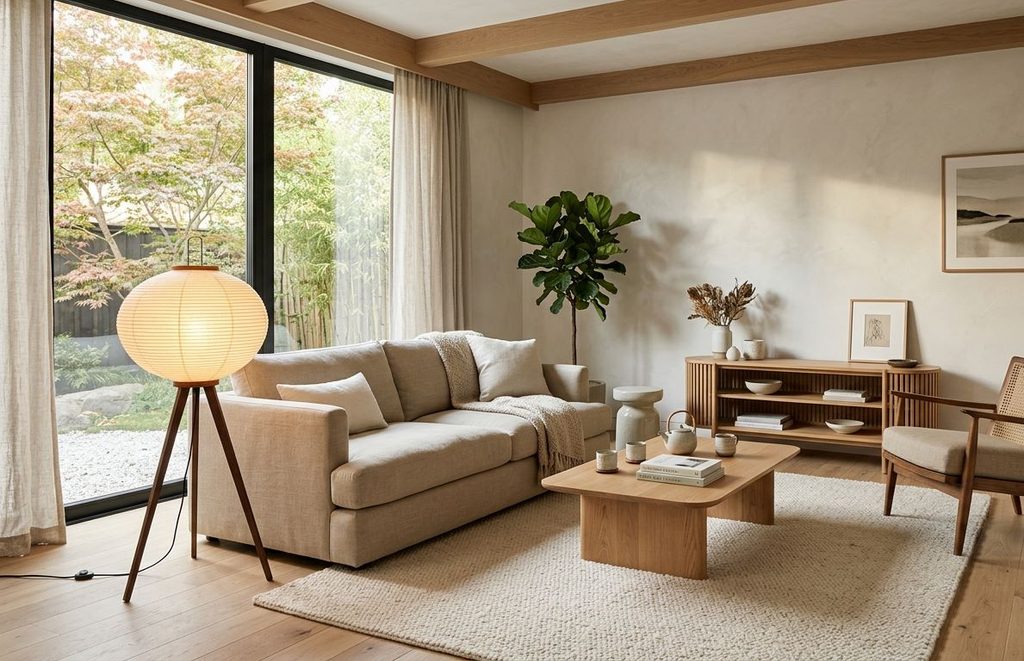
If you spend any time on Pinterest, you’ve seen those living rooms that look impossibly quiet. Warm oak, low seating, soft linen, and not a single rogue TV remote in sight.
That is Japandi. It takes the cozy warmth of Scandinavian functionalism (Hygge) and mixes it with the simple, weathered feel of traditional Japanese spaces (Wabi-Sabi).
The issue? A lot of people try to recreate this look, buy three white chairs, and end up with a room that feels like a doctor’s waiting room.
You don’t need to throw out everything you own. If you focus on these five core pieces, you can pull off the look while keeping your space warm, grounded, and functional.
What Makes a Piece “Japandi”?
Before you start shopping, it helps to understand why certain materials and shapes work so well together in this style:
- Low vertical centers: Traditional Japanese living happens close to the floor (washitsu tradition). Lower furniture opens up sightlines, making standard ceilings feel higher and rooms less cramped.
- Untreated, aging materials: In Wabi-Sabi philosophy, beauty comes from natural imperfection. Light woods like oak and ash are favored because they reflect ambient light well and age gracefully over time, unlike high-gloss plastic lacquers.
- Diffused lighting over direct glare: Instead of bouncing light off polished surfaces, Japandi favors matte textures—linen, paper, and unglazed ceramic—that absorb and soften light.
1. A Low-Profile Solid Wood Coffee Table
The coffee table anchors a Japandi living room. Instead of a tall, heavy box table with a shiny varnish, look for a piece made from solid, raw wood with a matte or oiled finish.
Scandinavian design brought pale woods like ash and white oak into modern spaces to maximize natural light during dark winters. Japanese craftsmanship values showing the natural, unpolished wood grain. Combining the two gives you a piece that feels sturdy yet visually light.
- Key Specs: Aim for a table height between 12 and 15 inches. Standard 18-inch coffee tables sit too high for low seating and immediately break the horizontal flow of the room. Round or oval edges work best to soften the rigid, boxy lines of standard drywall construction.
- Price Range: $150–$250 for quality veneer options; $600+ for solid handcrafted oak or ash.
Keeping the surface clear is key, though keeping it entirely bare isn’t always practical. Setting out a simple ceramic bowl or a single stoneware vessel keeps it intentional rather than cluttered—a balance we explore in our guide to styling a Japandi coffee table with three objects or less.
2. A Deep, Low Sofa in Textured Fabric

Minimalism gets a bad reputation for being stiff and uncomfortable. Japandi isn’t about sacrificing comfort—it’s about hidden comfort.
Skip high-backed sectional sofas and choose a low-slung frame with deep seat cushions in cream, oat, taupe, or light warm gray. Look for a seat depth of at least 22 to 24 inches so you can truly sink in, paired with low legs under 6 inches (or a floor-skirting base) to maintain that grounded horizon line.
Stick to slub linen, textured woven cotton, or low-pile bouclé for upholstery. Avoid shiny synthetic velvet or polished microfiber at all costs—the sheen reflects overhead light and shifts the aesthetic away from serene Japandi into generic 2010s modern gray. Natural textiles absorb light, creating a tactile depth that bridges Japanese restraint with Scandinavian coziness.
- Price Range: $900–$2,500 depending on frame construction and fabric blend.
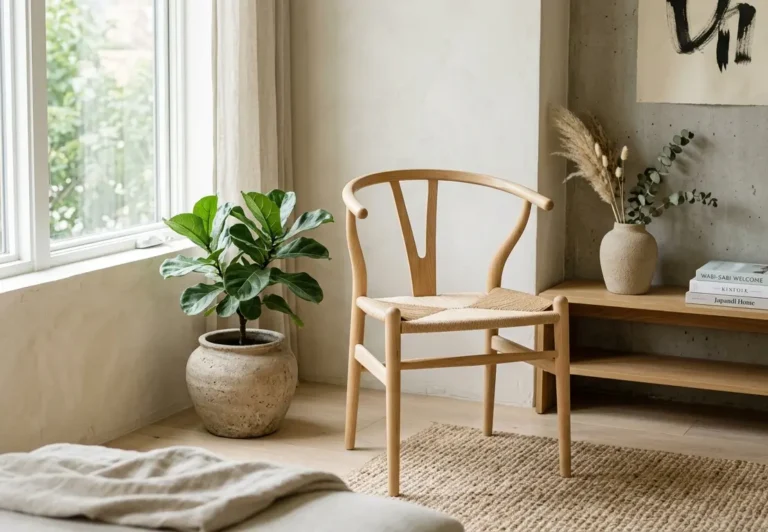
3. An Accent Chair with Woven Cane or Cord Details
If your sofa is soft and fully upholstered, your accent chair should bring structural contrast. A wood-framed lounge chair featuring a paper cord seat or woven cane back adds architectural structure without blocking natural light.
Aim for a seat height around 15 to 17 inches with a relaxed recline angle (around 105° to 110°) so it seamlessly aligns with the low profile of your sofa.
Don’t stress about matching the chair frame wood to your coffee table. A warm walnut chair frame paired with a light oak coffee table actually adds rich, organic visual depth. Position the chair at a slight inward angle toward the sofa to create an inviting conversational nook. (If you’re working with a tighter budget, check out our list of seven budget-friendly Japandi accent chairs under $300 that nail these exact proportions.)
- Price Range: $200–$500 for well-crafted paper cord or cane frames.
4. A Slatted Wood Media Console
Televisions are usually the biggest visual distraction in a living room. While you can’t always hide the TV, you can balance its presence with the right console beneath it.
A low credenza featuring vertical wood slats (or tambour doors) is a staple piece. This design offers a modern interpretation of traditional Japanese koushi—slatted wooden screens historically used in classic machiya townhouses to balance privacy with subtle airflow.
The vertical slats create a subtle rhythm of light and shadow, disguising electronics and messy cords while adding architectural texture to plain drywall walls. You can even choose a shade slightly darker than your flooring to anchor the wall without making the room feel heavy.
- Price Range: $300–$900 depending on length and solid wood versus slatted veneer construction.
5. A Rice Paper Lantern Floor Lamp
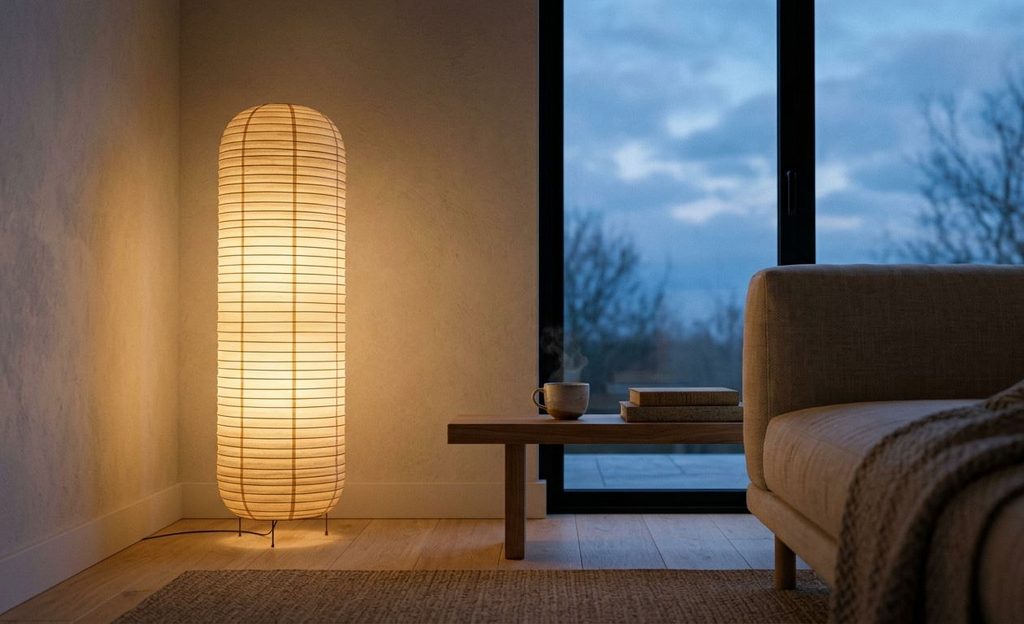
Overhead recessed lights can ruin the mood of a minimalist room instantly. Soft, layered lighting acts as functional artwork in a Japandi space.
Paper lantern lights draw direct heritage from 1950s sculptor Isamu Noguchi and his iconic Akari light sculptures, which modernized traditional Japanese Gifu paper lanterns crafted from mulberry bark and bamboo.
That fibrous paper does the heavy lifting here—it acts as a natural diffuser, turning harsh light into a warm glow reminiscent of sunlight filtering through paper screens.
Most Japandi rooms fall apart right at the light bulb—people grab whatever bulb is on sale and end up with a stark white glow that fights the whole aesthetic. Always pair paper lanterns with warm white LED bulbs rated around 2700K to maintain that soft ambient warmth. (Read our guide on how to choose the right lighting temperature for Japandi spaces if you want the full picture on Kelvin ratings.)
- Price Range: $50–$200 for floor-standing paper lanterns.
3 Common Mistakes to Avoid
- Matching every wood tone perfectly: Your coffee table, chair frame, and console don’t need to be identical. Mixing pale oak, ash, and subtle walnut accents creates natural depth that looks curated over time rather than bought out of a single catalog.
- Pushing all furniture against the walls: Low-profile furniture looks best with breathing room (Ma). Pull your couch 6 inches away from the wall to let light and shadows move freely around the frame.
- Skipping soft textiles: Without a thick wool rug or soft linen curtains to absorb sound, a room filled purely with wood, paper, and low frames will feel echoey and cold. Soft floor coverings complete the transition from minimalist showroom to lived-in sanctuary.
Quick Selection Guide
| Piece | Key Detail / Material | What to Avoid |
| Coffee Table | Height 12-15″, solid oak/ash, matte finish | High-gloss varnish, chrome frames |
| Sofa | Low back, textured linen or oat-toned fabric | Tall leather sectionals, stark white |
| Accent Chair | Paper cord, cane weave, exposed timber frame | Bulky fully-upholstered armchairs |
| Media Console | Vertical wood slats (koushi detail), low credenza | Open glass shelves, glossy plastic |
| Lighting | Mulberry paper shade, 2700K warm bulb | Exposed bare LEDs, bright overhead fixtures |