
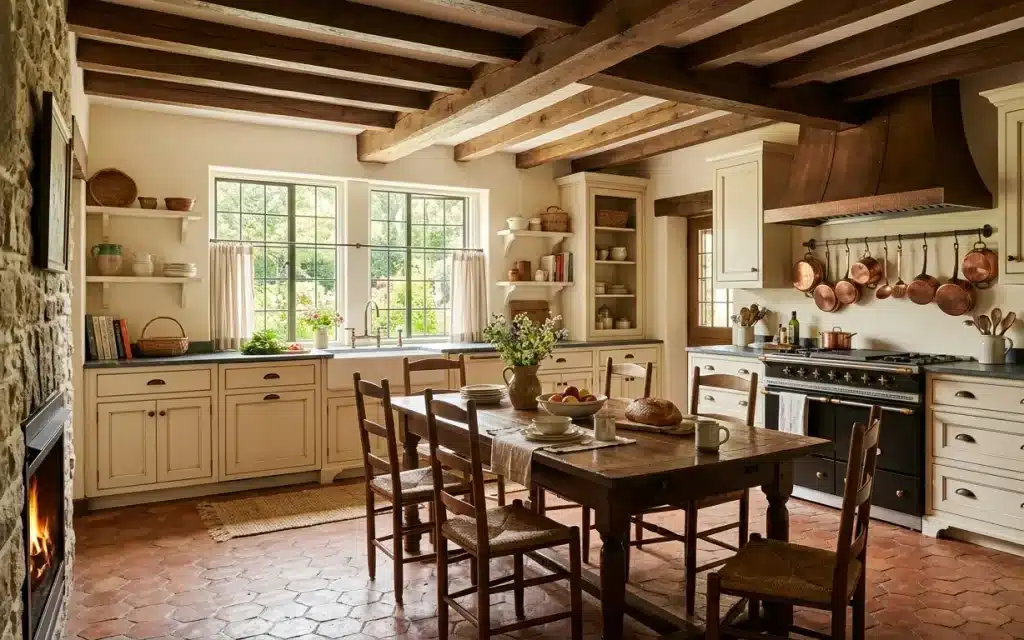
A French country kitchen is supposed to look like it was assembled over decades, not ordered in a weekend. That is also what makes it tricky to pull off in the U.S., where most kitchens are built from matching wall-to-wall cabinet runs and where building codes, appliance sizes, and materials all push toward uniformity.
This guide covers the look and the practical details that decide whether it works in a real house: what’s authentically French, what’s an American adaptation, and what to check before you buy.
What “French Country” Actually Means
There is no single French country look. French kitchen styles vary widely by region, from rustic Provençal to more polished Parisian interpretations. Provence leans on terracotta, painted cabinets, and colorful ceramics; Normandy leans toward timber and stone.
What ties them together is history. The provincial French kitchen is essentially aristocratic taste reinterpreted by country households with whatever materials and skills were at hand. Your goal isn’t to copy a château. It’s to get the layered, practical feel of a working country kitchen.
French Country vs. Modern vs. American Farmhouse
| Modern | French Country | American Farmhouse | |
|---|---|---|---|
| Cabinets | Flat-panel, handleless | Raised-panel, furniture-style, painted | Shaker, often white or two-tone |
| Materials | Quartz, chrome, acrylic | Terracotta, limestone, aged oak, brass | Wood, painted finishes, subway tile |
| Hardware | Minimal | Unlacquered brass, iron, bronze | Black iron, nickel |
| Palette | High contrast | Cream, greige, earthy accents | Crisp white with black accents |
| Display | Concealed | Copper, stoneware, open shelves | Open shelving, farmhouse signs |
In the U.S., “French country” and “farmhouse” are often used interchangeably. They overlap, but French country is warmer and softer, with less black-and-white contrast.
10 Design Ideas
1. Start With the Floor
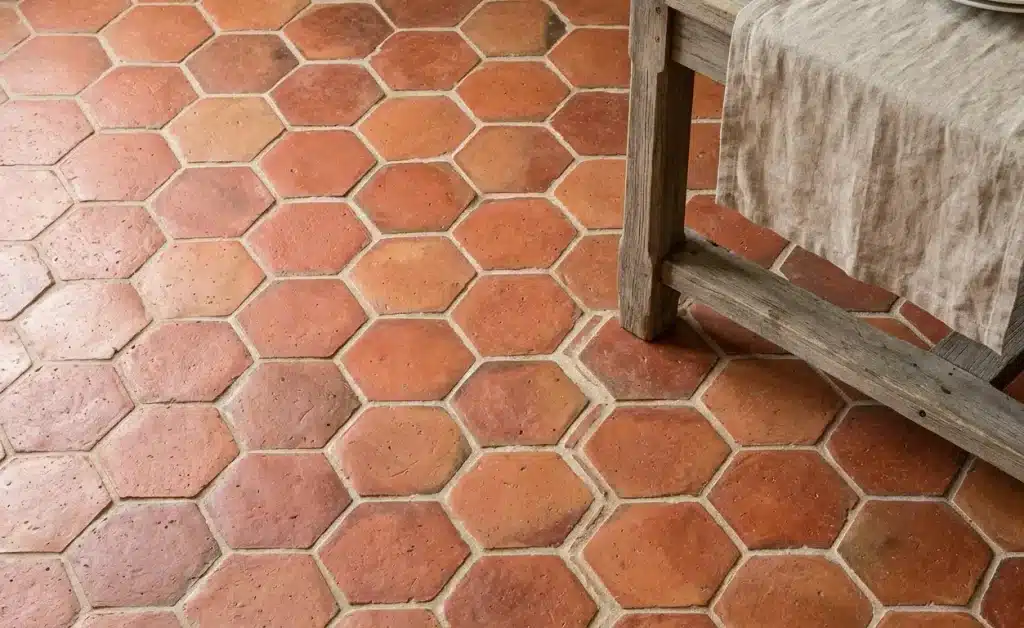
The signature floor of the Provençal kitchen is the tomette, a hexagonal terracotta tile common in southern France. Its shape lets the tiles fit together with minimal grout, and terracotta was prized for holding warmth from the hearth and staying cool in summer. Tomettes fell out of fashion in the mid-20th century but have come back, partly because they work well with radiant floor heating.
Two practical notes. Terracotta is porous, so plan on sealing it, and expect it to pick up patina from oil and wine. Reclaimed French tiles are available through architectural salvage dealers in the U.S., but they are sold in limited lots, so order more than you need. If terracotta feels like too much upkeep, wide-plank oak or honed limestone gets you a similar warmth.
2. Pick a Muted, Earthy Palette
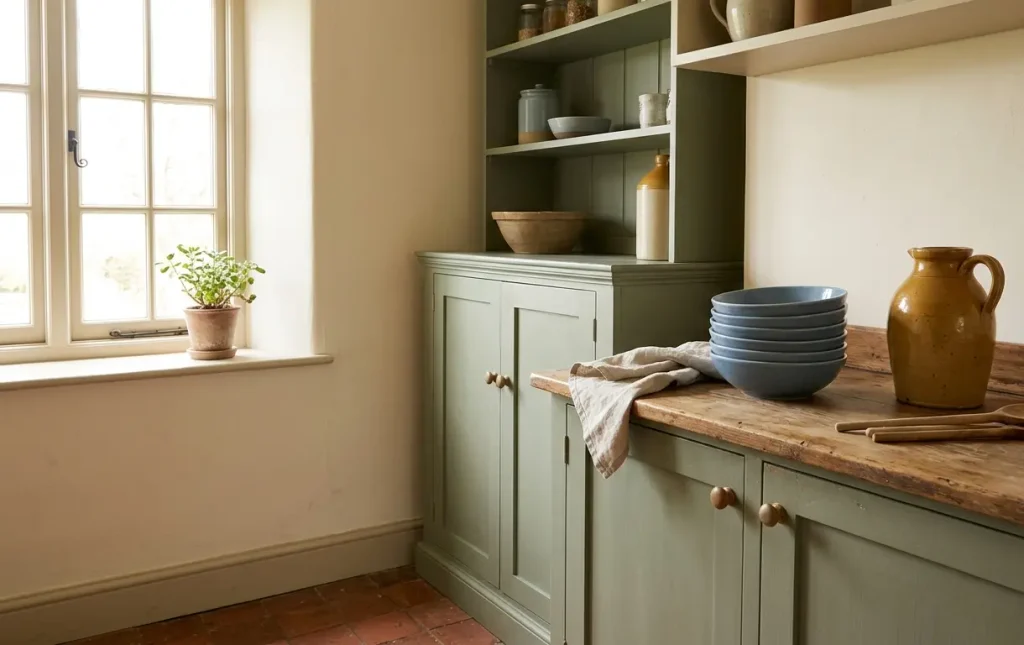
Build on creamy whites, soft beige, and greige, then pull accents from the landscape: sage, dusty blue, ochre, terracotta. Provençal kitchens often get their color from ceramics and painted furniture rather than from the walls. Test paint samples in your own light. Warm creams can read yellow in north-facing kitchens.
3. Think “Furniture,” Not “Cabinet Runs”
Traditional French kitchens were often assembled from separate pieces: a hutch, a worktable, a dedicated sink stand. To echo that, choose raised-panel or beaded doors, an island with turned legs, and a few freestanding pieces, such as a baker’s rack or a farmhouse table, in place of a continuous wall of uppers.
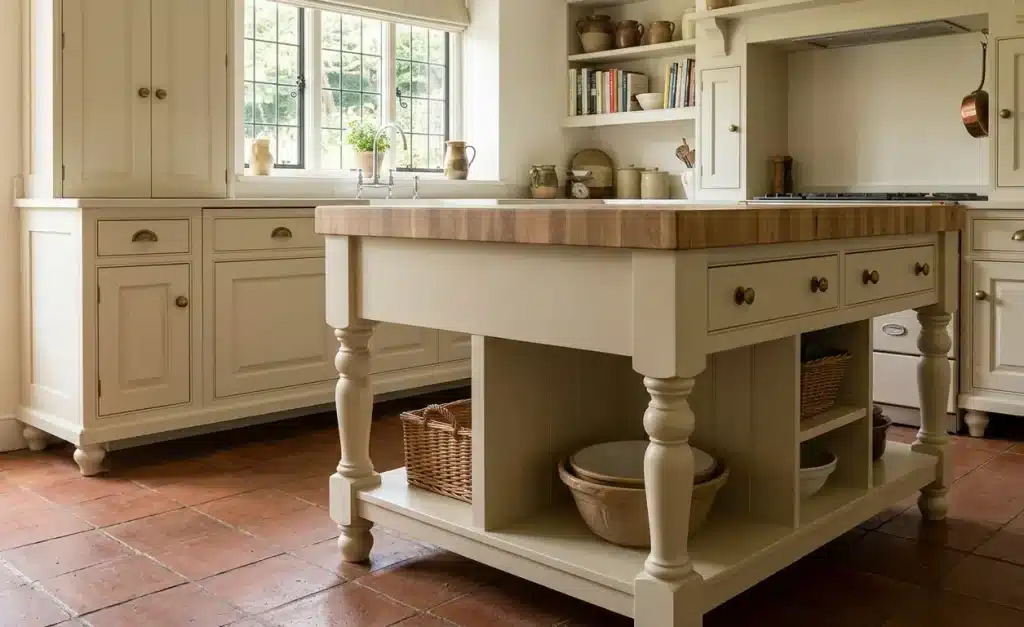
A note on Shaker. Shaker cabinets are the most common door style in American kitchens, and they’re an authentically American design. The five-piece door with a recessed center panel came out of the 19th-century Shaker religious communities, so it isn’t French. It’s still a reasonable choice: the style is simple enough to work with almost any kitchen aesthetic. If you want it to read as French country, use a cream or soft gray paint, add furniture details like feet and a decorative toe-kick, and choose aged brass hardware. If you want a more authentic French look, choose raised-panel doors instead.
4. Let the Hardware Age
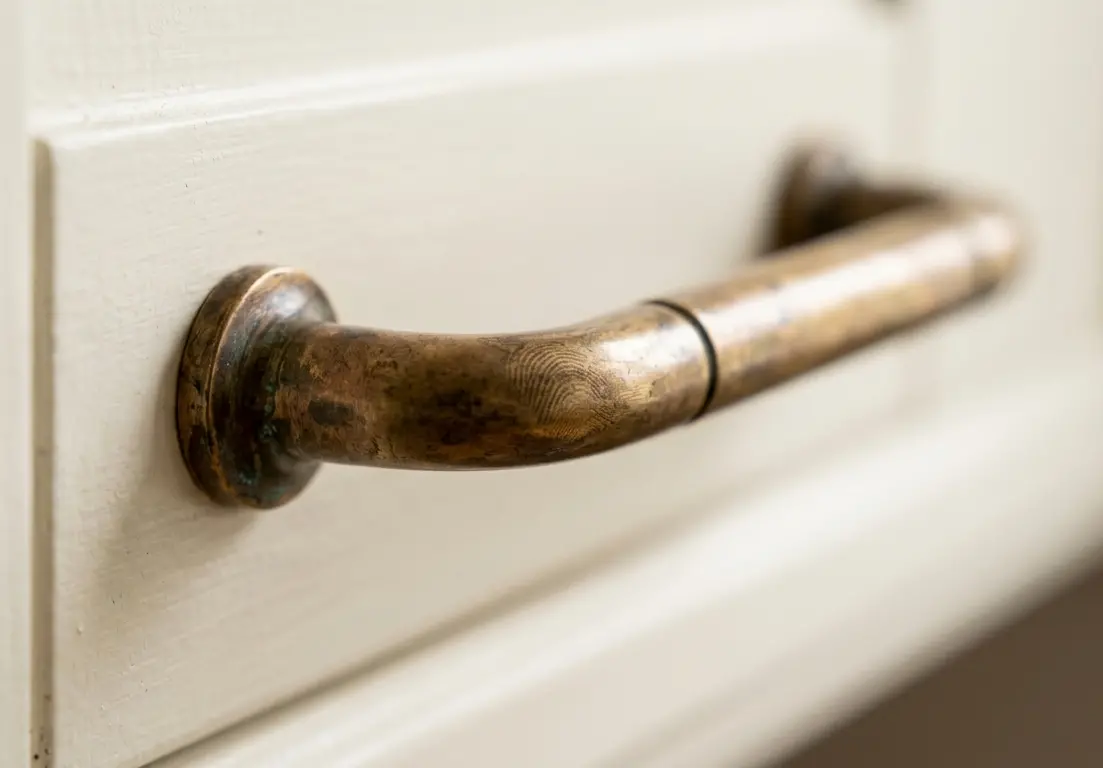
Unlacquered brass, bronze, and wrought iron develop a patina as they’re handled. That changing surface is the point. Skip lacquered “brass-look” finishes that will flake, and skip high-polish nickel, which reads as glossy and new rather than worn. If you like nickel, a brushed or aged finish fits better.
5. Consider an Apron-Front Sink, and Plan Carefully
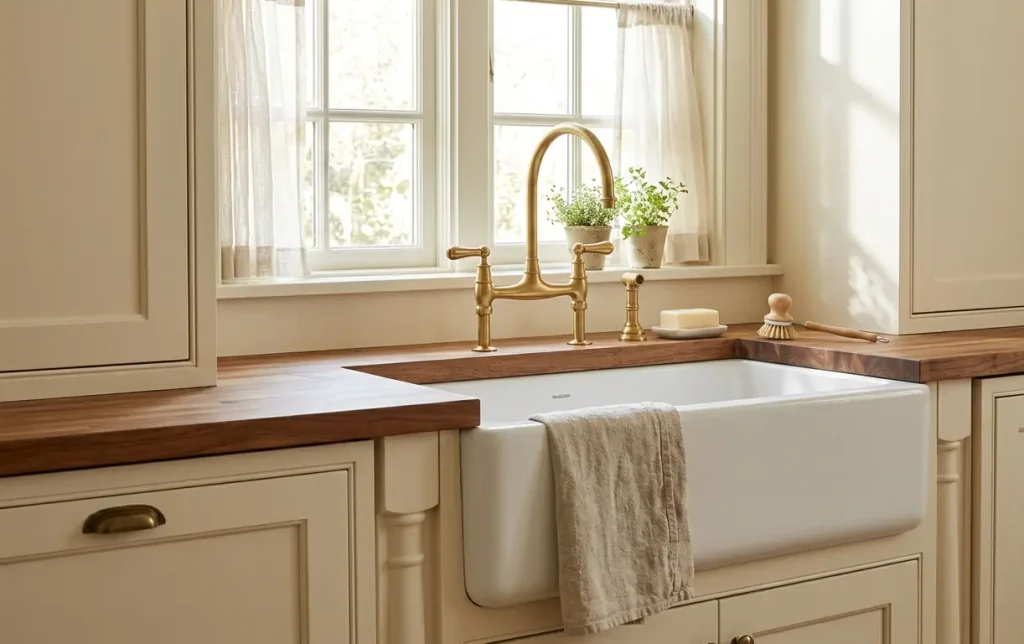
The apron-front sink is often called “French,” but it began in Britain and Ireland in the late 17th century as the Belfast and London sinks. Toward the end of the 19th century, French versions in white fireclay, often associated with Limoges clay, became popular. So it’s a natural fit for French country, but it’s an adopted element, not an original one.
In the U.S., the bigger issue is installation:
- Weight. Large fireclay and cast-iron sinks commonly weigh 100 to 200 pounds. Add water, dishes, and a disposal, and the base cabinet may carry double the sink’s shipping weight. Contractors typically reinforce the cabinet sides and front and add support cleats and a crosspiece.
- Cost. Fireclay and cast-iron models run roughly $700 to $2,000 and up.
- Fit. Handmade fireclay sinks vary slightly, so wait to cut the cabinet and counter until the sink is in hand. Thick walls (up to 2 inches in some models) can complicate a disposal, and the cabinet generally needs to be at least 24 inches deep to enclose the drain and disposal.
- Care. A mild cleanser is usually enough, but follow the manufacturer’s guidelines to protect the warranty.
6. Display Copper, but Know What You’re Hanging
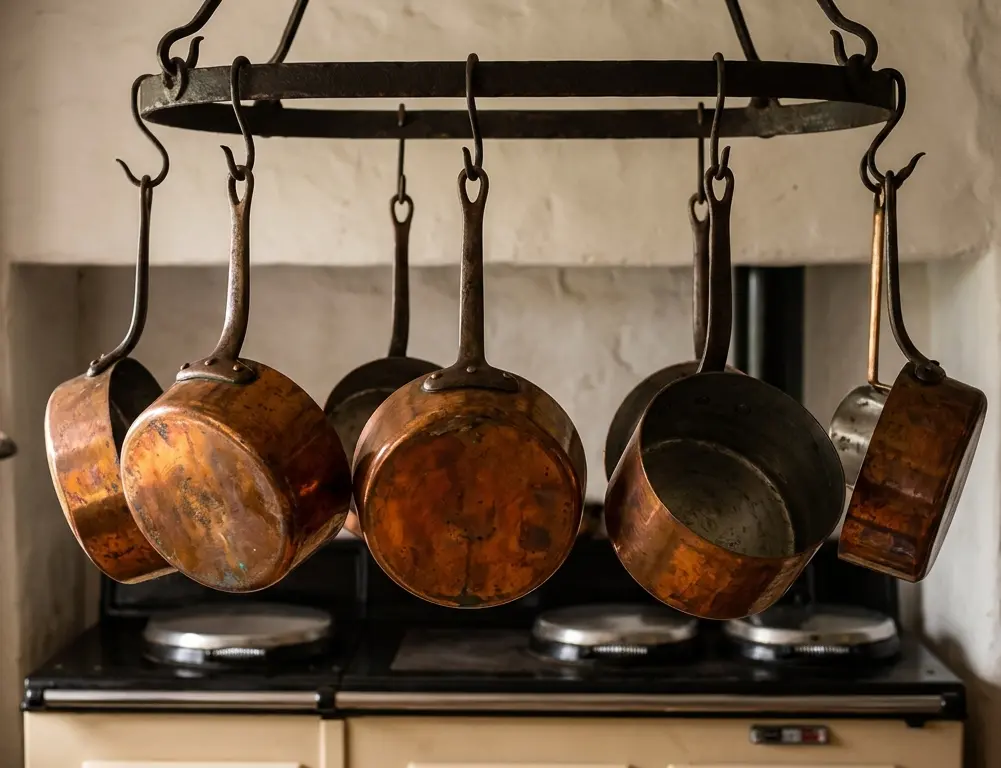
Copper cookware is central to the French kitchen image, and the town of Villedieu-les-Poêles in Normandy is its historic center. The Mauviel factory there has made cookware since 1830.
Before you buy vintage pieces, know two things:
- Lining. Copper reacts with acidic foods, so cookware meant for use is lined with tin. Tin wears down and must eventually be renewed by a retinner, and unlined copper shouldn’t be used for cooking. If a piece is purely decorative, a worn lining doesn’t matter.
- Retinning in the U.S. The craft is rare, but services exist, including East Coast Tinning in Rhode Island, which takes shipments from around the country. One blogger reported about $280 for four pieces including shipping, but that’s a single anecdote and prices vary with size, so request a quote first.
Exterior copper tarnishes. Decide up front whether you’ll polish it or let it darken.
7. Use Natural Light and Soft Window Treatments
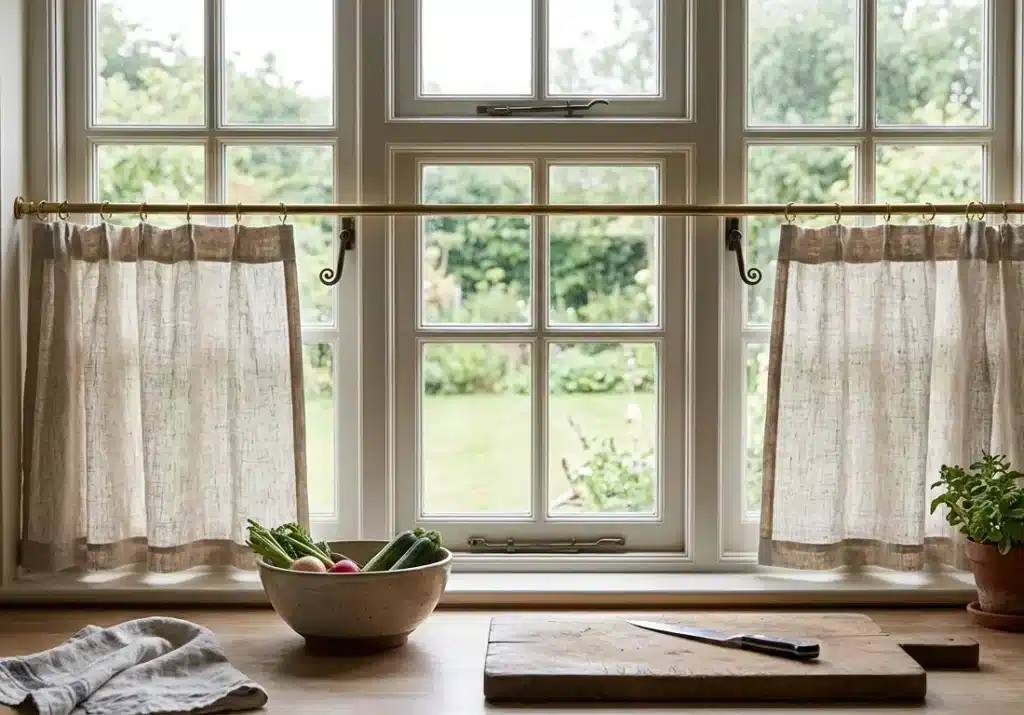
Multi-pane or casement windows and simple linen cafe curtains or woven shades let in light while softening it. Arched windows are a nice touch, but they aren’t a requirement of the style.
8. Mix Open Shelving With Closed Storage
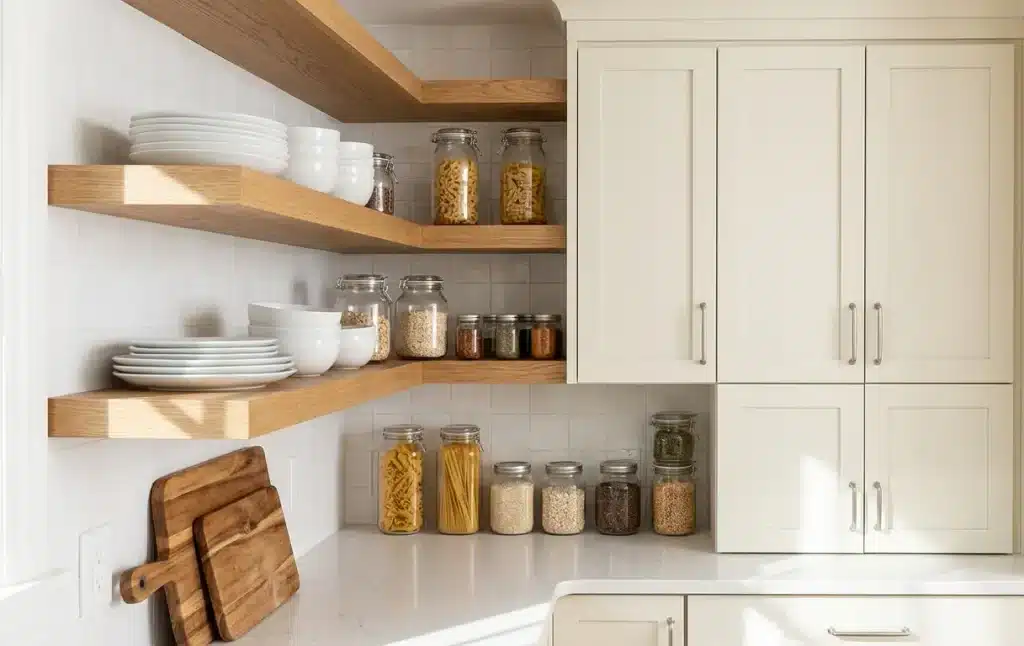
Open shelves work best with things you actually use, like stoneware, jars, cutting boards, and everyday dishes. Keep them away from the range, where grease will coat them. Store the rest behind doors so the kitchen stays calm.
9. Build a Statement Hood, and Check Your Code
A plaster, stone, or wood-clad hood turns the range wall into an architectural feature. The decorative shell is only half the job, though. The fan inside still has to clear grease and steam, and in the U.S. a powerful one can trigger a building-code requirement.
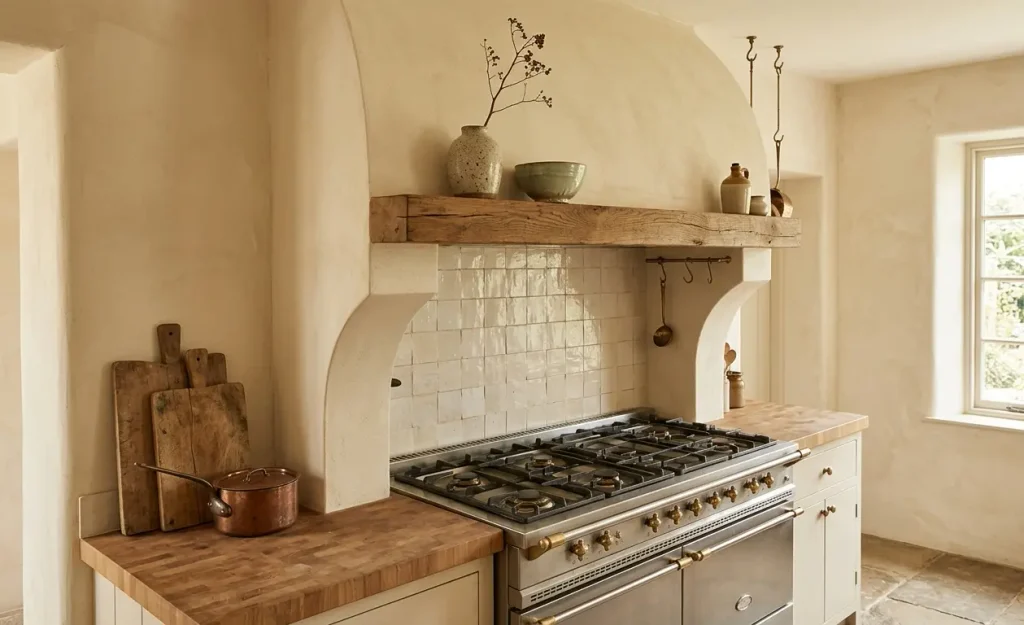
The short version
- The 400 cfm line. Cfm measures how much air a fan moves. Since 2009, the International Residential Code has required makeup air (fresh outdoor air that replaces what the fan exhausts) for kitchen fans above 400 cfm.
- The 2018 change. The rule was later narrowed to homes that also have atmospherically vented combustion equipment, such as a natural-draft water heater or furnace, which the fan could backdraft.
- Who’s likely exempt. An all-electric house, or one with only sealed-combustion equipment, is not subject to the requirement.
- Easy workaround. Many manufacturers sell hoods rated just under 400 cfm (often around 390), which is enough for most home ranges.
Quick check before you order
- Do you have a gas range, a fireplace, or a gas water heater or furnace that vents through a flue? If so, a hood over 400 cfm probably needs makeup air.
- Is your home all-electric or sealed-combustion? You may be exempt, but confirm.
- Not sure? Ask your local building department or HVAC contractor. Codes are adopted and amended locally, so your area may differ from the model code.
Design tip: A decorative plaster or wood shell can hide a standard insert, so you can choose the look and the fan rating separately. Pick the insert first, then design the shell around it.
10. Layer Lighting and Textiles
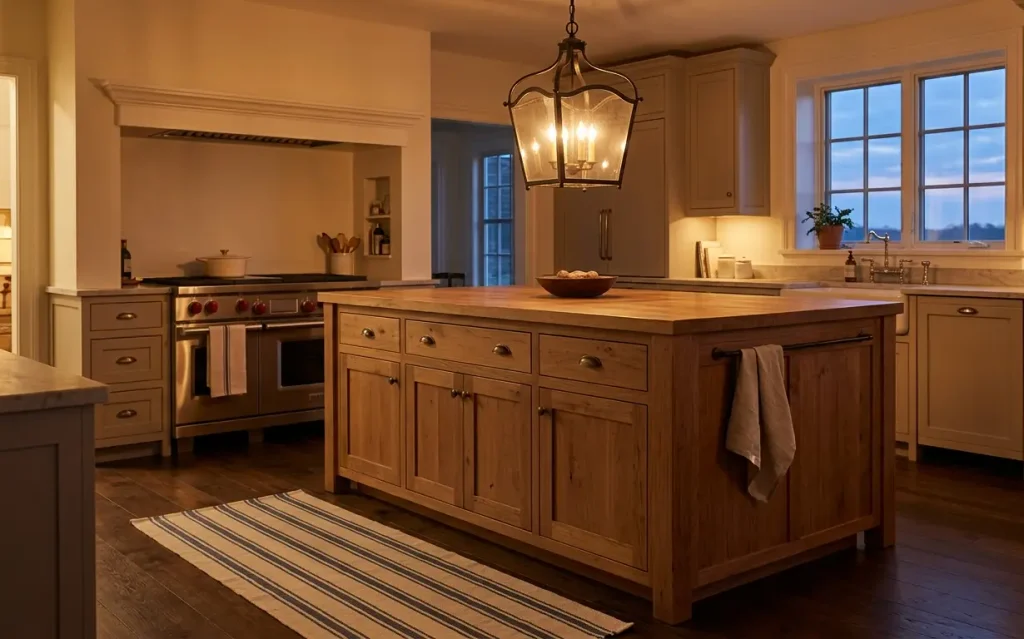
Wrought-iron chandeliers, lantern-style sconces, linen towels, and runners soften hard stone and wood surfaces. Mix ambient, task, and accent lighting rather than relying on one fixture.
French Country Ideas for Small Kitchens
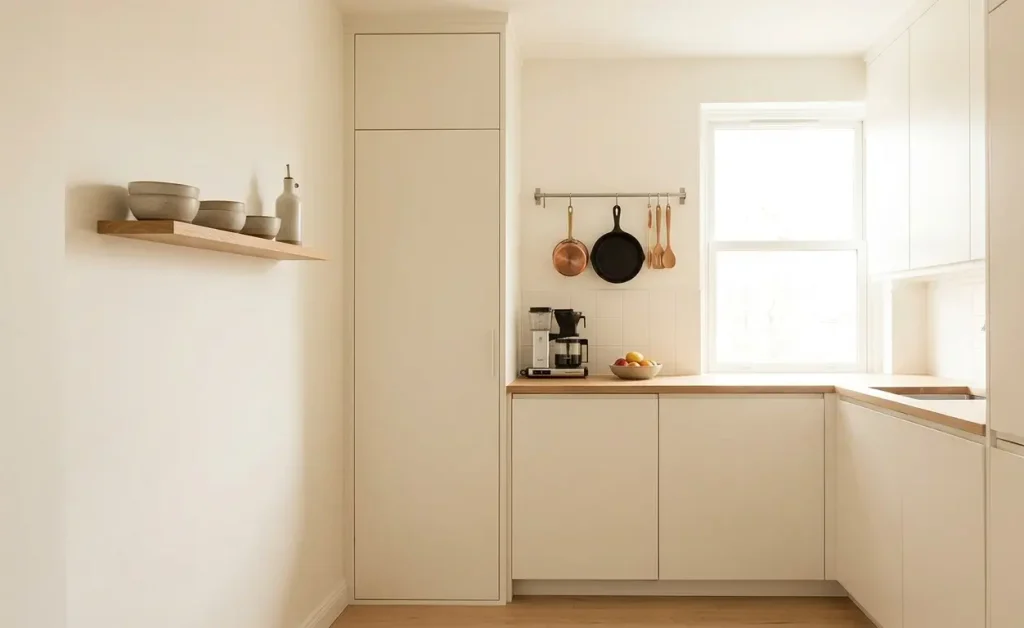
- Keep walls and cabinets in one light, warm tone to expand the space visually.
- Limit open shelving to a single section.
- Use tall, narrow pantry cabinets or a wall-mounted pot rail for vertical storage.
- Panel-ready appliances keep modern machines from breaking the look.
Getting the Look on a Budget
- Paint the cabinets. Cream, sage, or a soft gray change the room more than almost anything else.
- Swap the hardware. Vintage-style brass or bronze knobs and pulls.
- Shop secondhand. Flea markets and thrift stores for stoneware crocks, wooden boards, and copper (check the lining if you plan to cook).
- Change the light fixtures. An iron lantern or glass pendant in place of a flush mount.
FAQ
What colors work best? Warm neutrals such as cream, beige, and greige, with sage, dusty blue, ochre, and terracotta as accents.
How is French country different from farmhouse? Farmhouse tends toward simple lines and strong contrast, often black and white. French country uses softer curves, warmer colors, and more European detail.
Do I need custom cabinetry? No. Painted stock cabinets with better hardware and a furniture-style island get you most of the way.
Is copper cookware safe to use? Only if it’s lined, usually with tin, and the lining is intact. Don’t cook acidic foods in bare copper.
Sources: Shaker origins (Wikipedia, SemiHandmade); apron sinks (Houzz, Native Trails, Kraus, This Old House, Journal of Light Construction); copper and tin lining (Vintage French Copper, Borough Kitchen, The Peak, Copper Development Association); tomettes (Wikipedia, Marc Maison); makeup air (JLC, Proline).