
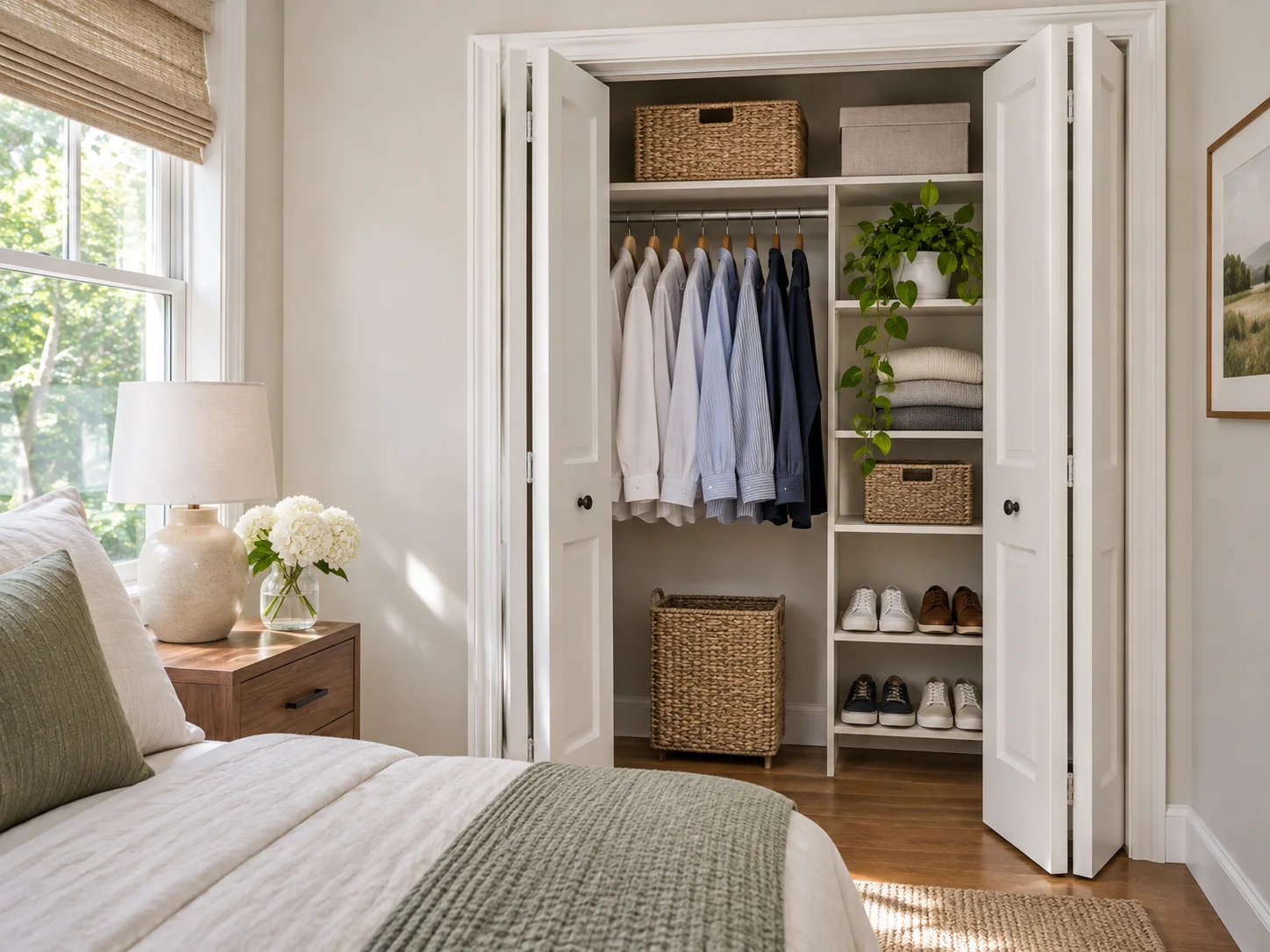
If your closet door hits the bed or blocks the walkway, a different opening style can make mornings less awkward. The best small closet door ideas leave room to stand, let you reach what you need, and suit the rest of the bedroom. Start with the problem you want to solve, then use these 11 ideas to narrow your choices.
Which Closet Door Works Best in a Small Space?
Think about two spaces: the floor in front of the closet and the opening you can actually reach through.
| Your room or routine | Consider | Check first |
|---|---|---|
| The bed is close to the closet | Sliding doors or curtains | Room to stand and reach inside |
| You want to see most of your clothes at once | Bifold doors | Space for the folded panels |
| The opening is very narrow | A curtain or small hinged door | How much usable access remains |
| You need a full-length mirror | Mirrored sliding doors | What the mirror will reflect |
| The wall beside the closet is empty | A barn-style sliding door | Space for the entire panel to slide aside |
| You are remodeling the bedroom | A pocket door | Whether the adjacent wall can accommodate it |
11 Small Closet Door Ideas for Tight Bedrooms
1. Bifold Doors for Easier Access
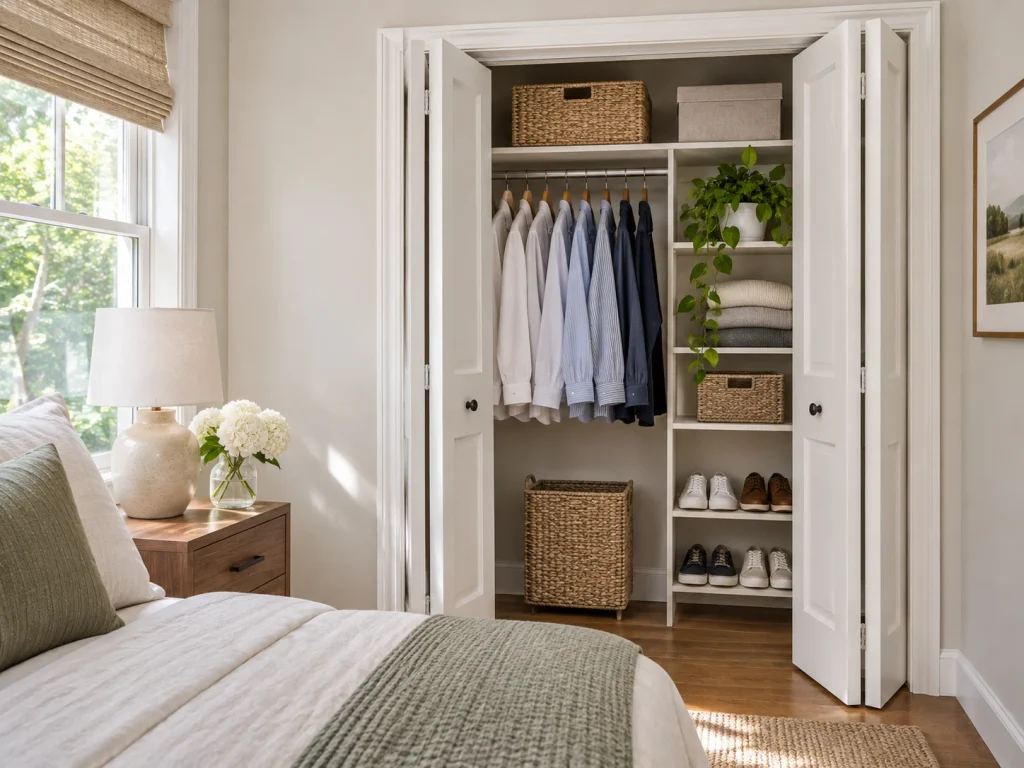
If you like seeing shirts, shoes, and shelves at the same time, bifold doors are a useful starting point. The panels fold in pairs, opening up more of the closet than a typical two-panel sliding setup.
Leave room for the folded panels at the sides and in front. They can still catch a nearby nightstand or overlap the edge of an interior drawer.
If you’re leaning toward this style, the bifold door guide explains common sizes, folding clearance, and what to check before choosing a set.
2. Sliding Doors That Keep the Walkway Clear
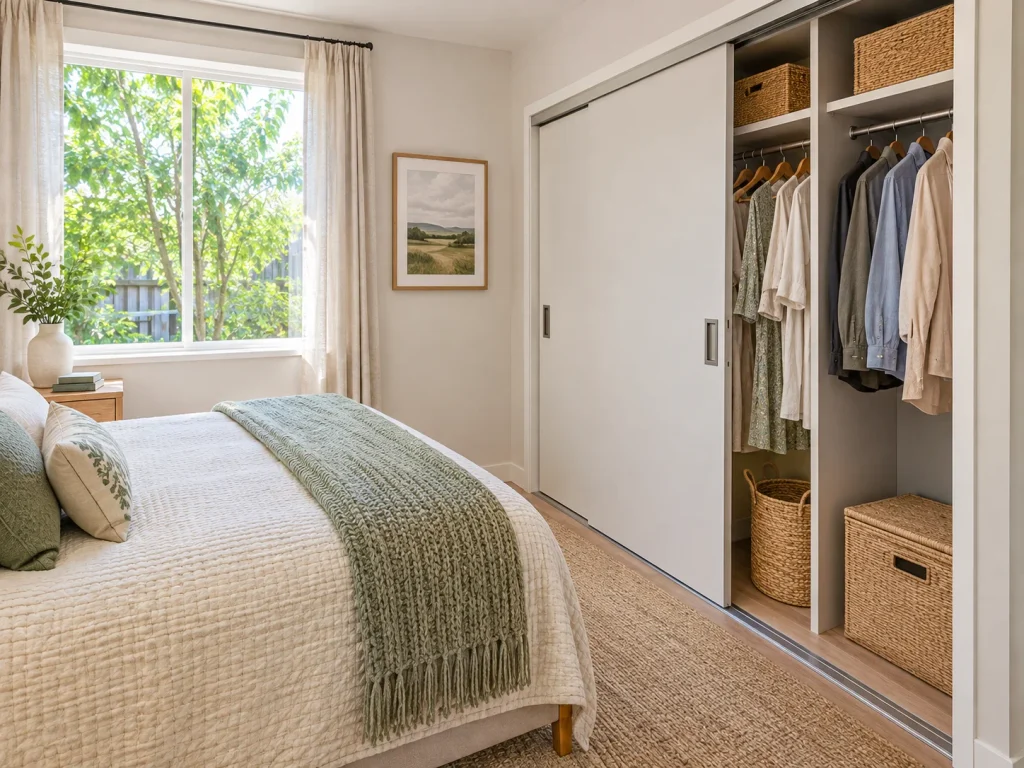
When the foot of the bed sits near the closet, sliding doors keep the panels out of that narrow walkway. In a typical two-panel sliding setup, one door slides past the other, so you access one side at a time.
This arrangement suits hanging clothes divided between the two sides. A wide drawer near the center may remain blocked by the overlapping panels.
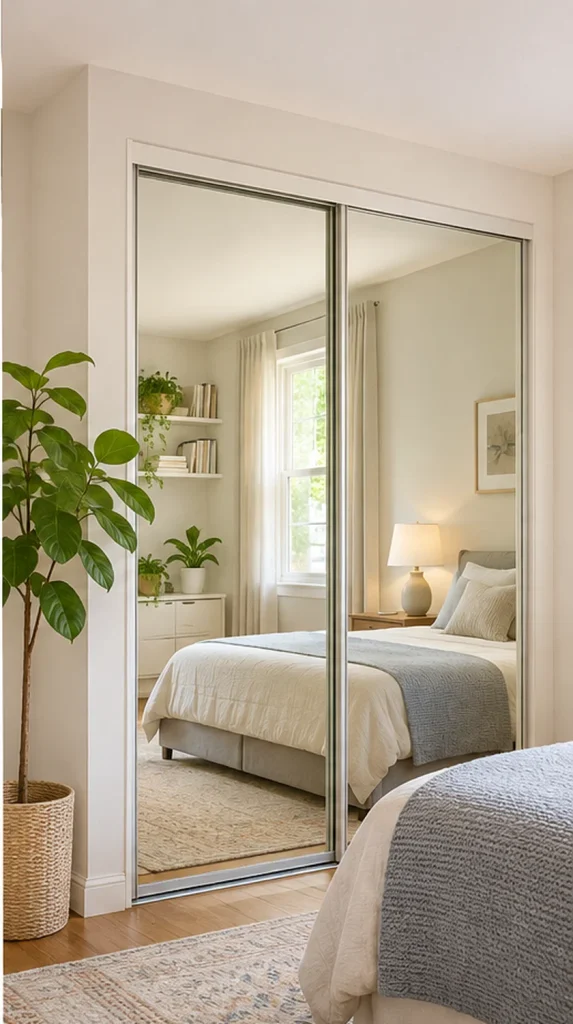
3. Mirrored Doors That Give the Room More Depth
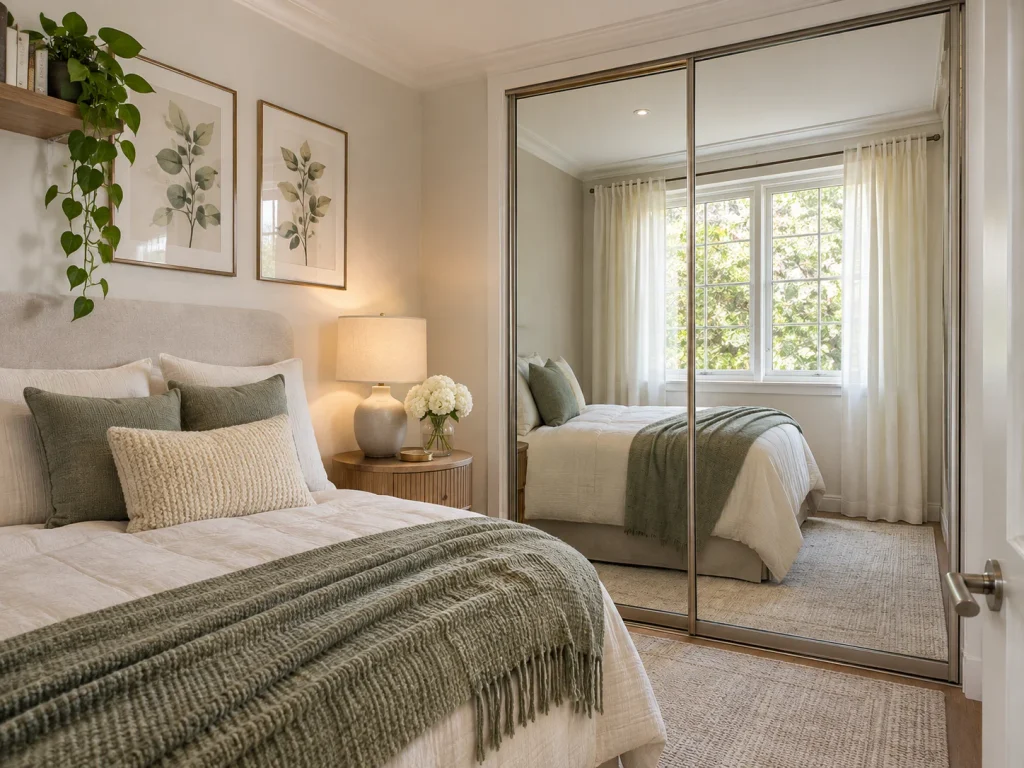
A mirrored door gives you a place to check an outfit without using another wall. It can also make a small bedroom feel more open.
Look at the reflection from the bed and doorway. A window or an uncluttered wall may be pleasant; an overflowing laundry basket probably won’t be. Choose a sliding version if you also need to keep the floor in front clear.
4. Accordion Doors Where Swing Space Is Limited
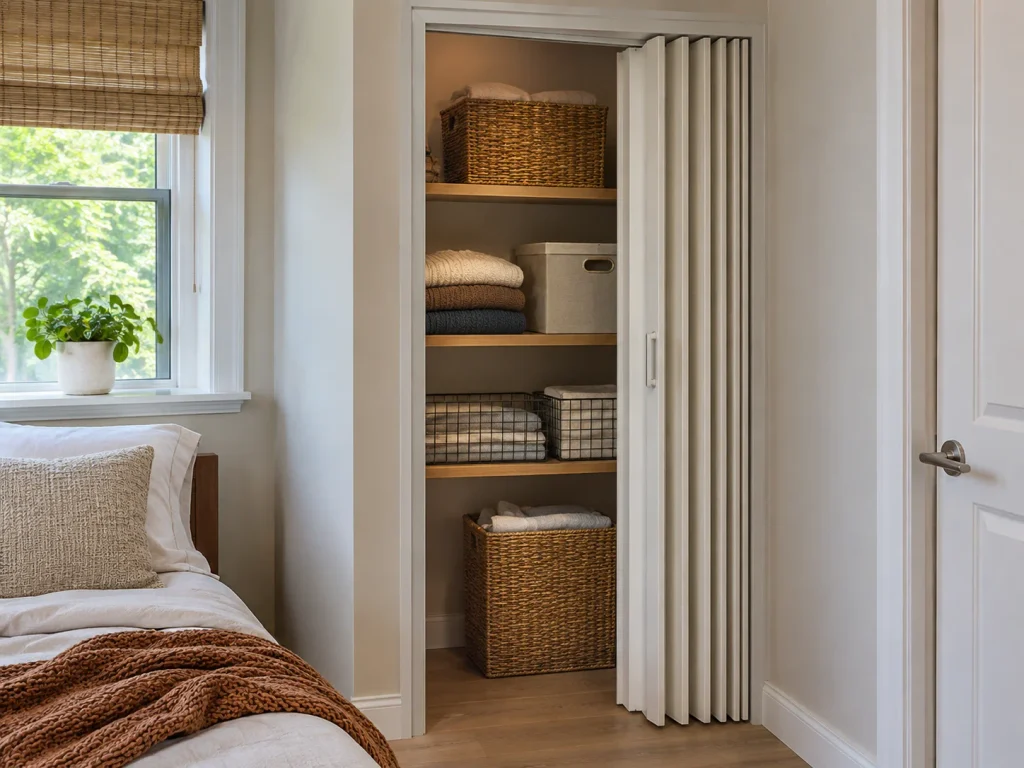
An accordion door has narrow sections that gather at one side. Consider it when a hinged door has nowhere to swing.
Check the manufacturer’s folded width first. The stack occupies part of the opening, so it isn’t automatically the best choice for a very narrow closet. Make sure you can still bring out your largest basket or storage bin.
5. Closet Curtains for a Softer Look
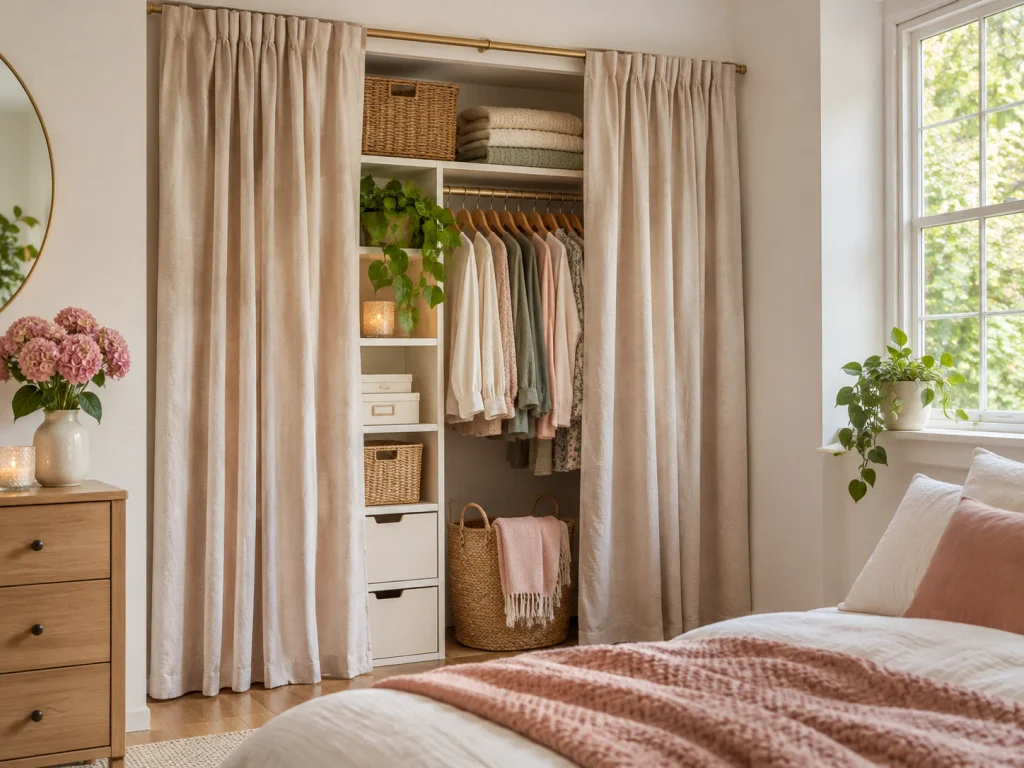
Curtains bring a little softness to a bedroom filled with hard furniture edges. Choose opaque fabric if you want the shelves hidden, and keep the hem just above the floor.
Two panels let you open the closet from the middle. Leave somewhere for the fabric to gather when pulled aside, and choose a washable material if the curtain will brush against shoes or laundry baskets.
6. Pocket Doors for a Bedroom Remodel
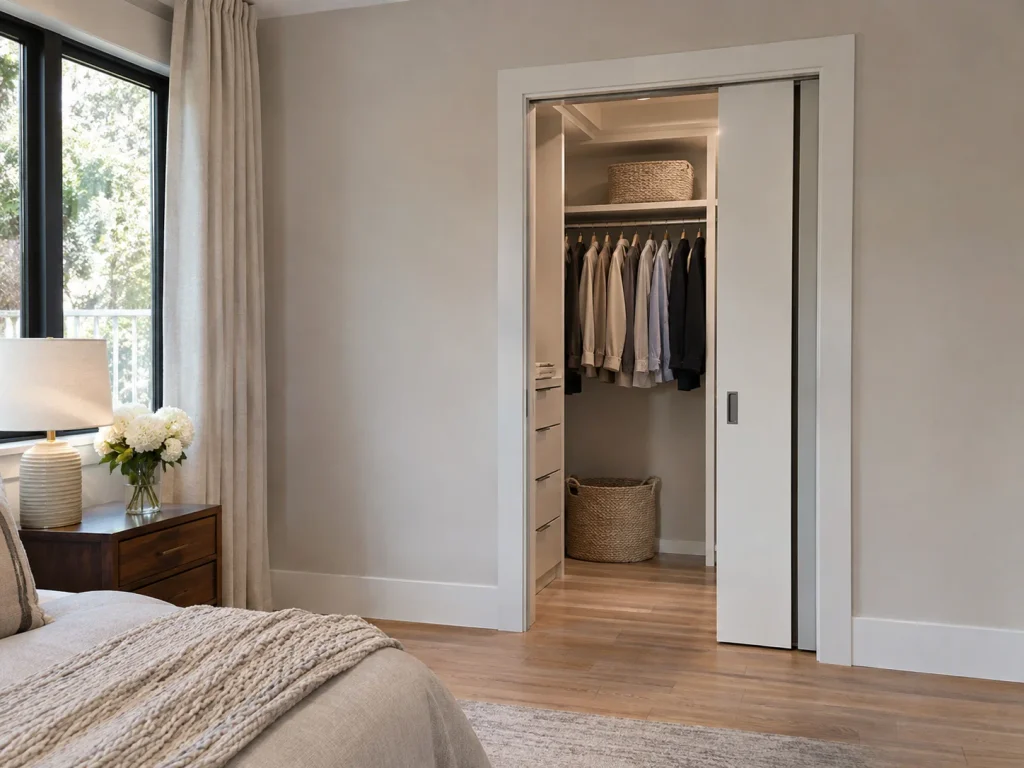
Pocket doors slide into the wall, leaving the area in front of the closet free of swinging or folded panels.
They make more sense during a remodel than as a quick door swap. Adding one usually involves opening the wall beside the closet and creating space inside it. Check whether that wall can accommodate the door before planning the room around this option.
7. A Barn-Style Door Along an Empty Wall
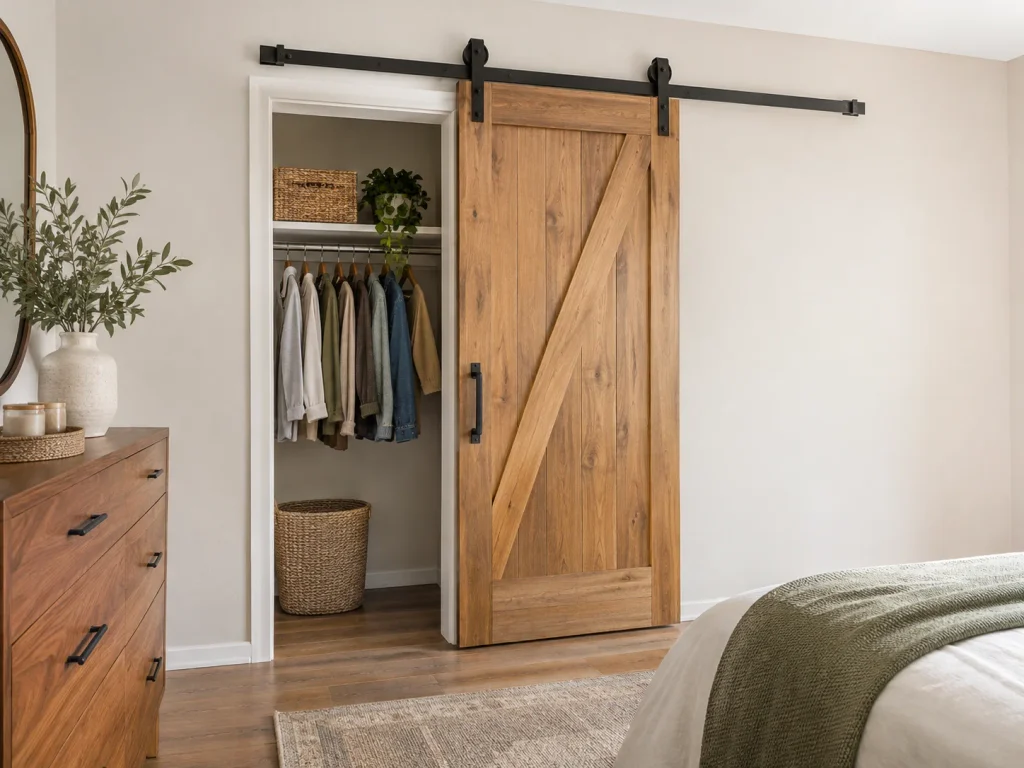
An empty stretch of wall beside the closet gives a barn-style door somewhere to go. The panel needs enough room to slide completely open, without covering a light switch or running into a dresser. A wall lamp or tall mirror in that path may also make this option awkward.
8. A Single Door for a Tiny Closet
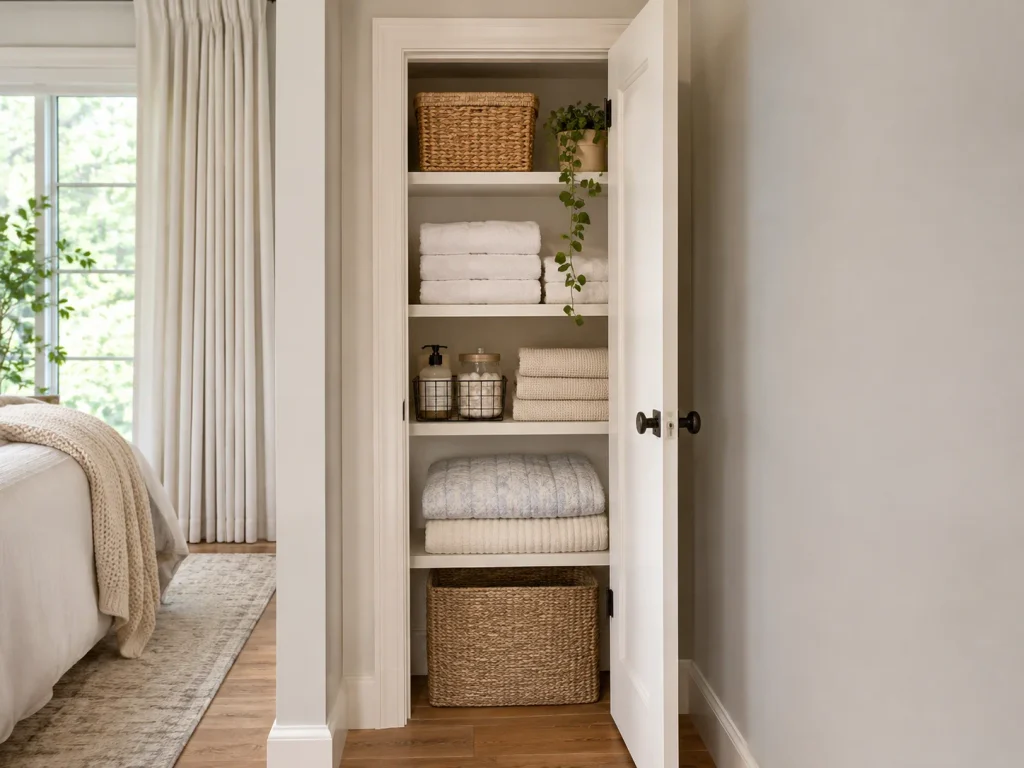
For a small linen closet or shallow storage cupboard, an ordinary hinged door may be all you need. It keeps the front simple and lets you open the closet in one motion.
Check where it rests when fully open. A door that opens toward an unused wall can work well; one that blocks the bedroom entrance will soon become annoying.
9. Double Doors With Narrower Panels
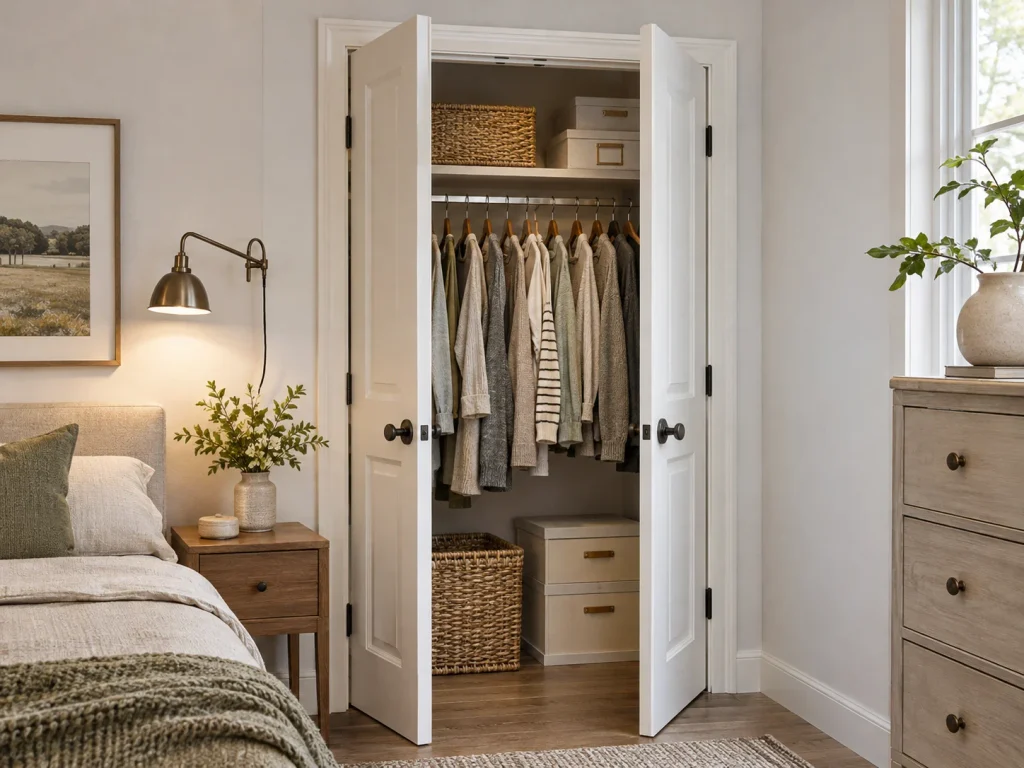
A pair of narrow hinged doors gives a closet a cabinet-like appearance. Each panel needs less swing space than one wide door across the same opening.
Both sides still need room to open. Check the shelves near the outer edges, especially if a bed or dresser sits beside one panel.
10. Frosted Glass for a Soft, Muted Finish
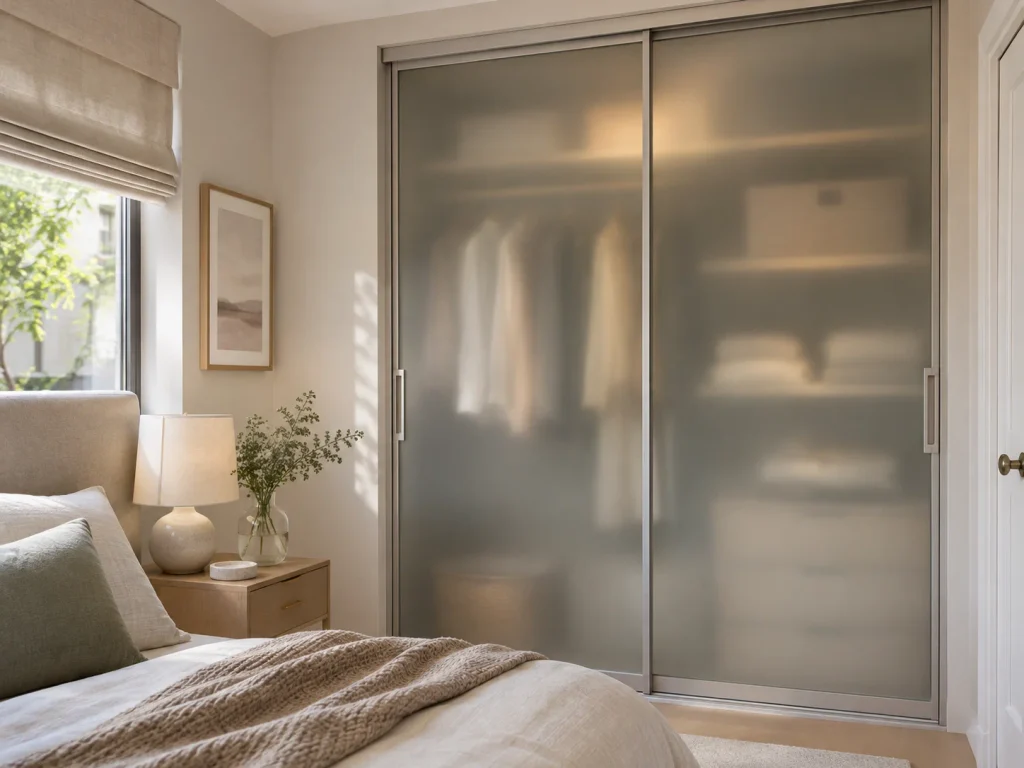
Frosted glass offers another look if you don’t want a solid painted panel or a full mirror. It blurs the contents, although shapes may remain visible, particularly with a light on inside the closet.
Choose the opening style separately. A frosted sliding door keeps the walkway clear; a frosted hinged door still needs swing space.
11. An Open Closet for Everyday Clothes

Look at your closet on an ordinary laundry day. If you like seeing your clothes, removing the doors gives you direct access and makes the storage part of the room. Matching hangers and a few baskets can help the view feel calmer.
If the shelves tend to collect loose items, curtains may be easier to live with.
Example: Choosing a Closet Door When the Bed Is Close
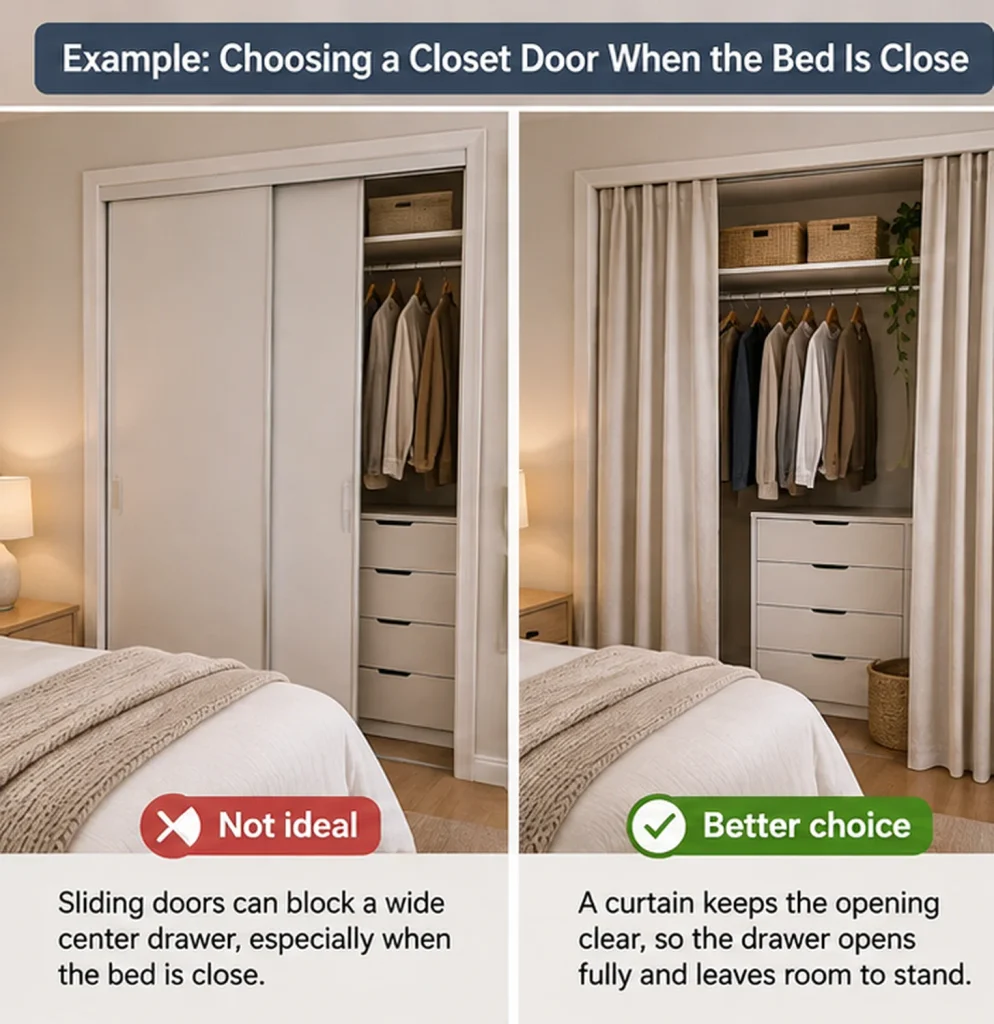
Imagine a bedroom where the bed sits close to the closet and a wide drawer is centered inside. With the opening clear, the drawer opens fully and leaves room to stand.
Sliding doors seem sensible until you compare the full drawer width with the opening left by the panels. If the drawer stays blocked no matter which side you slide the doors toward, that setup won’t work. Bifolds would reveal more of the closet, but their folded panels crowd the gap beside the bed.
Here, a curtain that gathers clear of the opening is a practical choice. If you prefer solid doors, see whether the drawer unit can move to one side, then repeat the access check before choosing sliding doors.
How to Measure Before Choosing a Door
Look at each style fully open as well as closed. Then use a tape measure and a quick sketch to check these four things.
- Measure the existing opening. Record the width at the top, middle, and bottom, and the height at the left, center, and right. Measure from the finished floor, including carpet.
- Check the room in front. Measure to the nearest bed, dresser, or other obstacle. Include handles and any rug the door would pass over.
- Check the space beside the closet. For a barn-style door, measure where the whole panel would sit when open. For a pocket door, an empty wall surface alone doesn’t tell you whether there’s room inside.
- Test access to your belongings. Pull out each drawer, remove a storage bin, and reach the far shelves. Allow for the position of the new door panels.
For a hinged door, mark its proposed swing on the floor with painter’s tape. Walk around it while carrying a laundry basket.
Use these as planning measurements, then follow the selected door’s sizing instructions. The opening size and the actual panel size aren’t always the same.
Simple Ways to Make Closet Doors Look Better
- Match the wall color. On doors that can be painted, a similar shade helps the closet blend into the room.
- Keep the detail simple. A few vertical panels can draw the eye upward without covering the door in decoration.
- Choose easy-to-grip handles. Check that they won’t catch nearby furniture or stop sliding panels from passing each other.
- Clear the surrounding floor. Moving a hamper or shoe pile may improve both the view and everyday access.
Frequently Asked Questions
What Type of Closet Door Takes Up the Least Space?
Pocket doors avoid a swing and hide inside the wall. Standard sliding doors also avoid a swing, but part of the opening stays covered. Curtains are another option, with gathered fabric taking space at the sides.
Are Bifold or Sliding Doors Better for Small Closets?
Choose sliding doors when space in front is the main problem. Consider bifolds when you want to see more of the closet at once and have room for the panels to fold outward.
What Can I Use Instead of Closet Doors?
Curtains or an open closet are the simplest alternatives to consider. A freestanding screen can hide the contents, but it uses floor space and may need moving whenever you reach inside.
Choose a Door That Works With Your Routine
Picture opening the closet, taking out clothes, and putting laundry away. Choose a door that lets you do those things comfortably with your furniture in place. Once the movement works, pick the color and finish you enjoy seeing from the bed.


1 thought on “Small Closet Door Ideas: 11 Options for Tight Bedrooms”
Comments are closed.