

Few architectural elements connect a home to its outdoor spaces as well as modern exterior French doors. Historically, French doors were used to bring daylight deep into a room. Today’s versions pair thin frame profiles with energy-efficient glass and durable factory finishes.
Whether you are replacing an old sliding patio door or planning a new build, this guide covers popular styles, frame materials, performance ratings, and realistic budgeting.
Why Modern French Doors Are So Popular
Traditional French doors often used wide wooden stiles and many small glass panes. Modern exterior French doors favor clean lines, slimmer frames, and larger glass areas. Homeowners often choose them over sliders or solid doors for three reasons:
- Indoor-outdoor flow: Double doors open wide to connect a living room, kitchen, or dining area to a deck, patio, or garden.
- More natural light: Large glass panels bring daylight deeper into the floor plan.
- Design flexibility: The style suits transitional, modern farmhouse, Scandinavian, and contemporary homes.
Modern Black French Doors Exterior: Design Ideas and Materials
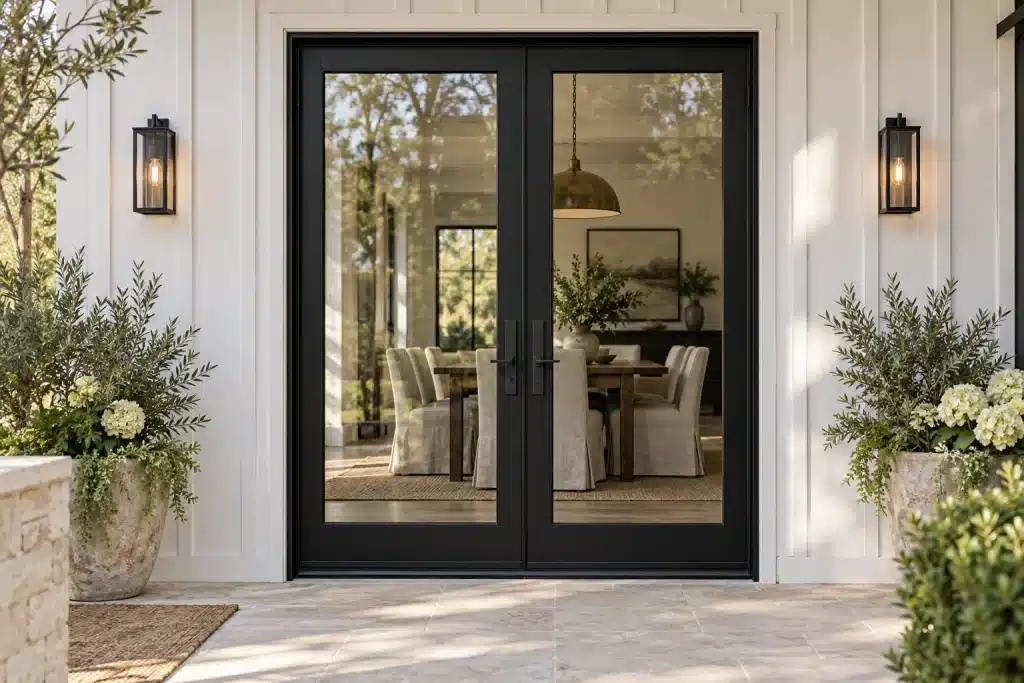
Black-framed French doors are one of the most visible trends in contemporary residential design. A dark, thin frame outlines the view like a picture frame and adds definition to the facade.
Visual Impact
Black frames contrast well with white siding, smooth stucco, red brick, and natural stone. The slim profile gives an industrial-inspired look while keeping the familiar two-door, hinged operation.
Material Options for Black Frames
- Powder-coated aluminum: Smooth finish, good corrosion resistance, and relatively light weight.
- Thermally broken steel: Very thin sightlines and high structural rigidity.
- Aluminum-clad wood: A dark, weather-resistant exterior shell with warm timber on the interior.
- Fiberglass or vinyl in dark colors: Available from some manufacturers, but see the warranty note below.
Before You Choose a Dark Color
- Heat absorption: Dark surfaces absorb more solar heat than light ones. In hot, sunny locations with direct sun on the door, this matters more for vinyl and fiberglass than for metal.
- Warranty limits: Some manufacturers restrict dark colors on vinyl or fiberglass frames, or limit warranty coverage for them. Check the written warranty before you order.
- Long-term appearance: Factory powder coatings resist fading and moisture well, but results depend on UV exposure, local weather, frame material, and routine cleaning.
Practical Design Scenarios
Scenario 1: Tight Patio Swing Space
On a small patio or narrow deck, door clearance is a real concern.
- Inswing: Keeps the patio free of obstructions, which helps if furniture sits near the doorway. It needs clear floor space inside.
- Outswing: Saves interior floor space. Hinges sit on the exterior side, so choose security hinges or hinge studs. Check how the door will work with any screen or storm door, and make sure the swing doesn’t block a walkway.

Scenario 2: Black Frames on White Walls
Black-framed doors against white board-and-batten or stucco create a strong focal point. For a cohesive look, repeat the color in exterior light fixtures, gutters, or window trim.
Scenario 3: Light and Privacy Near Neighbors
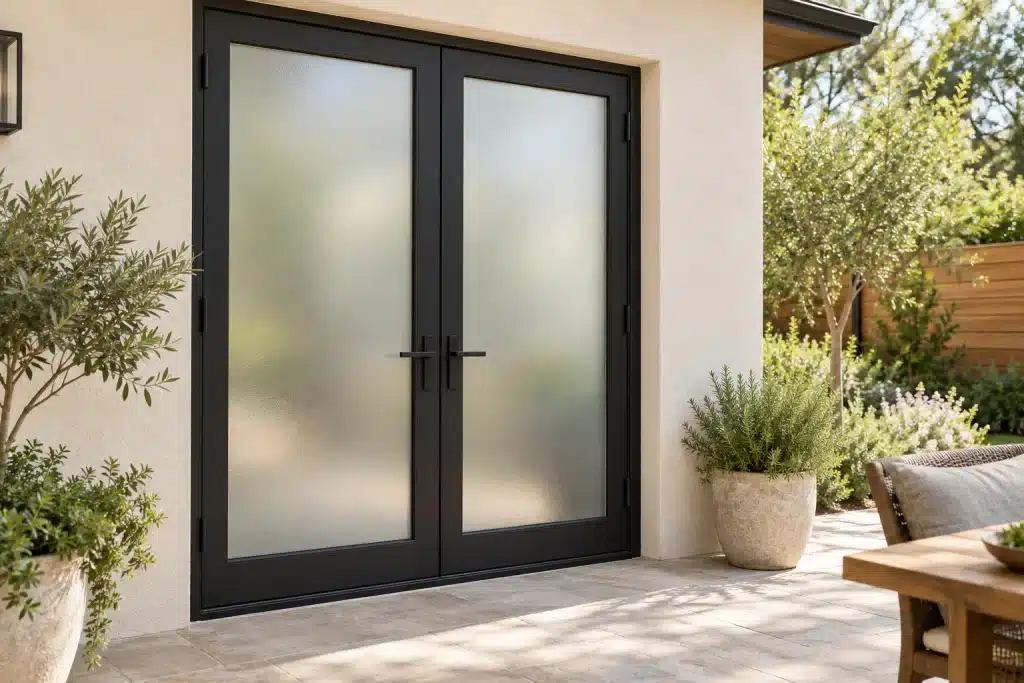
For doors that face close neighbors or an alley, frosted or obscure glass with a climate-appropriate Low-E coating keeps daylight while limiting sightlines into living areas. Blinds sealed between the glass panes are a low-maintenance alternative.
Top Design Styles
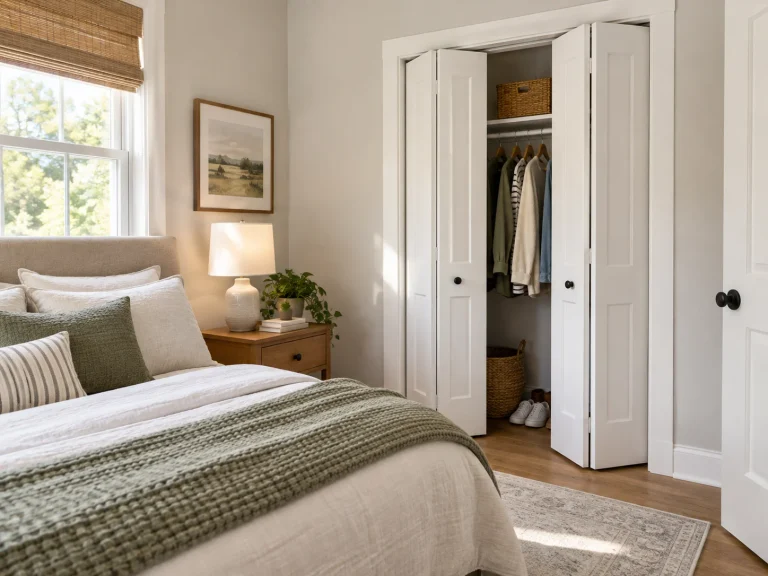
French-style double doors aren’t limited to exterior entrances. For interior closets, you can achieve a similar hinged-door look by reusing existing bifold panels. Our guide on how to convert bifold doors to French doors explains the measurements, hinge options, and installation process.
Full-Lite Glass Doors
One continuous sheet of glass in a minimal frame. This maximizes glass area and gives the clearest view of a yard, pool, or landscape.
Simulated Divided Lites (SDL) vs. True Divided Lites (TDL)
Grids, also called mullions or muntins, add structure to glass panels. Modern designs usually use simple 4-pane, 6-pane, or horizontal ladder patterns.
- SDL: Grid bars are applied to the interior and exterior of one insulated glass unit. This gives the look of separate panes while keeping a single sealed unit. Actual thermal performance depends on the product’s construction and ratings.
- TDL: Separate glass panes are divided by real muntin bars. This is the traditional approach, but it has more seams, so it needs more careful weatherproofing and upkeep.
Frame Material Comparison
Judge frame materials by climate suitability, structural strength, and tested performance ratings, not by material type alone.
| Material | Look | Maintenance | What to check |
|---|---|---|---|
| Aluminum | Sleek, thin profiles | Wash periodically with mild soap | Choose thermally broken frames to reduce heat transfer |
| Steel | Very slim sightlines | Inspect the factory coating for scratches | Ask about thermal break specifications and total unit weight |
| Clad wood | Natural wood interior | Inspect exterior perimeter sealant each year | Verify cladding thickness and finish quality |
| Fiberglass | Versatile, composite finish | Relatively low maintenance; periodic cleaning and sealant checks | Compare core insulation and frame rigidity; confirm color warranty |
| Vinyl | Budget-friendly, limited profiles | Low maintenance; periodic cleaning | Check frame reinforcement and dark-color availability and warranty |
Pricing, Installation, and Budgeting
Separate the price of the door unit from the total project cost. Prices vary widely by region, material, glass package, door size, and the structural work required.
Rough Planning Ranges (US)
For French doors in general, HomeAdvisor’s cost guide puts installation at about $2,000 to $5,000, with an average near $3,500. It lists exterior French doors at roughly $1,000 to $4,000, and says premium installations with custom dimensions or high-end materials may reach $6,000 or higher.
The same guide gives these ranges by frame material:
- Vinyl: $500 to $2,000
- Fiberglass: $800 to $5,000
- Aluminum: $650 to $3,000
- Steel: $650 to $4,000
- Clad wood: $2,500 to $5,500
Large, thin-profile, thermally broken metal systems in modern black finishes often cost more than typical stock doors and are usually quoted per project, so treat these ranges as a starting point. HomeAdvisor lists labor at about $140 to $600, but changes to framing, headers, flashing, or exterior trim can add to that.
These are rough planning estimates, not verified national averages. Your actual quote will depend on size, location, glass options, and scope of work.
Budget tip: Ask for an itemized quote that lists the manufacturer’s unit price separately from labor, disposal, and flashing.
Permits and Local Codes
Glass in doors generally must be safety glazing (tempered or laminated). Under the International Residential Code, glazing in swinging, sliding, and bifold doors is treated as a hazardous location, and local rules vary by jurisdiction. Some projects also need a permit, especially when you change the opening size or a structural header. Check with your city or county, and ask your installer who handles permits.
Key Performance Factors
Instead of relying on general claims about a material, compare standardized ratings and test results.
Thermal Efficiency: U-Factor and SHGC
According to the U.S. Department of Energy, the lower the U-factor, the more energy-efficient a window, door, or skylight is, and the lower the SHGC, the less solar heat it transmits. Look for the label from the National Fenestration Rating Council (NFRC), the independent certification body whose label lists these ratings so you can compare products. ENERGY STAR certification adds requirements for your climate zone, and for doors the criteria depend on how much glass the door has.
- U-factor: Measures how well a door assembly keeps heat from escaping. Lower is better, especially in cold climates.
- Solar Heat Gain Coefficient (SHGC): Measures how much solar radiation passes through the glass. Lower values block more solar heat, which suits hot, sunny climates.
- Glass: Look for double- or triple-pane units with argon fill and Low-E coatings matched to your climate zone.
Wind and Water Resistance
Don’t assume an outswing door handles wind better. Check the manufacturer’s Design Pressure (DP) and Performance Grade (PG) ratings, which come from the North American Fenestration Standard (NAFS). The Fenestration and Glazing Industry Alliance explains that PG means the product was tested to the applicable design pressure as well as the standard’s other requirements, so a DP number alone tells you less than a PG rating. This is separate from the NFRC energy label, so ask for both.
Security
Security comes from the whole assembly, not just a strong frame.
- Multi-point locks: Latch the door at several points along the jamb with one handle turn.
- Laminated glass: A plastic interlayer improves resistance to forced entry compared with standard glass.
- Proper installation: The frame must be anchored securely and installed square, without warping or gaps.
Interior French doors typically use a different hardware setup from exterior entry doors. If you’re upgrading a pair of room-to-room double doors, our guide on how to install interior French door handles explains active and dummy levers, backset measurements, and handle alignment.
Is a Modern French Exterior Door Right for You?
Choosing modern exterior French doors means balancing design, swing clearance, climate-appropriate ratings, and a realistic budget. A dark frame gives crisp contrast, suitable U-factor and SHGC ratings control comfort and energy use, and multi-point hardware improves security. Confirm warranty terms and local code requirements before you order, and get itemized quotes from more than one installer.
Sources
- U.S. Department of Energy: Energy Performance Ratings for Windows, Doors, and Skylights
- NFRC: National Fenestration Rating Council
- ENERGY STAR: Residential Windows, Doors & Skylights
- FGIA: Performance Class Overview (NAFS, DP and PG)
- Boulder County: Safety Glazing guidelines based on the 2021 IRC
- LawnStarter: French door cost guide



2 thoughts on “Modern French Doors Exterior: Styles, Materials, and Costs”
Comments are closed.