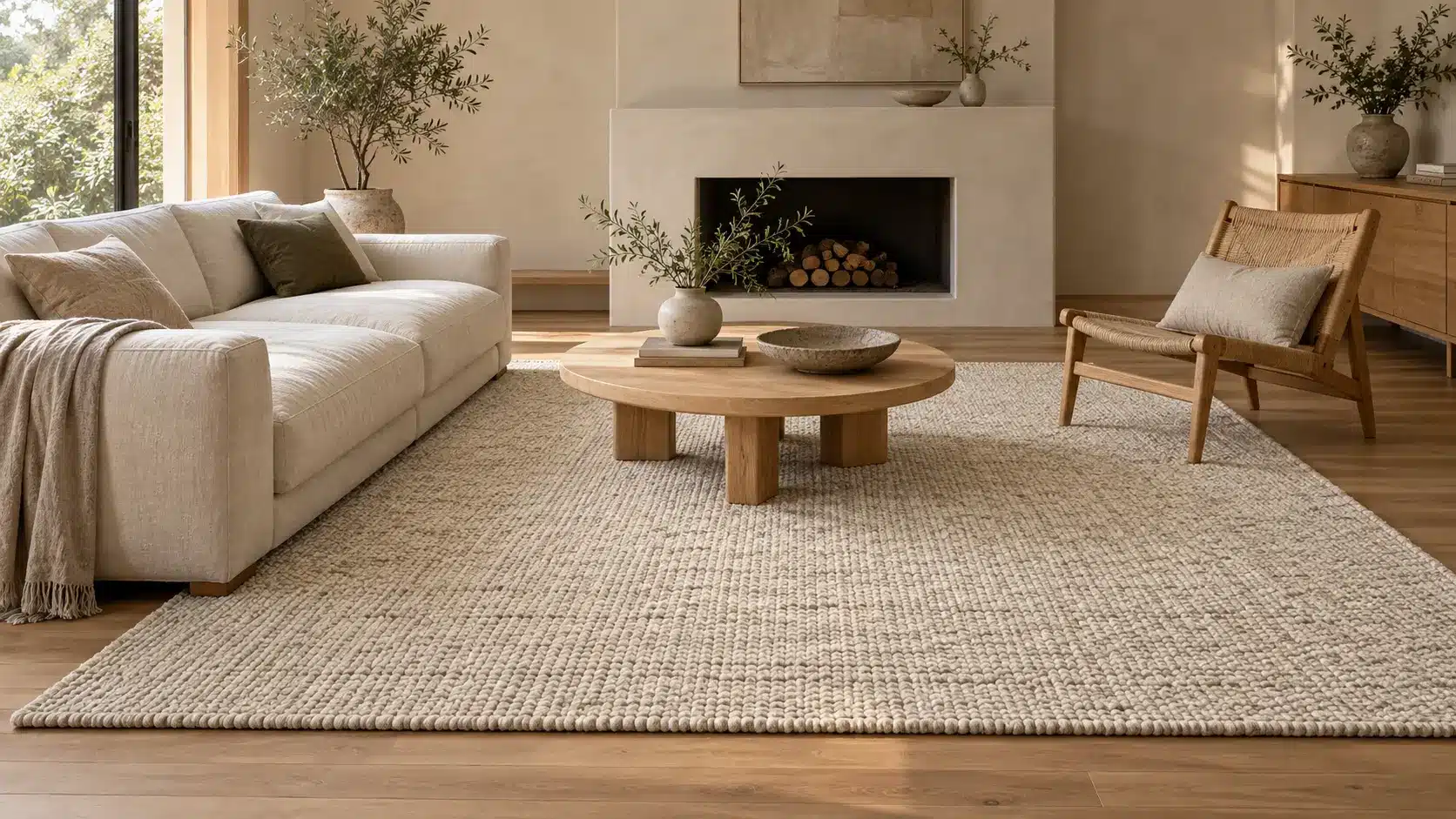
Japandi blends Japanese restraint with Scandinavian warmth, and a well-chosen Japandi rug is one of the easiest ways to bring that balance into a room. It grounds low-profile furniture, adds texture in place of loud pattern, and softens hard floors underfoot. The right rug rarely draws attention to itself. It quietly makes the space feel calmer, warmer, and more put together.
Choosing the right one comes down to a few practical decisions. This guide walks you through the material that suits your household, the colors and textures that fit the style, and the size that works for your living room, bedroom, dining area, or entryway, so you can choose with confidence.

What the style actually asks of a rug
Two ideas are worth getting right, because they shape the buying decisions.
- Wabi-sabi is the Japanese aesthetic of accepting imperfection, age, and impermanence. For rugs, this means irregular handspun texture and fibers that soften and patina over time are features. A rug that looks slightly lived-in is on-style.
- Hygge is a Danish and Norwegian concept of cozy, unhurried comfort. It is not a pan-Scandinavian rule, but it explains why softness underfoot matters in this look.
In practice, that points to muted colors (oatmeal, sand, warm taupe, soft charcoal), texture over print, and natural fibers.
Choosing a material
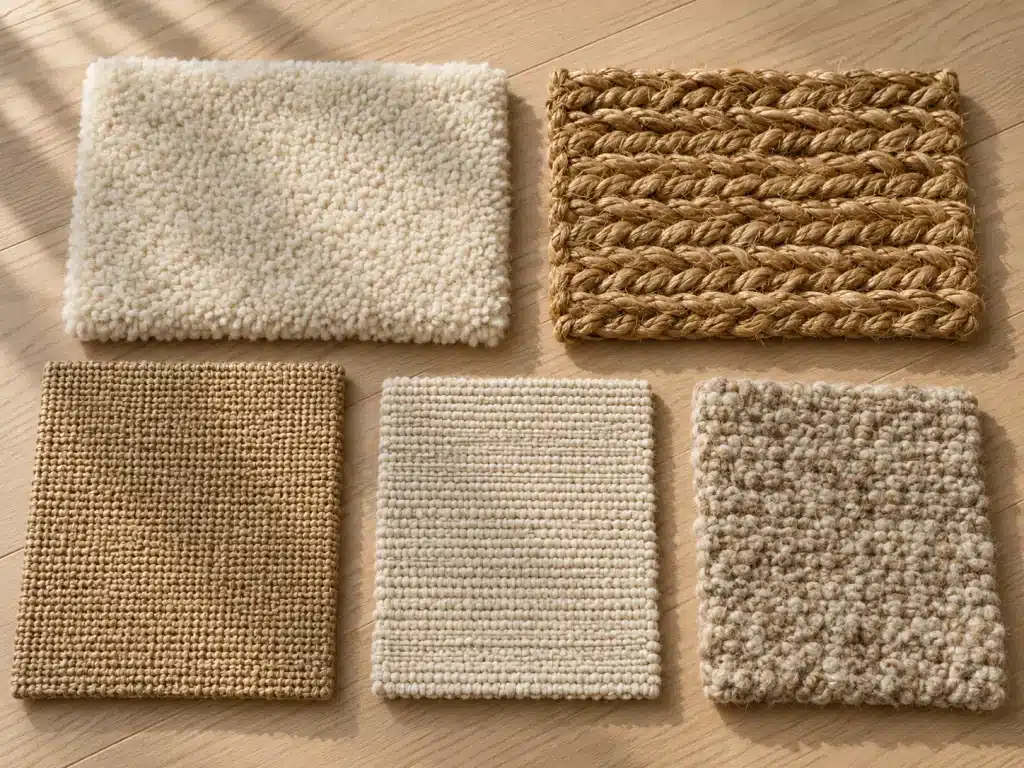
| Fiber | Best for | Watch out for |
|---|---|---|
| Wool | Living rooms, bedrooms, most households | Some shedding in the first months; loop piles can snag on pet claws; spills still need quick blotting |
| Jute | Low-to-moderate traffic, dry rooms | Sheds fiber, absorbs moisture, can show water rings |
| Sisal | Hallways and heavier traffic in dry spaces | Coarse underfoot; stains easily when wet; hard to spot-clean |
| Cotton flatweave | Kitchens, dining areas, layering | Lightweight and can slide or wrinkle; use a rug pad |
| Wool-jute blends | A compromise between softness and texture | Follow the manufacturer’s care label; the blend may retain jute’s moisture sensitivity |
Moisture rule: Jute and sisal belong only in dry, indoor spaces. Wet shoes and rain can leave rings and weaken the fibers. For wet entryways, use a rug made for it.
Washing: Some small cotton flatweaves are machine washable, but many rugs are not. Follow the care label. Rigid or latex backings and heavy weaves can be damaged in a washer.
Matching the rug to your household
- Pets: Cut-pile wool or a tight flatweave is safer than loops. Vacuum often, since hair settles into any pile.
- Robot vacuums: Low pile and no long fringe usually work best, but this depends on your model. Check the manufacturer’s maximum pile height or threshold spec.
- Barefoot comfort: Wool and plush cotton are generally softer than sisal, though both fiber and weave affect comfort.
- Dining areas: Choose a low, flat surface so chairs slide easily. Expect to clean crumbs often.
Color and texture
- Light neutrals (cream, oatmeal, sand) brighten small or dim rooms. In high-traffic spots, choose heathered or multi-tonal weaves, which hide wear better than a flat solid.
- Deeper earth tones (taupe, charcoal, muted terracotta) add weight to rooms with white walls and pale wood.
- Texture instead of pattern: Look for carved lines, ribbing, subtle bouclé, or tone-on-tone geometry.
Always check a sample in your own light. Screen colors and showroom lighting can differ noticeably from your room.
Sizing
Measure your space and use these as starting points, not strict rules. Rug and room dimensions vary.
Living room
- 8×10 ft or 9×12 ft is a common range for a standard seating area.
- At minimum, the front legs of the sofa and chairs should sit on the rug. Having all legs on it looks more cohesive.
- Leave about 12 to 18 inches of bare floor to the walls in a larger room. In a small room, 6 to 8 inches can work.
Bedroom
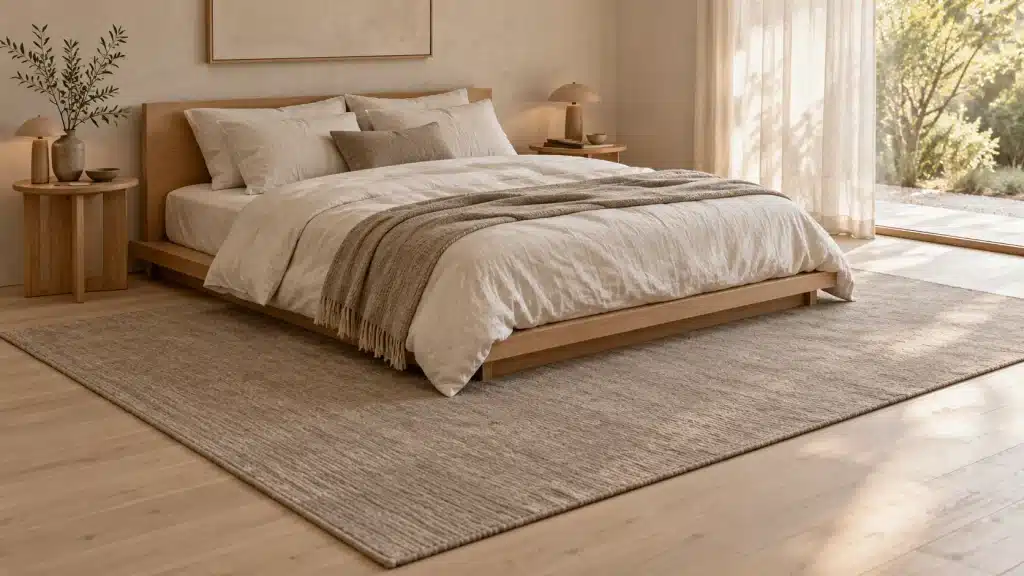
- US queen beds (about 60×80 in) are commonly paired with an 8×10 ft rug, and king beds (about 76×80 in) with 9×12 ft. Check against your own bed frame and the space around it.
- Place the rug under the bottom two-thirds of the bed, so about 18 to 24 inches shows on each side and at the foot.
Dining room
- Extend the rug at least 24 inches past the table edge on every side, then confirm that chair legs stay on it when chairs are pulled back.
Hallway and entry
- Check door clearance before buying. Pile height plus a rug pad can make a door catch. If clearance is tight, choose a thinner rug and pad.
Before you buy: Tape the rug’s outline on the floor with painter’s tape, then walk the room. This catches proportion problems that a tape measure doesn’t.
Don’t skip the rug pad
A pad keeps the rug from slipping, adds cushioning, and reduces wear. Use one made for your floor type, since some pad materials can discolor or damage certain finishes.
Quick checklist
- Will the spot stay dry? If not, skip jute and sisal.
- Do you have pets or a robot vacuum? Choose pile type accordingly and check the vacuum’s spec.
- Do doors swing over the rug? Account for pile and pad height.
- Did you read the care label before committing?
- Did you tape out the size and view a sample in your lighting?
Use these sizing suggestions as starting points, and follow the manufacturer’s specifications and care instructions for your chosen rug.