

Bifold doors are a space-saving option for closets, pantries, and laundry rooms. However, because they rely on tracks, rollers, and multi-panel hinges, dust and debris can build up over time. Excess dirt does more than affect their appearance. It can make the doors stick, create unwanted noise, and accelerate wear on moving hardware.
If your bifold doors are sticking, scraping, or covered in smudges, this guide explains how to clean each component safely, identify common hardware problems, and keep the doors operating smoothly.
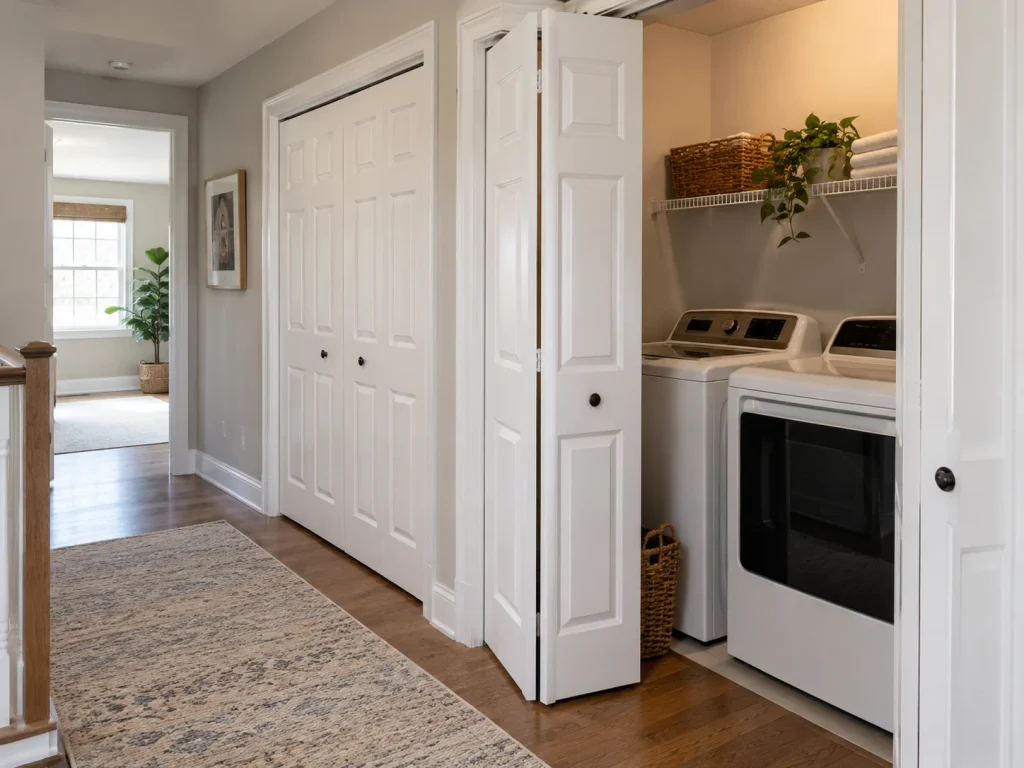
What You’ll Need to Clean Bifold Doors
Before starting, gather suitable tools for your specific door finish and track material.
Essential Cleaning Supplies
- Vacuum Cleaner: Equipped with a hose and narrow crevice tool attachment.
- Microfiber Cloths: Several clean cloths (for washing, rinsing, and dry buffing).
- Soft Detail Brush or Old Toothbrush: For scrubbing tight corners and track grooves.
- Mild Dish Soap or Non-Abrasive Cleaner: Gentle enough for painted, vinyl, or wood finishes without stripping protective coatings.
- Warm Water: In a bucket or spray bottle.
- Cloth-Wrapped Putty Knife: A butter knife or putty knife wrapped in a microfiber cloth to safely dislodge packed dirt in narrow channels.
Specialized Materials (By Material Type)
- Glass Cleaner (or Approved Mirror Cleaner): Ordinary glass cleaner for standard glass; manufacturer-approved, ammonia-free/vinegar-free cleaner for mirrors.
- Wood-Safe Cleaner: For natural stained wood doors.
- Manufacturer-Approved Lubricant: A suitable silicone or dry PTFE lubricant, if specified by the manufacturer.
Before You Start: Identify Your Bifold Door Track Type
Bifold door track designs vary by manufacturer and hardware system. Interior closet doors and larger exterior folding systems can use different load-bearing components, as explained in the comparison of bifold door types, hardware, and materials. Understanding how your door’s weight is supported helps prevent hardware strain during cleaning or maintenance.
1. Standard Interior Closet Bifold Systems
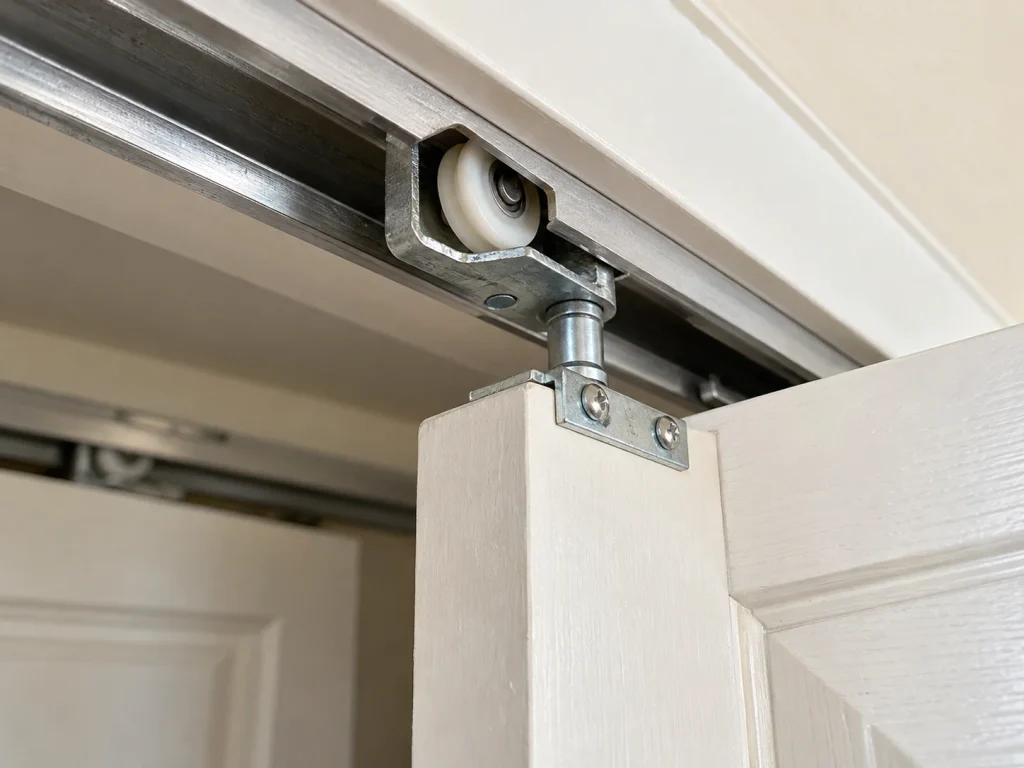
Many residential closet bifold doors use an upper track, a guide or hanger assembly, and pivot brackets near the door frame (such as the residential-grade Johnson Hardware 1700 Series). Depending on the hardware design, the door’s weight may be supported by the upper assembly, lower pivot, or a combination of components.
- Cleaning Priority: Remove debris from the upper channel and inspect the lower pivot bracket for accumulated dust. Check the manufacturer’s hardware diagram before adjusting or lubricating any components.
2. Heavy-Duty or Bottom-Track Systems
Some larger or commercial-grade folding door systems (such as the Johnson Hardware 100FD Series) use heavy-duty overhead hangers, while others incorporate a bottom track or guide channel. The location of the load-bearing components varies by manufacturer.
- Cleaning Priority: Focus on the tracks and guide components your system actually uses. Bottom tracks require particular attention because floor-level debris can accumulate inside their channels.
3. Track Material Types
- Aluminum or Steel Tracks: Durable metal channels that can create grinding sounds if grit gets trapped inside.
- Plastic or PVC Tracks: Found in specific lightweight or budget door systems. Avoid sharp metal tools that can scratch or gouge the plastic channel walls.
Step 1: Deep Clean the Bifold Door Tracks
Dirty tracks are a common cause of sticking and noisy operation. Cleaning the track first prevents dislodged dust from landing on freshly cleaned door panels.
1. Vacuum Out Loose Debris
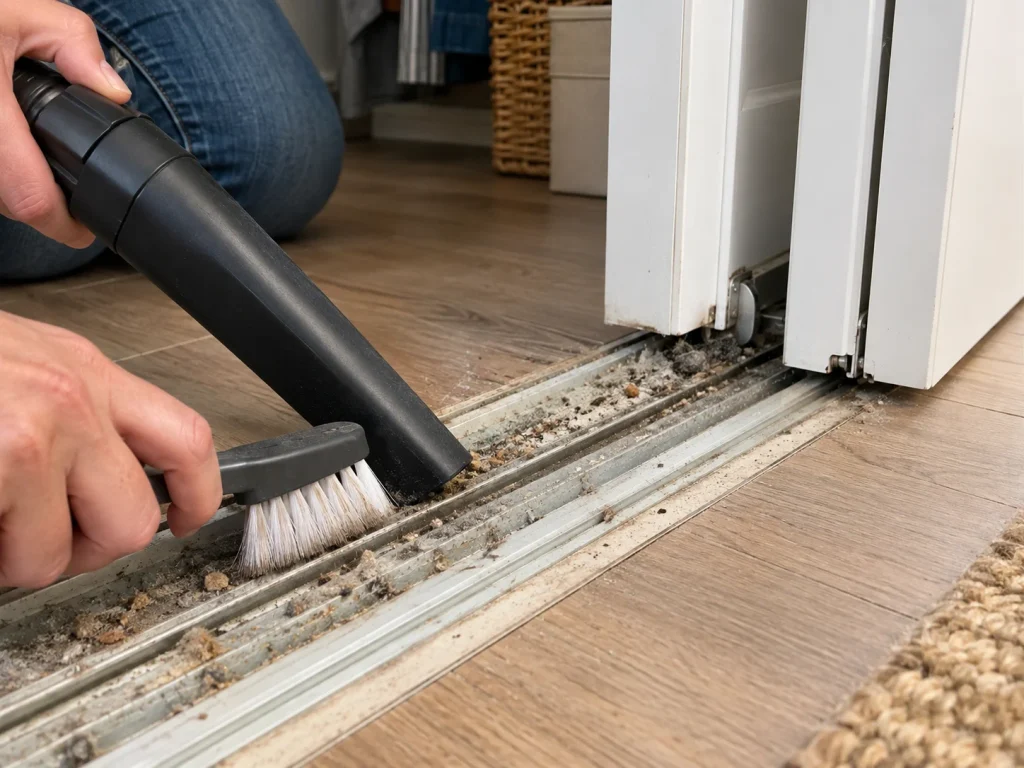
Open the bifold doors fully to expose the accessible sections of the track. Move the panels carefully between their open and closed positions as needed to reach different areas. Use a vacuum crevice attachment to remove loose dust and debris without forcing the door beyond its normal travel.
2. Dislodge Packed Dirt in Corners
Dirt often packs tightly around end-pivots and track stops.
- Dip a soft brush or toothbrush into warm, soapy water and scrub the corners gently.
- For narrow gaps, wrap a microfiber cloth over the edge of a putty knife and slide it through the channel to lift out packed grime.
3. Wipe and Dry Thoroughly
Wipe down the inside of the track using a damp microfiber cloth soaked in warm water and a few drops of mild soap. Follow immediately with a clean, dry cloth. Do not leave standing moisture inside metal or bottom tracks to reduce the risk of corrosion and moisture damage to nearby flooring.
Step 2: Clean the Door Panels by Material
Select a cleaning method matched to your door panel finish to protect paint, prevent wood swelling, or protect reflective mirror backings.
Wooden Bifold Doors
- Mix a few drops of mild dish soap or wood-safe cleaner in warm water. Note that unfinished or raw natural wood should not be cleaned with water-based solutions.
- Dampen a microfiber cloth and wring it out completely so it is slightly damp, not wet.
- Wipe gently along the wood grain to remove surface dust and smudges.
- Dry immediately with a fresh towel to prevent moisture absorption.
Glass or Mirrored Bifold Doors
- Standard Glass Panels: Spray a suitable glass cleaner onto a microfiber cloth and wipe in a Z-pattern.
- Mirrored Bifold Doors: Use a lightly dampened, lint-free cloth or a mirror-safe cleaner approved by the manufacturer. Avoid ammonia- or vinegar-based cleaners, as these can damage the mirror’s edges or reflective backing. Keep moisture away from the edges and dry the surface immediately.
Louvered (Slatted) Bifold Doors
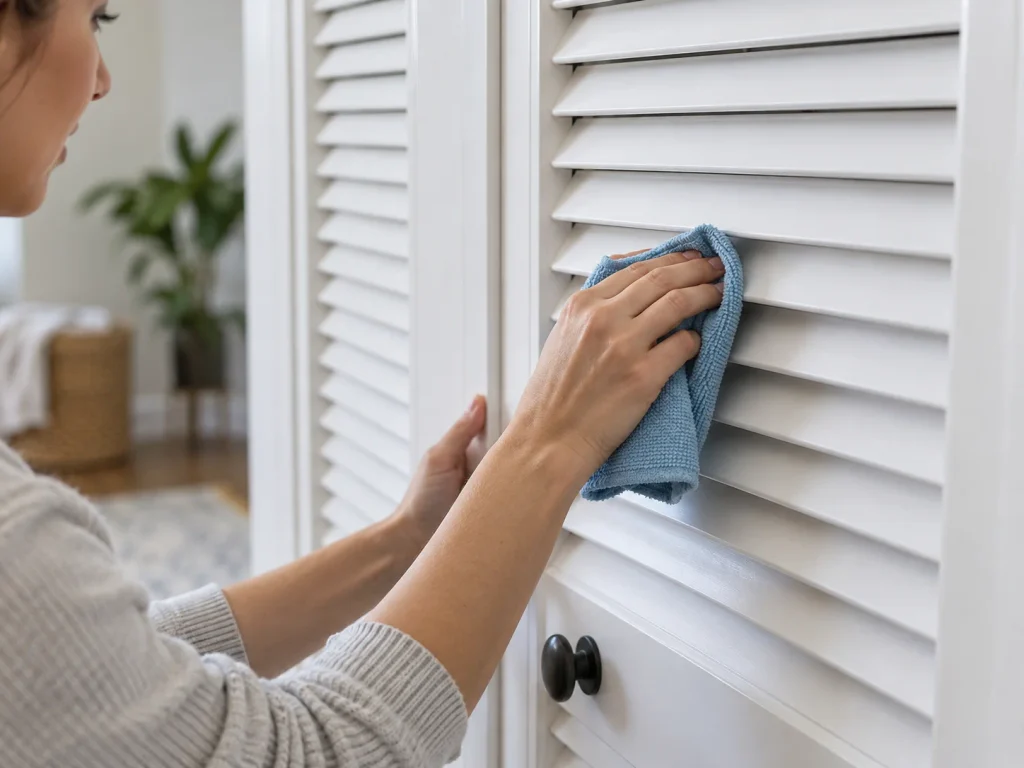
Louvered doors collect dust between the angled slats.
- Dusting: Use a soft-bristled brush, vacuum dusting brush, or a cloth wrapped around a thin ruler to clear dust from between each slat.
- Wiping: Wipe each slat using a slightly damp microfiber cloth dipped in mild soapy water, then dry thoroughly.
Vinyl and Painted Bifold Doors
- Use a solution of warm water and a mild, non-abrasive detergent.
- Gently wipe away scuffs, handprints, and other surface marks using a soft microfiber cloth.
- Avoid abrasive scouring pads or harsh baking soda pastes, as abrasive powders can leave fine scratches or dull the glossy sheen of painted surfaces.
Step 3: Clean Hinges, Handles, and Hardware
Door handles and intermediate hinges accumulate skin oils and dust.
- Clean Handles and Knobs: Apply a mild multi-surface cleaner to a cloth and wipe around the handle base.
- Clean Center Hinges: Open the panels fully to expose the hinges connecting the door segments. Brush away dust accumulation from the hinge pins using a soft brush.
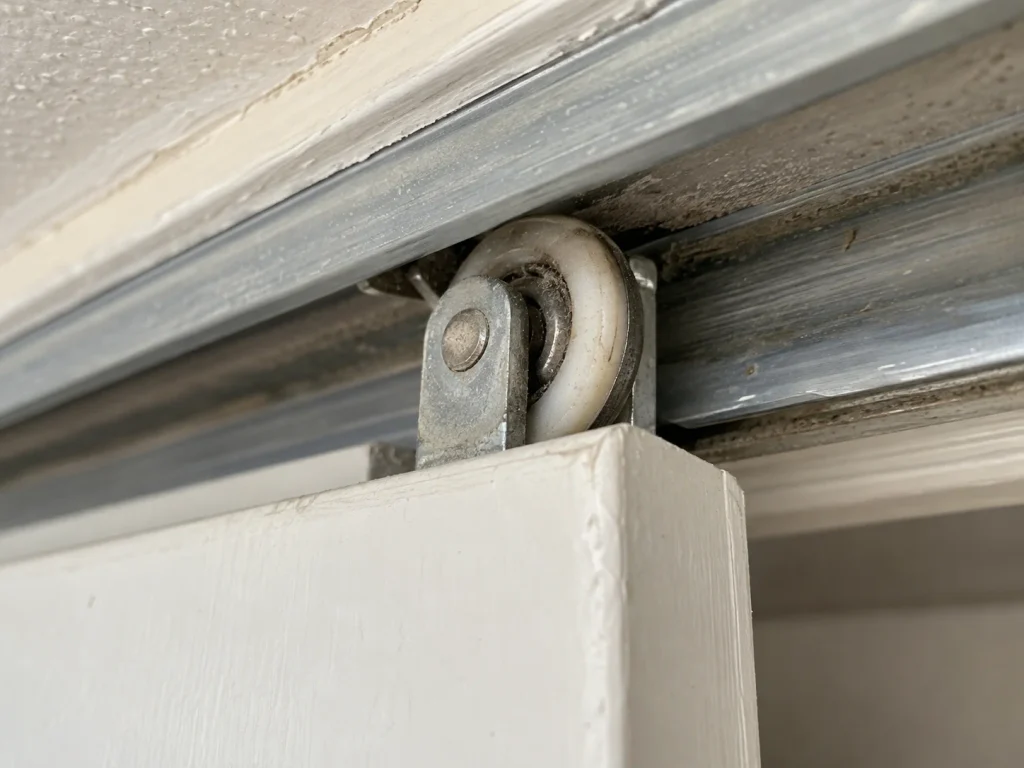
- Inspect Top Rollers & Pivots: Check the roller assembly at the top of the door. Carefully remove any hair or fibers tangled around accessible roller components to ensure the wheels turn freely.
How to Lubricate Bifold Hardware Safely
Avoid applying lubricants indiscriminately. Some bifold systems use sealed bearings that require no additional lubrication, while others specify particular lubricants for their tracks, pivots, or hangers.
Follow these general steps when lubricating hardware:
- Check the Hardware Instructions: Identify whether the manufacturer recommends lubrication and which components require it.
- Apply Only the Specified Lubricant: Use the recommended product sparingly at the designated points. Do not spray the entire track unless specifically instructed.
- Remove Excess and Test: Wipe away excess lubricant, then open and close the door gently to check its operation.
Why Bifold Doors Still Stick After Cleaning
If your bifold doors are clean but still do not slide smoothly, refer to the diagnostic table below to identify the underlying cause and corrective action:
Bifold Door Diagnostic Guide
| Symptom | Possible Cause | Primary Area to Inspect |
|---|---|---|
| Door is difficult to open or close | Debris buildup, guide friction | Upper track and top guide assembly |
| Door drags along the floor | Height misadjustment or pivot misalignment | Bottom pivot bracket and adjustment screw |
| Door jumps off the track | Worn guide roller, bracket alignment | Upper guide roller and track alignment |
| Squeaking or grinding from hinges | Hinge friction or loose fasteners | Intermediate hinges and mounting screws |
| Door does not close flush | Frame misalignment or obstruction | Panel margins, pivot brackets, internal closet items |
Corrective Actions
Loose Top or Bottom Pivot Bracket
- Correction: Inspect the metal bracket mounted inside the track corner. Use a screwdriver to tighten the adjusting screw. If the bracket has shifted, loosen the screw slightly, re-align the pivot point so the panel hangs plumb, and retighten firmly.
Damaged or Worn Roller Components
- Correction: Plastic roller wheels can crack or wear flat spots over time. If the wheel does not spin freely after removing tangled debris, replace the guide assembly. When purchasing replacement hardware kits, verify your door’s pivot diameter, track profile, and component compatibility, as hardware dimensions vary across door manufacturers.
Misaligned Floor Guides or Pivots
- Correction: Check whether the bottom pivot or floor guide is securely seated in its bracket. Some models have threaded height-adjustment pins, while others use different adjustment mechanisms. Follow the manufacturer’s instructions and support the door’s weight before loosening or adjusting load-bearing hardware.
Simple Maintenance Tips to Keep Bifold Doors Clean
Follow these simple routine steps to keep hardware working smoothly according to manufacturer specifications:
- Regular Vacuuming: Remove dust from the upper track and lower pivot area during routine cleaning. If your door has a bottom guide track, vacuum its channel as well to prevent grit from accumulating.
- Routine Hardware Checks: Periodically inspect screws and brackets. Bifold doors vibrate during operation, which can loosen fasteners over time.
- Follow Manufacturer Service Cycles: Check and service door hardware according to the manufacturer’s recommended maintenance interval rather than applying blanket lubrication schedules.
- Maintain Internal Clearance: Keep clothing, boxes, and storage bins clear of the door panels. Items pressing against the doors can interfere with folding movement and place unnecessary strain on the hardware.
References & Hardware Specifications
For technical specifications, load ratings, and structural diagrams of residential and commercial bifold hardware, refer to manufacturer documentation:
- Johnson Hardware: 1700 Series Residential Bifold Hardware
- Johnson Hardware: 100FD Commercial-Grade Bifold Hardware

1 thought on “How to Clean Bifold Doors & Tracks (Step-by-Step Guide)”
Comments are closed.