

Japandi has become one of the most recognizable looks in modern interiors: Japanese restraint meets Nordic comfort, with plenty of natural texture and very little clutter. Lighting is where that balance either comes together or falls apart. A harsh overhead bulb can flatten even the most carefully chosen furniture, while a well-chosen Japandi lamp can make a plain room feel calm.
This guide covers what actually makes a lamp “Japandi,” 13 specific lamp ideas for tables, floors, and dining spaces (with a real-world watch-out for each), how to choose bulbs, and the safety basics that matter most with paper, rattan, and fabric shades.
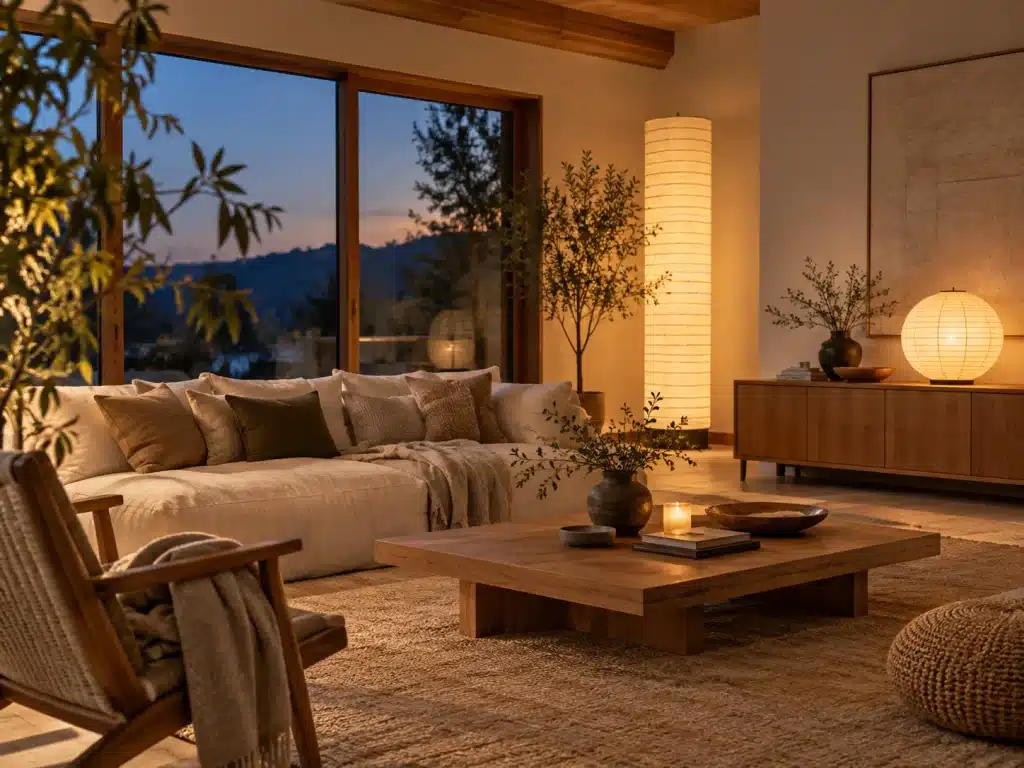
What Is Japandi Lighting?
Japandi lighting borrows from two traditions that happen to agree on a lot.
The Japanese side: wabi-sabi. Wabi-sabi finds beauty in imperfection and simplicity. In lighting, that means handmade-looking surfaces, visible grain, and shapes that are not too polished.
The Nordic side: hygge. Hygge is a Danish concept of coziness and well-being. VisitDenmark notes that the word likely came into Danish from older Norwegian, and it ties hygge closely to candlelight and soft evening light. Visit Copenhagen points out that dim, warm lighting is what softens the clean, uncluttered look of Danish living rooms. That is the same job a Japandi lamp does.
Put together, Japandi lamps tend to share four traits:
- Natural, tactile materials: washi paper, rattan, bamboo, light oak or ash, unglazed ceramic, linen, plaster, and frosted glass.
- A quiet palette: cream, off-white, oat, soft grey, muted clay, with black metal used sparingly as an accent.
- Diffused light: the bulb sits behind paper, fabric, or frosted glass so you see a glow, not a hot spot.
- Simple, organic silhouettes: spheres, columns, domes, tripods, and gentle curves.
Table Lamp Ideas for Bedrooms, Desks, and Consoles
1. Sphere Washi Paper Lamp
A round paper lamp gives off an even, lantern-like glow. It is the most recognizable Japandi shape. Watch out: it is ambient light, not reading light. If you read in bed, pair it with a small directional lamp.

2. Ribbed Bamboo Table Lamp
Exposed bamboo ribs under a translucent shade add fine craft detail without visual noise. Watch out: paper and thin bamboo need gentle dusting (a soft brush or dry microfiber cloth) and should not be placed where they can be knocked over regularly.

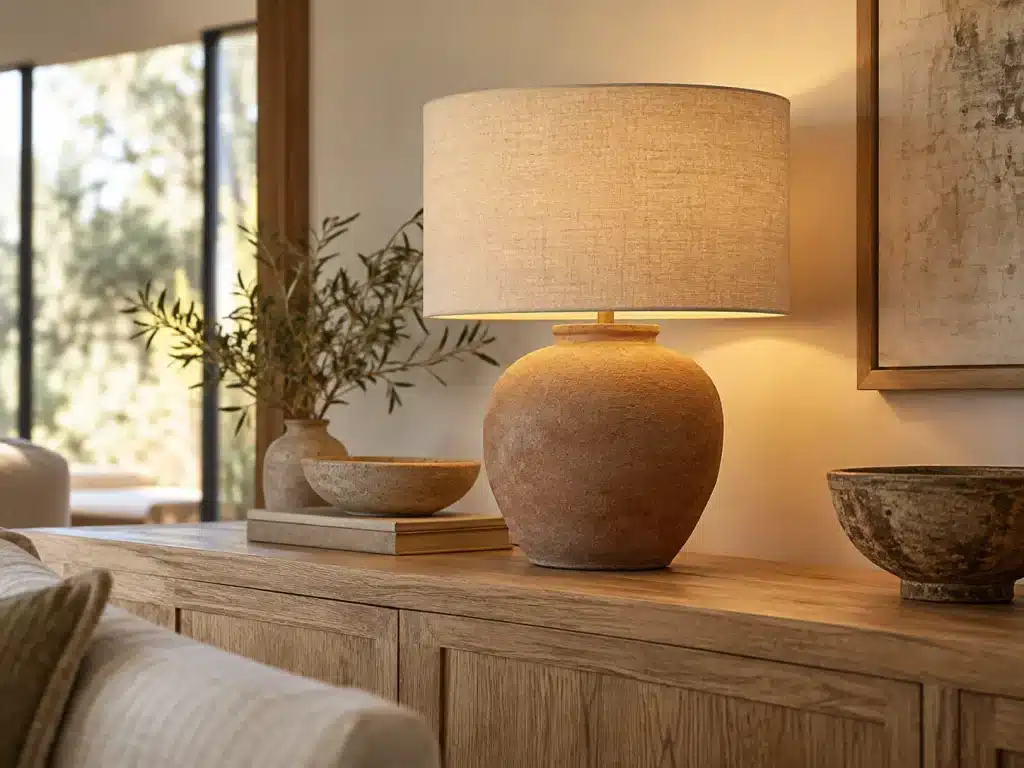
3. Terracotta or Stoneware Base with a Linen Shade
An earthy, matte base grounds a console or sideboard. Watch out: ceramic bases can be wide and heavy. Measure your nightstand before buying so the lamp does not crowd the surface.
4. Frosted Milk-Glass Mushroom Lamp
A smooth dome is the most “Scandinavian” of the group. It spreads light evenly and suits compact desks. Watch out: it has less natural texture than paper or wood, so pair it with a wood or linen element nearby.

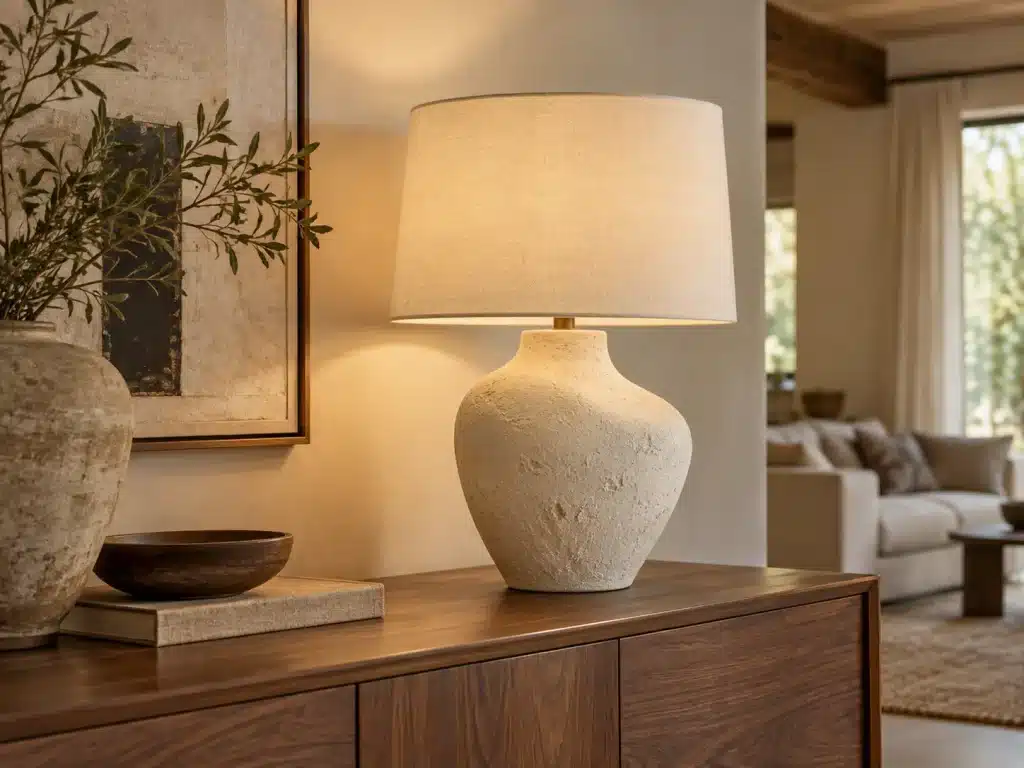
5. Plaster Vessel Lamp
A hand-finished plaster base shows off raw texture, a very wabi-sabi look. Watch out: porous, matte finishes can show marks in busy areas. Surface care varies by brand, so check the manufacturer’s cleaning notes before buying.
Floor Lamp Ideas for Living Rooms and Corners
6. Column Washi Floor Lamp
A tall paper cylinder softens a dark corner and adds vertical interest. Watch out: it is built for atmosphere, not tasks. Keep a separate lamp near the sofa if you read there.

7. Sculptural Oval Lantern on Slim Legs
A paper oval on thin black legs looks light and almost floating. Watch out: the slim base is easy to tip. Keep it out of walkways, away from pets and kids’ play areas.

8. Light Oak Tripod with a Linen Shade
Tapered wood legs and an oat-colored shade add Scandinavian craftsmanship. Watch out: tripods need a wider footprint than a single pole. Check that the legs will not catch traffic.

9. Bentwood Arc Floor Lamp
A curved wooden arm over a sofa gives downward light for conversation or reading. Watch out: check the arc’s reach and height against your sofa and ceiling so the shade does not sit awkwardly close to heads.

10. Matte Black and Linen Dimmable Floor Lamp
A slim black frame adds contrast against pale wood. Watch out: dimming only works smoothly with a bulb that is labeled dimmable and compatible with your dimmer. Otherwise you may see flicker or buzzing.

Pendant Lights for Dining Areas and Entryways
Pendants set the mood over a dining table, and two measurements matter more than style: width and hanging height.
- Width: lighting manufacturer Golden Lighting recommends a fixture roughly half to two-thirds the width of the table.
- Height: the common starting point is 30–36 inches from the tabletop to the bottom of the fixture for a standard ceiling. Retailer guides such as Fenchel Shades suggest going a little higher (around 36–40 inches) with a 10-foot ceiling. Treat these as starting points, then hold the fixture up and check sightlines across the table.
11. Oversized Paper Pendant
A large paper shade over an oak table gives a soft, cloud-like glow. Watch out: if it hangs too low, it blocks conversation across the table. Size it using the width rule above.

12. Woven Rattan Dome Pendant
Tightly woven rattan filters light into patterned shadows on nearby walls. Watch out: the shadow pattern is part of the appeal. If you want flat, even light on the table, choose paper or fabric instead.

13. Shallow Ceramic Dish Pendant with Exposed Bulb
A simple ceramic dish with a visible bulb feels modern and artisanal. Watch out: an exposed bulb can glare. Use a frosted or lower-lumen LED, and a dimmer if you have one.

Choosing Bulbs: Color Temperature and Brightness
Color temperature is measured in kelvins (K) and printed on the bulb package. A lower number gives warmer, more yellow light. Energy Trust of Oregon notes that people usually prefer around 2700K for living rooms, bedrooms, and dining rooms, while kitchens and work spaces tend to suit cooler white around 3500K. The ENERGY STAR guide uses a similar scale from 2700K to 6500K.
| Kelvin | Look | Typical use | Japandi note |
|---|---|---|---|
| ~2200–2400K | Very warm, candle-like | Accent and evening wind-down lamps | Cozy, but can look dim and amber |
| 2700K | Warm white | Living rooms, bedrooms, dining rooms | The safe default for most Japandi lamps |
| 3000–3500K | Soft to neutral white | Kitchens, home offices | Slightly cleaner, still friendly |
| 4000K and above | Cool to daylight | Task and utility lighting | Can feel clinical with paper and wood |
Sources differ a little on exact recommendations (some put kitchens at 3000K, others at 3500K), so treat the table as a guide rather than a rule.
Color temperature is only half the story. Brightness (lumens), beam spread, and glare control matter just as much for comfort. How bright a lamp needs to be depends on the room, the size of the table, and how many other light sources you have, so check the lumen output on the packaging and adjust with a dimmer if you can.
Safety: What to Check Before You Buy
Paper, rattan, and fabric shades look wonderful, but they are also combustible, so a few habits matter.
- Do not exceed the lamp’s maximum wattage rating. Lamps carry a maximum-wattage label for a reason. The U.S. Consumer Product Safety Commission describes a recalled table lamp whose label warned to use 40W max, where a hot bulb touching bedding or upholstery created a fire risk.
- Choose LED bulbs. They run far cooler than halogen. The CPSC has warned that halogen torchiere floor lamps were linked to hundreds of fires, and that very hot bulbs can ignite curtains, clothing, and other flammable material.
- Keep shades clear of the bulb and away from fabric. Do not drape cloth over a lamp, and keep it away from bedding.
- Look for a UL or ETL listing mark. Both indicate testing to North American safety standards. A missing mark does not automatically mean a lamp is unsafe, but it is worth asking the seller about.
- Check dimmer compatibility on both the bulb and the lamp or wall dimmer.
How to Style Japandi Lamps
- Layer your light. Combine a floor lamp, a table lamp, and one accent source in the evening instead of relying on a bright ceiling light.
- Mind the scale. A wide ceramic lamp suits a sideboard but can overwhelm a narrow nightstand.
- Balance wood tones. On dark walnut furniture, choose lighter oak, ash, or off-white shades for contrast.
- Leave breathing room. Paper and ceramic lamps look best with some empty space around them.
Where to Buy Japandi-Style Lighting in the U.S.
Authentic Japanese design. For Isamu Noguchi’s Akari light sculptures, the Noguchi Museum Shop stocks over 70 models and notes that handmade production can limit quantities. The Museum describes Akari as handmade in Gifu, Japan, produced by the original manufacturer Ozeki & Co. using washi made from mulberry bark. If you want a genuine Akari, buy from the museum shop or another authorized seller.
Mid-range and designer. Design Within Reach, West Elm, CB2, and Lulu & Georgia are good places to look for wood floor lamps, ceramic and plaster bases, and woven pendants.
Budget-friendly. IKEA and Target carry paper, fabric, and woven shades at lower prices. Check current stock and pricing on the product pages.
FAQ
What makes a lamp Japandi?
Natural materials, soft diffused light, a neutral palette, and simple organic shapes.
What color temperature works best?
For most living spaces, warm white around 2700K, with 3000–3500K for kitchens and work areas.
Are paper lamps safe?
They can be, when you use an LED bulb, stay within the lamp’s wattage rating, and keep fabric and bedding away from the shade.
How high should a dining pendant hang?
Start at 30–36 inches above the tabletop and adjust for ceiling height and sightlines.
Final Thoughts
Good Japandi lighting is less about owning a specific lamp and more about the combination: natural materials, a warm bulb, shades that diffuse, and a few well-placed sources at different heights. Choose lamps that fit your room’s scale, check the safety labels, and keep the glow soft.
Sources used
- VisitDenmark: What is hygge?
- Visit Copenhagen: Defining Danish hygge
- Golden Lighting: Pendant lights over a dining table
- Fenchel Shades: Pendant height guide
- Energy Trust of Oregon: Choosing light bulbs
- ENERGY STAR consumer brochure (PDF)
- CPSC: Cooper Lighting halogen bulb warning
- CPSC: Twister lamp recall
- Noguchi Museum Shop

1 thought on “13 Japandi Lamp Ideas for a Warm, Minimalist Home”
Comments are closed.