

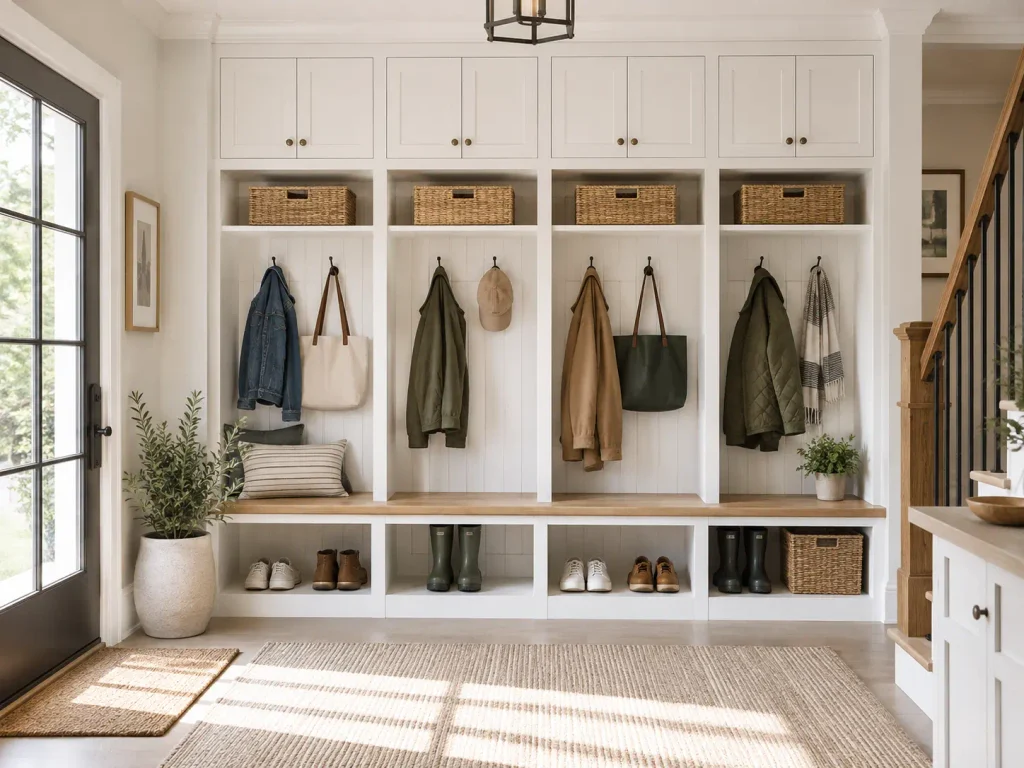
The entryway between the garage and the main living space takes a beating. Muddy cleats, soaked winter parkas, school backpacks, dog leashes, and grocery bags all land there first. Without a structured drop zone, that clutter spills into hallways and kitchens, and every departure turns into a hunt for missing keys and matching shoes.
Dedicated mudroom lockers and storage cabinets are one of the most practical ways to organize a busy family entryway. Giving each household member their own vertical slot cuts floor clutter and makes good use of wall space. Getting it right means balancing looks, capacity, daily habits, and the actual dimensions of your room.
Open Mudroom Lockers vs. Closed Storage Cabinets: Which Fits Your Lifestyle?
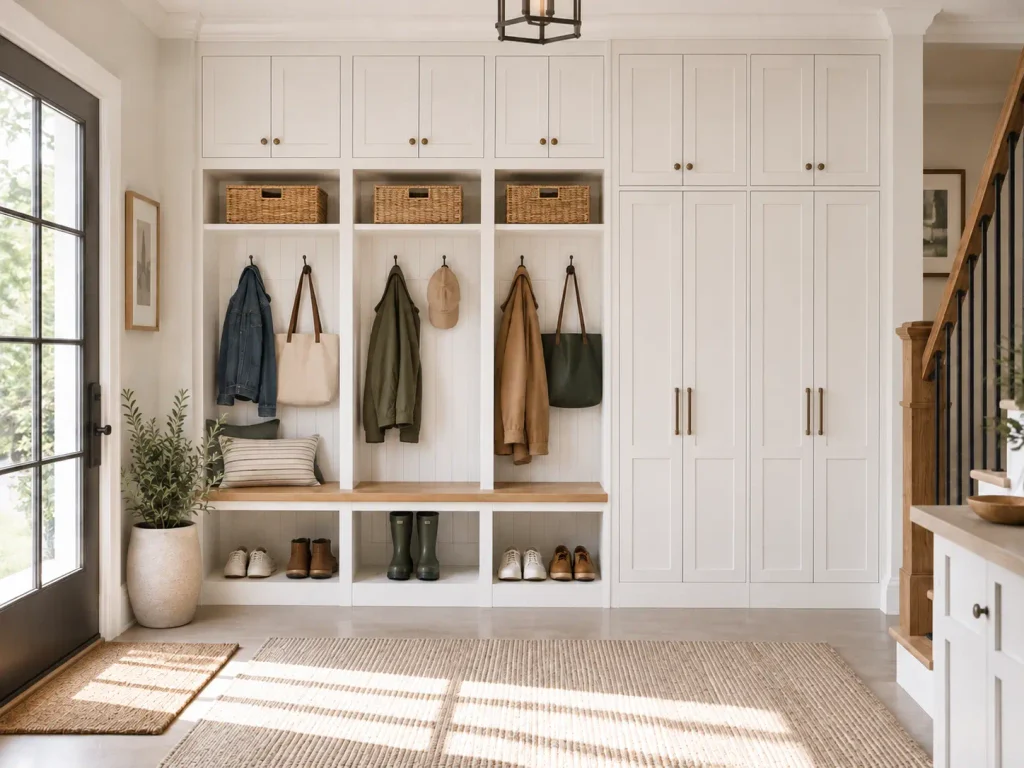
The first big decision is between open-front lockers and fully enclosed cabinets with doors. Each suits a different kind of household.
Open Mudroom Lockers (The “Drop-and-Go” Approach)
Open lockers have no doors. They are usually built as locker bays or open cubby towers.
Pros: They are fast. Kids coming home from school can toss a backpack on a hook and slide shoes into a cubby with no latches or handles. Open bays also let air circulate, which helps damp coats and gloves dry and can reduce moisture and odor buildup in a well-ventilated room.
Cons: Everything stays visible. If coats aren’t hung up or boots aren’t lined up, anyone walking in sees the mess. Dust and pet dander also settle on open shelves more easily, so they need regular cleaning.
Closed Storage Cabinets (The “Clean Aesthetic” Approach)
Closed cabinets use full-height or partial doors (hinged, sliding, or louvered) to hide the contents.
Pros: Closed cabinets give a streamlined, built-in look. With the doors shut, coats, bags, hats, and sports gear disappear. That works especially well in open-concept homes where the mudroom is visible from the kitchen or living room. Doors also protect off-season clothing from dust and pet hair.
Cons: Doors add friction. Young kids may skip opening a door every time they put away a backpack, and things pile up outside the cabinet. Shutting damp coats and shoes in an unventilated box can also trap moisture. If you go with closed cabinets, build in louvered panels, perforated backs, or ventilation gaps.
The Hybrid Solution
Many families split the difference: open lockers or hooks at the daily-use level, with closed upper cabinets and lower drawers. Active gear stays within easy reach, and off-season items and visual clutter stay behind doors.
Essential Dimensions for Mudroom Lockers and Tall Storage Cabinets
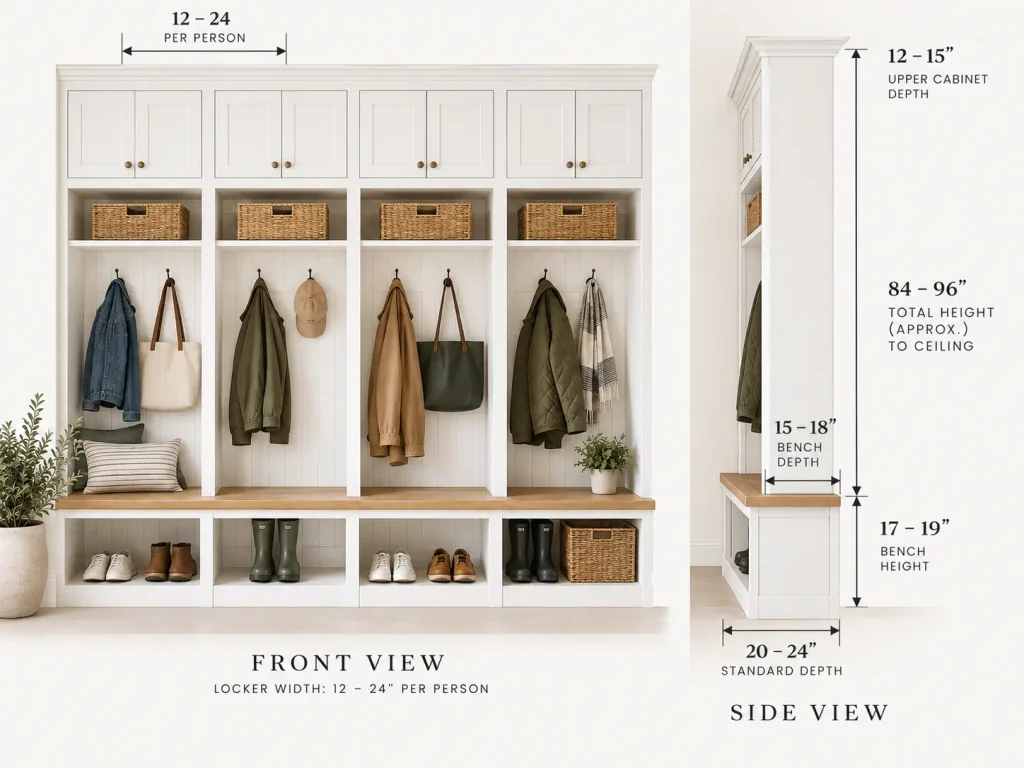
Scale decides whether a mudroom feels custom or cramped. Treat these numbers as planning baselines, and always check them against your actual room and the manufacturer’s specifications.
Locker Width and Personal Allocation
- Small children: 12 to 15 inches per locker works well for toddlers and early elementary kids.
- Adults and teenagers: 18 to 24 inches is comfortable for adult coats, bulky winter jackets, and large backpacks. Anything under 18 inches can feel tight for an adult winter coat.
- Heavy gear: If your family does hockey, skiing, or camping, allow up to 30 inches for a dedicated gear locker.
Height and Vertical Clearance
- Total unit height: For a seamless built-in look, run lockers and cabinets up to the ceiling. In most homes with 8-foot ceilings, that means roughly 84 to 96 inches or more, depending on your ceiling height and any crown molding. This avoids dust-collecting gaps on top and maximizes vertical storage.
- Bench seat height: A comfortable bench seat sits about 17 to 19 inches off the floor, with a seat depth of roughly 15 to 18 inches.
- Clearance above the bench: Leave enough space between the seat and any upper shelf or hook rail so coats hang freely and don’t bunch up on the seat.
Depth Considerations
- Shallow (15 to 18 inches): Works in narrow entryways for basic coat hanging and standard shoe cubbies. It is generally too shallow for large backpacks stored sideways or bulky winter gear.
- Standard utility depth (20 to 24 inches): Matches standard 24-inch kitchen base cabinets and gives enough room for parkas, large sports bags, and deep baskets.
Upper Cabinet Depth
Keep upper cabinets shallower than the lockers or bench below, typically 12 to 15 inches deep. That way adults can stand up from the bench or lean forward without hitting their heads on cabinet doors.
Practical Layout Example: A 72-Inch Mudroom Wall
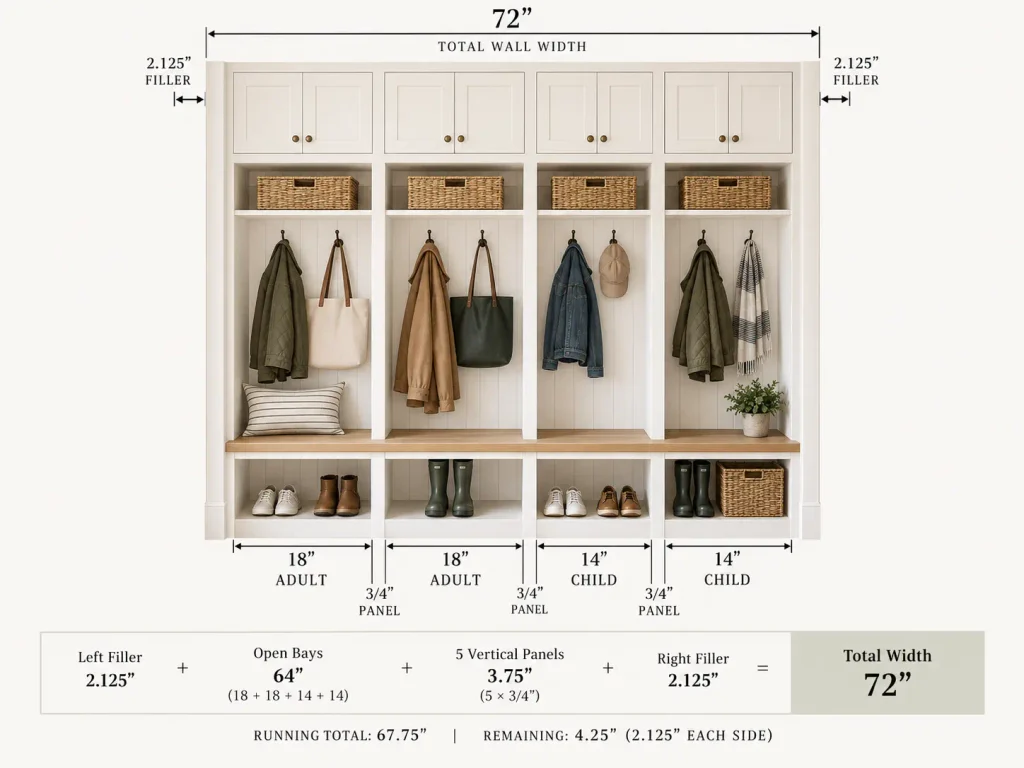
Here is how those numbers translate to a real wall for a family of four.
Example: A 72-inch wall (6 feet), two adults and two children
- Bays: two 18-inch adult bays and two 14-inch kids’ bays, for 64 inches of open bay width.
- Panels: five 3/4-inch vertical panels (two end panels and three shared partitions) add 3.75 inches.
- Running total: 67.75 inches.
- Remaining space: about 4 1/4 inches, which you can split into scribe fillers on each end so the unit fits snugly against walls that aren’t perfectly square.
Pro tip: Confirm finished exterior dimensions and panel thicknesses with your cabinet supplier before ordering, and measure the wall at several heights, since walls are rarely perfectly plumb.
How to Optimize Inside Your Mudroom Storage Cabinets (Hooks, Shelves & Outlets)
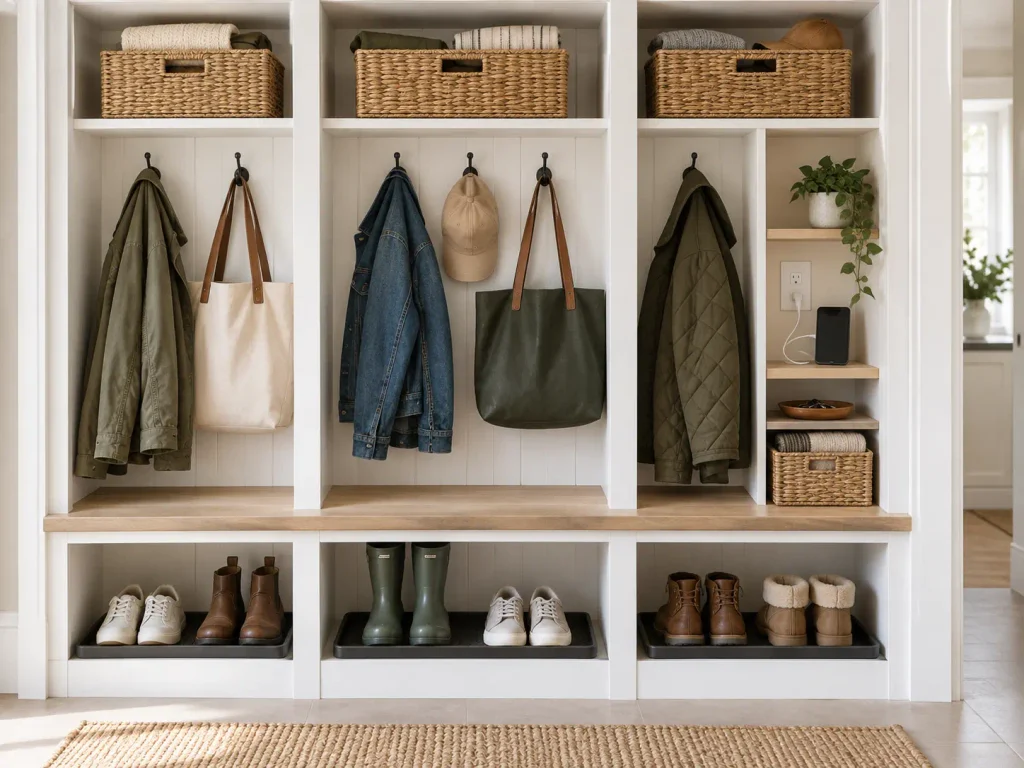
A cabinet shell only works if the inside is organized. Otherwise things just disappear into it.
The Three-Zone Vertical Strategy
Divide each locker or tower into three tiers:
- Top zone (above 66 inches): Off-season items, travel gear, and labeled bins of seasonal accessories like gloves, beanies, and sunscreen. It takes a step stool to reach, so keep only things you need occasionally here.
- Middle zone (36 to 66 inches): The high-frequency zone for daily coats, jackets, keys, and school backpacks.
- Lower zone (below 36 inches): Footwear, heavy bags, and dog supplies. Use open shoe cubbies, pull-out wire baskets, or removable rubber trays to catch melting snow and mud.
Hook Hardware and Placement
Skip single flimsy pegs, which let heavy winter coats slip off. Use heavy-duty double-prong hooks or multi-tier hook rails.
- Adult hook height: about 60 to 66 inches from the floor, adjusted for coat length and the user’s reach.
- Child hook height: 42 to 48 inches, or lower for younger children, so they can handle their own things.
These are general recommendations. Adjust them to the heights and reach of the people actually using the lockers.
Integrated Charging Stations and Electrical Safety
Mudrooms often double as charging hubs for phones, tablets, power tools, and other devices.
- Concealed outlets: Have a licensed electrician install approved receptacles inside a lower cabinet or drawer, in line with local codes. In the U.S., those codes are generally based on the National Electrical Code (NFPA 70).
- Battery safety: Don’t charge lithium-ion batteries unattended inside sealed, unventilated enclosures, because of the heat and fire risk.
- Task lighting: Hardwired LED strips or puck lights inside open lockers brighten dark corners and make early-morning departures easier.
Modular Mudroom Cabinets vs. Built-in Lockers: Budget & Flexibility
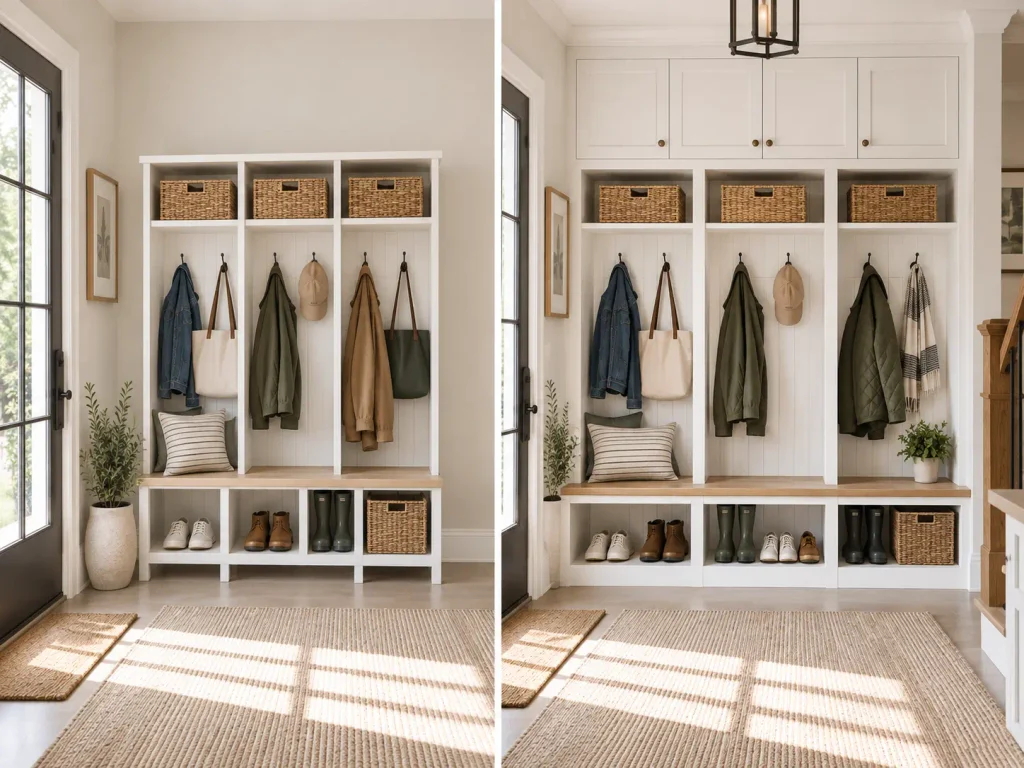
Next, decide between prefabricated modular systems and custom carpentry made to your room.
Prefabricated / Modular Storage Units
Modular units come in standard box sizes, usually sold as locker towers, bench kits, and upper modules that you assemble and anchor to the wall.
Pros: They are generally the budget-friendly option, often running from a few hundred to a couple thousand dollars depending on size and brand. They are widely available at home improvement retailers, DIY-friendly, and sometimes can be taken apart and moved.
Cons: Factory sizes rarely match your wall exactly, leaving gaps on the sides or top that need filler strips and trim for a finished look.
Custom Built-In Lockers and Cabinets
A finish carpenter or cabinet shop builds these to measure, scribed into your walls, baseboards, and ceiling.
Pros: A seamless fit that uses every inch, interiors tailored to your gear (specific sports equipment, pet crates), premium materials, and a polished look that many buyers appreciate.
Cons: Cost is significantly higher, often several thousand dollars or more depending on size, materials, and your region. Installation is permanent, and lead times from design to completion are longer.
Material Selection, Structural Integrity, and Safety Guidelines
Material quality determines how long the unit lasts, whether modular or custom. Avoid low-density particleboard or thin MDF for bench seats and lower cabinet bases. In an entryway, wet boots and road salt will make unsealed particleboard swell and break down.
Better choices are cabinet-grade plywood carcasses, solid hardwood bench seats (oak, maple, or walnut), and moisture-resistant PVC or composite trim near the floor.
Tip-over safety: Tall, heavy storage units can tip, especially in homes with children. Anchor lockers into wall studs with heavy-duty anti-tip hardware and follow the manufacturer’s installation instructions. The U.S. Consumer Product Safety Commission’s “Anchor It!” campaign offers more guidance on securing furniture.
Conclusion
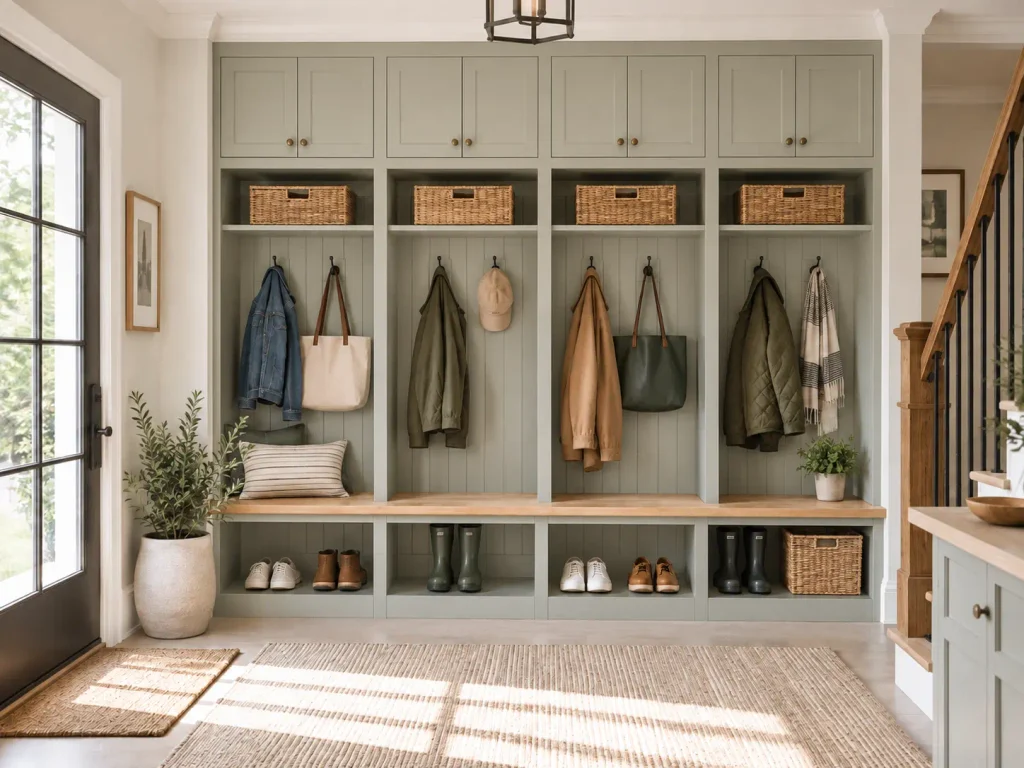
Mudroom lockers and storage cabinets streamline the daily routine by giving outerwear and footwear a place to go. Decide whether your household needs open accessibility or a closed, minimal look. Plan your vertical dimensions carefully, zone the interior logically, and follow sound material, electrical, and anchoring practices. Do that, and a chaotic entryway becomes a clean, functional space that fits your family.


1 thought on “Mudroom Lockers & Storage Cabinets: Sizes, Styles & Layouts”
Comments are closed.