

Mudroom hall trees offer a practical way to organize entryways where coats, shoes, backpacks, and mail tend to pile up. If your home lacks a dedicated mudroom or built-in cabinetry, a hall tree brings essential storage together in a single piece of furniture.
A well-designed hall tree combines coat hooks, an entryway bench, shoe storage, and upper shelving without taking up too much floor space. This guide covers dimensions, bench weight capacities, material options, and wall-anchoring safety so you can choose a hall tree that fits your entryway and everyday needs.
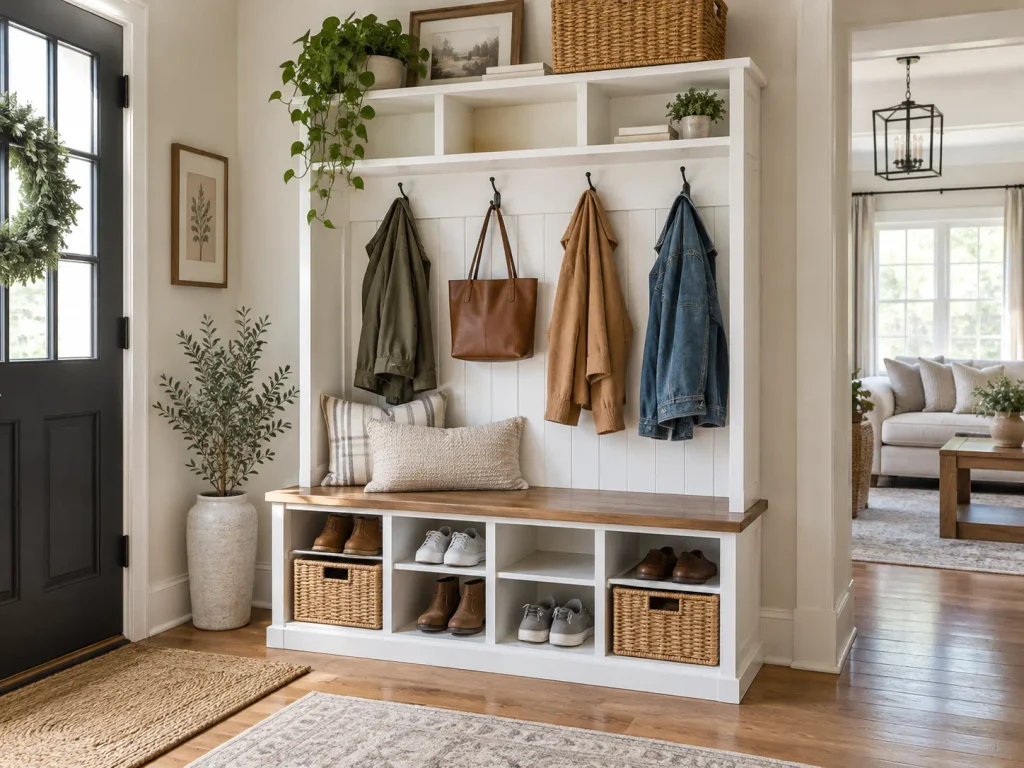
What Is a Mudroom Hall Tree?
A hall tree is a vertical, freestanding piece of furniture designed for entryways, mudrooms, and foyers. Modern designs combine four common functional features in one unit:
- Coat Hooks: Upper pegs or double hooks for jackets, bags, dog leashes, and hats.
- Seating Bench: A built-in surface for sitting down while putting on or removing footwear.
- Shoe Storage: Lower open cubbies, slatted shelves, or flip-down drawers located beneath the bench.
- Upper Shelving: High shelves or overhead compartments for seasonal outdoor gear or storage bins.
By using vertical wall space, a hall tree helps organize daily entryway items without requiring permanent construction.
Hall Trees vs. Custom Built-In Mudroom Storage
When organizing an entryway, homeowners often compare ready-made hall trees with custom millwork. The right choice depends on your budget, timeline, and whether you own or rent your home.
| Feature | Ready-Made Hall Tree | Custom Built-In Mudroom |
|---|---|---|
| Upfront Cost | Generally lower upfront furniture investment | Higher investment due to custom materials and professional labor |
| Installation | Flat-pack or pre-assembled; assembly time varies by model | Timeline depends on design complexity and contractor availability |
| Mobility | Gives you the option to move the unit later | Permanent architectural addition |
| Fit & Dimensions | Standard manufacturer sizes | Tailored precisely to specific wall dimensions |
| Best Suited For | Budget-conscious buyers and renters who can secure the unit | Homeowners seeking a permanently integrated architectural feature |
While custom built-ins offer seamless, edge-to-edge cabinetry, freestanding hall trees provide a quicker way to add storage at a significantly lower initial investment.
How to Choose the Right Hall Tree Size
Measuring your space accurately before buying helps prevent narrow or awkward walking paths. Beyond overall height and width, pay close attention to clearance depths, door swings, and usable walkway space.
The dimensions listed below are illustrative shopping ranges rather than standardized hall tree sizes. Actual measurements vary by manufacturer and design. Always verify assembled product dimensions and usable storage openings before ordering.
Entryway Size Matching
- Compact Entryways & Apartments: Units around 12 to 14 inches deep and 24 to 32 inches wide work well in smaller spaces where floor area is limited.
- Standard Entryways: Units measuring 14 to 16 inches deep and 36 to 48 inches wide generally provide a balanced layout with sufficient hook space for daily use.
- Large Foyers or Mudrooms: Wider units measuring 60 inches or more (or modular multi-piece systems) offer distinct bays for multiple household members.
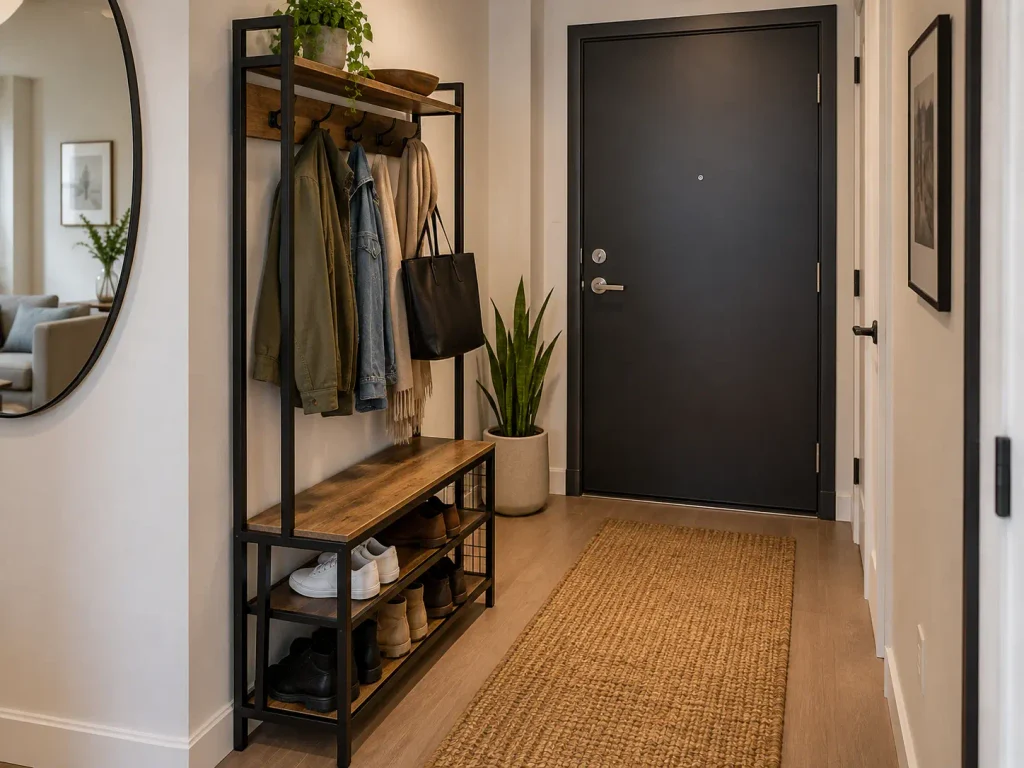
Door Swing and Walkway Clearance
When evaluating a prospective location:
- Check Front Door Swing: Confirm that the entryway door can open completely without striking the bench edge or protruding coat hooks.
- Maintain Walkway Width: As a practical planning target, aim to preserve at least 36 inches of unobstructed walking space in front of the unit wherever possible. This is a comfort guideline, not a requirement for most private homes, so check local building code and accessibility guidelines regarding door clearance and exit paths.
- Verify Light Switch & Trim Access: Ensure that hanging bulky winter coats will not block nearby wall switches, thermostats, or doorway trim.
Practical Example: Calculating Walkway Clearance
Suppose your entryway corridor measures 54 inches wide from wall to wall, and you are considering a hall tree with an overall depth of 15 inches. Subtracting the furniture depth leaves 39 inches of open floor space:
54 inches − 15 inches = 39 inches of clearance
While 39 inches may provide sufficient walking space depending on the layout, always account for real-world factors:
- Coat Protrusion: Bulky winter coats and heavy backpacks may extend beyond the front of the hall tree frame. Measure the total clearance with items actually hanging on the hooks, not just the dimensions of the furniture itself.
- Door Clearance: Ensure the main entrance door swings inward without making contact with the bench or hanging items.
- Seating Comfort: Confirm that someone sitting on the bench to tie their shoes will not completely block passersby.
Key Storage Features to Evaluate
1. Bench Weight Capacity
Always check the manufacturer’s stated seating capacity prior to purchase. Ratings vary widely based on frame construction, hardware, and material thickness.
- Check Stated Use: Verify whether the weight rating applies strictly to the seating bench or to the total combined weight of the entire unit (including upper shelves and hooks).
- Storage-Focused Models: Do not assume a larger or heavier-looking hall tree has a higher seating capacity. Some models are engineered primarily for lightweight storage and are not designed for adult seating.
2. Lower Shoe Storage
- Open Cubbies: Provide fast, visible access. Fixed cubbies often measure around 5 to 7 inches high in standard designs, which suits sneakers and flats. If you regularly store high-top boots or work shoes, measure your footwear height and look for units with adjustable shelving or taller lower openings (often 12 inches or higher).
- Slatted Metal/Wire Shelves: Allow air circulation around damp or mud-covered footwear, aiding drying times. Keep in mind that fine debris or dirt can drop through open slats to the floor below.
- Flip-Down Drawers: Conceal footwear for a streamlined appearance, but require additional clearance space when opened.
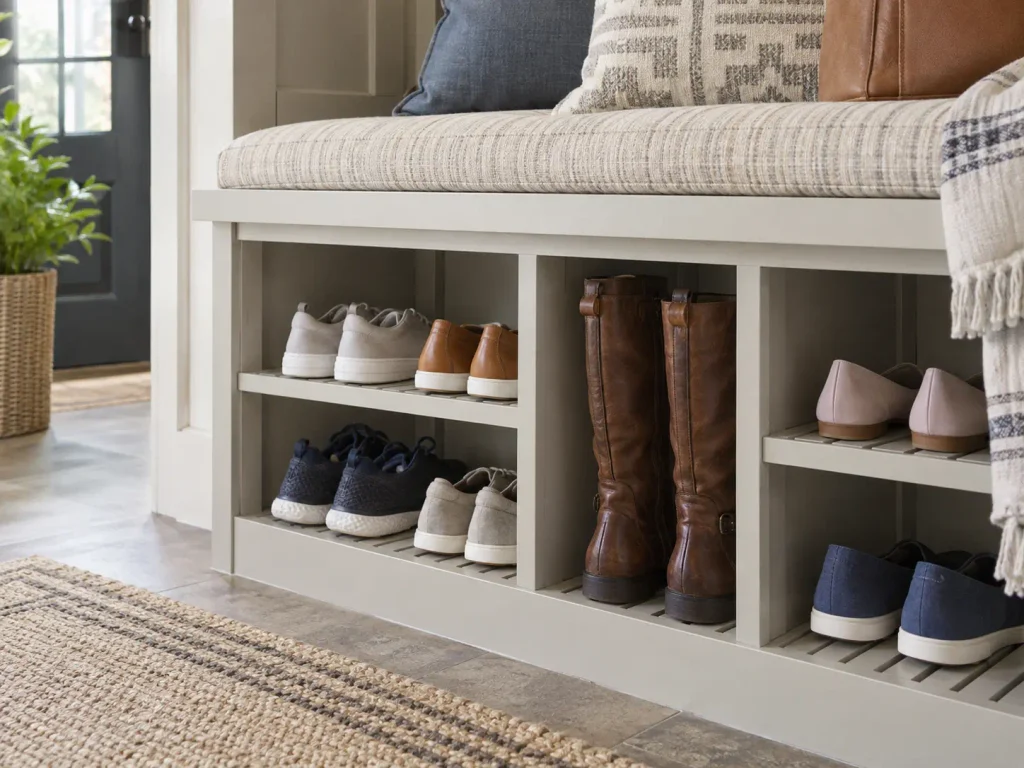
3. Hook Strength and Placement
Check how the coat hooks attach to the frame or backing panel, especially if you plan to hang heavy winter jackets or backpacks. Look for securely fastened metal hooks and follow any manufacturer-specified load limits.

Hook placement matters as well. Make sure hung coats and bags will not interfere with the seating area, nearby doors, or light switches.
4. Hall Tree Style Types
Choosing the right type depends on your entryway layout and household needs:
| Hall Tree Type | Best For | Key Things to Check |
|---|---|---|
| Compact Industrial | Narrow entryways and small apartments | Overall unit depth, walkway clearance, bench rating |
| Farmhouse with Bench | Family entryways and mudrooms | Shoe cubby height, hook capacity, baseboard cutout |
| Wide Storage Unit | Large foyers or garage entrances | Total wall width, multi-person seating capacity, wall anchoring |

Hall Tree Materials Compared
The material affects both long-term stability and how well the unit handles moisture brought in on damp shoes and coats.
| Material | Advantages | Maintenance Considerations |
|---|---|---|
| Solid Wood | High structural integrity; can often be sanded, refinished, or painted over time. | Generally higher cost; sensitive to extreme humidity fluctuations. |
| Engineered Wood (MDF/Particle Board) | Budget-friendly; provides smooth, uniform painted surfaces. | Requires immediate cleanup of standing water or melted snow to prevent edge swelling. |
| Powder-Coated Steel Frame | Can provide a durable frame, depending on construction and joints. | Moisture resistance depends on coating integrity; scratches or chips may expose the steel to rust. |
| Mixed Materials (Wood + Metal) | Combines rustic or modern design aesthetics with strong frame support. | Requires periodic inspection and tightening of hardware joints. |
Wall Anchoring and Tip-Over Safety
Tall furniture with upper hooks poses a potential tip-over risk if pulled on by children or unevenly loaded with heavy bags. Securing your unit safely requires correct hardware and proper attachment techniques.
Note on Federal Safety Standards: Under the STURDY Act, the U.S. Consumer Product Safety Commission (CPSC) requires dressers, chests, and similar bedroom clothing storage furniture to meet a mandatory tip-over stability standard. A typical hall tree is designed for coats, shoes, and bags rather than clothing, so it may not fall under that rule. Even so, all tall entryway furniture should be anchored to the wall. To see which products the rule covers, read the CPSC’s clothing storage unit guidance.
Safe Installation Protocol
- Follow Manufacturer Instructions: Always install the specific anti-tip restraint kit (brackets, steel cables, or heavy-duty straps) provided with your unit according to the assembly manual.
- Anchor Directly into Wall Studs: Where recommended by the manufacturer, locate a solid wooden wall stud using a stud finder and attach the restraint using specified wood screws. Fastener type and length depend on your wall construction and the anchoring hardware provided.
- Hollow Wall Anchors: If a wall stud is unavailable at your desired installation spot, consult the furniture manufacturer or a qualified installer regarding approved hollow-wall anchoring methods. Do not rely on basic plastic expansion plugs or assume a drywall anchor’s static weight rating is sufficient to stop dynamic tip-over forces.
- Rental Considerations: Check your lease for rules on wall anchoring and repairs before moving out, as installing wall anchors typically leaves small screw holes in drywall that may need patching.
Common Hall Tree Buying Mistakes
- Ignoring Shoe Opening Heights: Selecting a model with fixed 5-inch cubby openings when your household regularly wears tall boots or work footwear.
- Forgetting Coat Depth: Overlooking how far padded winter coats or stuffed backpacks extend outward past the front of the frame when hung on hooks.
- Overlooking Baseboard Trim: Standard wall baseboards can prevent a square-backed hall tree from sitting completely flat against drywall. Look for units featuring lower cutout notches or adjustable leveling feet to bridge baseboard gaps.
- Skipping Hardware Maintenance: Failing to periodically check and tighten assembly bolts on high-use seating benches and hook panels over time.
Frequently Asked Questions
How deep should an entryway hall tree be?
Many hall trees are approximately 14 to 18 inches deep, although sizes vary by model. For narrow hallways or tight entrance corridors, look for compact designs measuring 12 to 14 inches deep to keep walkways unobstructed.
How do I protect an engineered wood (MDF) bench from wet footwear?
Place water-resistant silicone mats or rubber shoe trays inside lower cubbies or beneath slatted shelves. Promptly wipe up standing water, melted snow, or mud to prevent edge laminate peeling or swelling.
Can a hall tree be placed in a garage entryway?
Yes, but the material matters. Metal-framed hall trees with intact powder coatings may be better suited to damp garage entryways than unsealed engineered wood models. Check the manufacturer’s recommended use environment and moisture-resistance information before purchasing. Keep the door between the garage and the house clear so it can open, close, and latch properly. Check local building requirements for garage-to-house door protection and self-closing features.

Final Buying Checklist
Before you buy, check the following:
Your checklist is saved in this browser. Downloads include all tasks and their completion status. These are planning reminders, not installation or code-compliance instructions.



1 thought on “Mudroom Hall Trees: Sizes, Storage Options & Buying Tips”
Comments are closed.