
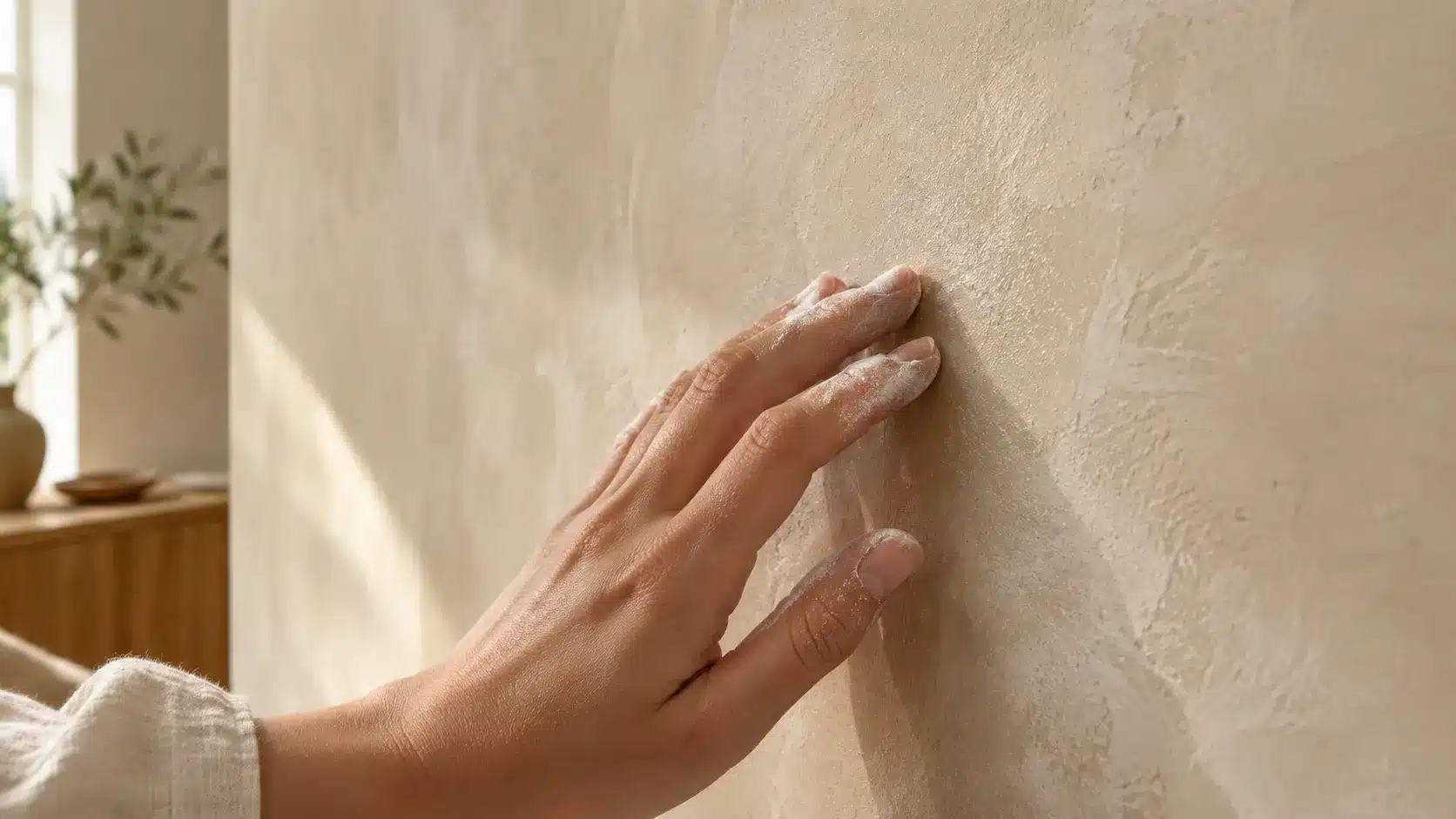
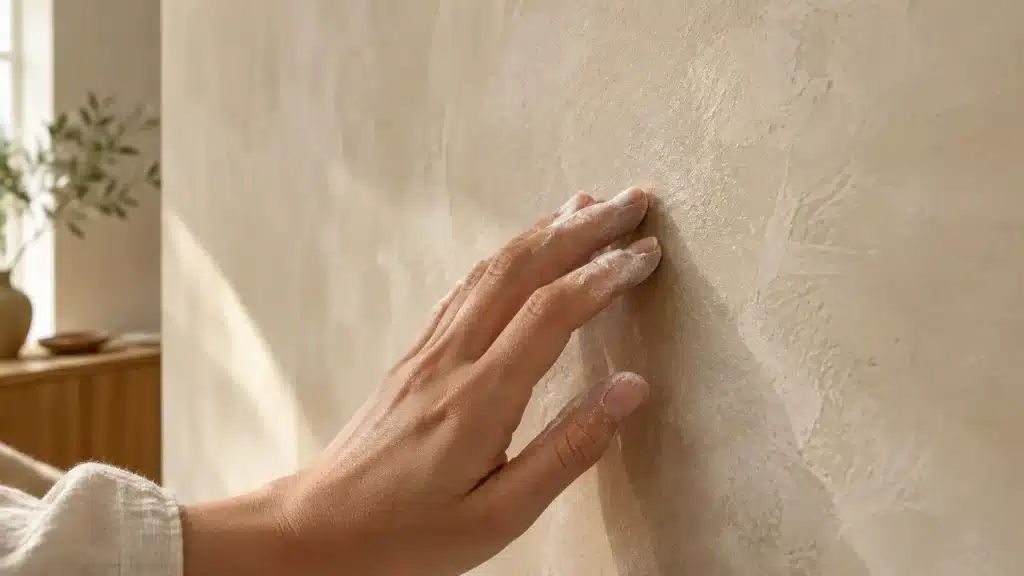
You finish applying limewash, let it dry, and run your hand across the surface only to find a layer of white powder on your fingers or clothing. In paint and coating terms, this surface powdering may be described as chalking or dusting.
Limewash offers a distinct, low sheen mineral character with subtle shading. However, persistent dusting can compromise both aesthetics and daily function. Understanding the physical mechanisms behind chalking helps you prevent application failures and systematically repair powdery walls.
What Is Limewash Chalking?
Traditional limewash hardens through carbonation, in which slaked lime reacts with carbon dioxide (CO₂) from the atmosphere to form calcium carbonate. Rather than forming a synthetic plastic film like latex or acrylic paint, it develops a bonded mineral layer across the substrate.
When curing is incomplete or the coating does not properly bond to the substrate, loose lime particles can remain on the surface and rub off easily.
Why Is My Limewash Rubbing Off?
Chalking is rarely caused by a single factor. While premature moisture loss is a primary contributor, several environmental and application variables can disrupt the finish:
- Inadequate Substrate Preparation: Applying traditional limewash directly over non porous surfaces, gloss paints, or unprimed drywall can prevent the coating from anchoring properly.
- Rapid Evaporation: Direct sunlight, high winds, or dry indoor air can draw water out of the wash before carbonation completes, leaving an unbonded, powdery layer.
- Excessive or Incorrect Dilution: Adding more water than the product’s recommended dilution ratio can reduce coating strength and coverage, while applying a single thick coat can interfere with even drying.
- Product and Substrate Mismatch: Using traditional lime formulations on non compatible modern paints without manufacturer recommended basecoats leads to surface failure.
How to Prevent Limewash Chalking
Preventing a powdery finish requires managing substrate absorption, atmospheric conditions, and layer thickness during application.
- Follow Substrate Specific Priming Guidelines: Always check manufacturer specifications for your specific substrate. Modern drywall or previously painted latex surfaces may require a manufacturer approved mineral bonding primer or specialized basecoat, depending on the limewash system.
- Manage Moisture and Drying Rates: On highly absorbent masonry or mineral primers, misting the surface lightly with clean water prior to painting slows moisture loss. Avoid painting in direct sunlight, low humidity, or drafty areas.
- Apply Multiple Thin Coats: Apply multiple thin coats as recommended by the manufacturer, using overlapping crosshatch strokes when appropriate. Thin layers promote controlled drying, consistent coverage, and a more durable mineral finish. Always adhere to recommended recoat intervals.
How to Fix Limewash That Is Rubbing Off
If your cured limewash wall is dusting, avoid immediately painting over it or applying liquid sealers. Follow this structured troubleshooting process to restore wall stability:
- Test the Surface Severity: Lightly wipe an inconspicuous area with a clean, dry cloth to evaluate how loose the powder is and whether the underlying layers are sound.
- Identify the Coating and Substrate: Determine whether you are dealing with a traditional pure slaked lime wash, a commercial mineral paint, or a limewash effect acrylic paint. Review the manufacturer’s technical data sheet for specific repair protocols.
- Remove Loose Material: Gently wipe away unstable powder using a soft microfiber cloth or a very soft brush. Avoid harsh scrubbing or wet washing that could compromise sound, lower layers.
- Test a Compatible Repair Patch: Perform a patch test on a small section. Depending on the product specs, this may involve rewetting the area and feathering in a thin, diluted coat of limewash, or applying a compatible mineral consolidating wash. Allow full cure time to verify adhesion.
- Decide to Recoat or Strip: If the patch stabilizes, proceed across the wall. However, if the coating remains powdery, cracked, or flaking across large areas, a simple recoat will not hold; the unstable layers must be gently removed down to a sound substrate and reprepared.
A Note on Matte Protective Sealers
Applying a breathable matte mineral sealer can help protect high contact zones like hallways or dining areas. However, sealers are not a structural fix for unbonded, chalking paint. Always verify sealer compatibility with your limewash system and test a small area first, as protective sealers can alter the wall’s color depth, sheen, and moisture permeability.
Frequently Asked Questions
Is limewash supposed to rub off?
A small amount of mineral dust can be present during the early curing period of some traditional lime washes. However, noticeable chalking that leaves heavy residue or thins out the wall color can indicate incomplete curing, poor adhesion, or application error.
Can I seal limewash to stop it from rubbing off?
Sealing only works if the underlying limewash layer is stable and well adhered. If the lime underneath lacks adhesion to the wall, applying a sealer over a loose, powdery surface can lead to peeling or poor adhesion over time. Resolve surface stability first before evaluating a sealer.
Can you paint over chalky limewash?
Standard paint should not be applied directly over a chalking surface. Any loose powder acts as a bond breaker. You must gently clean off all loose material and ensure the wall is stable. Once the surface is stable and properly prepared, use a primer compatible with both the substrate and the new paint system.


1 thought on “Limewash Paint Chalking: Why It Rubs Off and How to Fix It”
Comments are closed.