
Your backyard might feel exposed even with a six-foot fence. But adding taller fences isn’t always the best solution.
Wondering how to create privacy in your backyard with plants? The trick isn’t planting more—it’s placing the right plants in the right spots. Here are 10 practical ideas to help make your outdoor space feel more private.
1. 10 Easy Ways to Create Backyard Privacy With Plants
Plant an Evergreen Hedge for Year-Round Screening
If your yard feels exposed even in winter, an evergreen hedge is worth considering. Species like American Arborvitae (Thuja occidentalis) or broadleaf evergreens keep their leaves year-round, maintaining cover when deciduous plants drop their foliage. Always check the mature width before buying; some varieties grow significantly wider than they appear in small nursery pots. You also do not need to line your entire property border—screening just the section facing a neighbor’s main outdoor area is often enough.
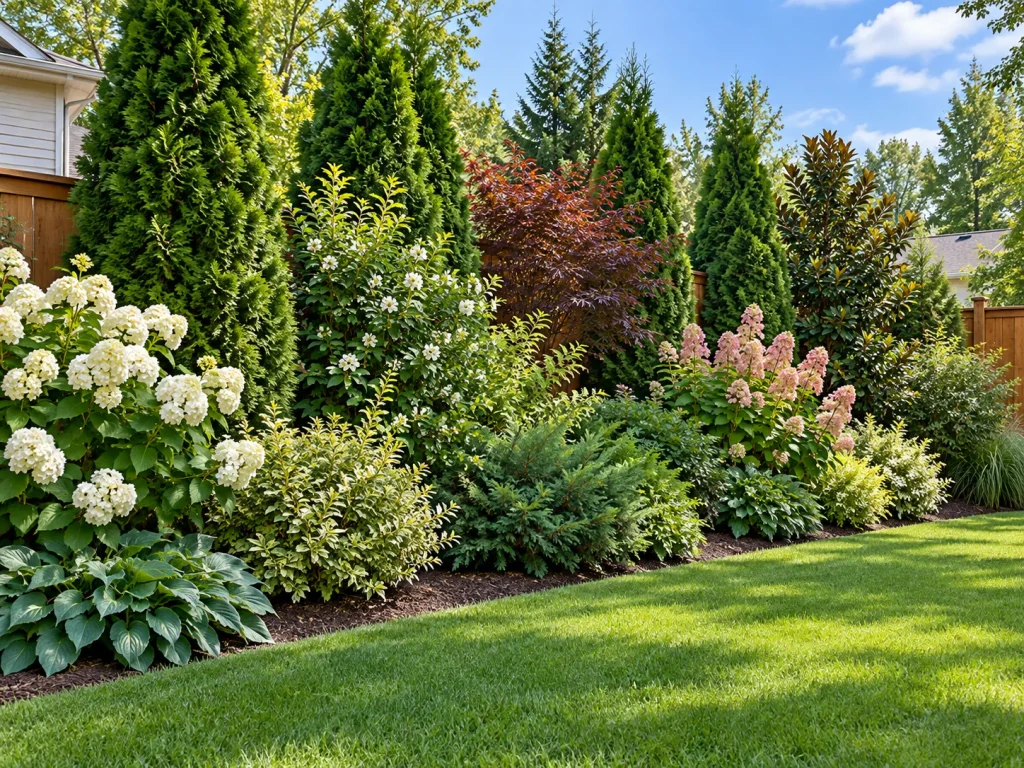
Mix Trees and Shrubs for a Natural Privacy Screen
Instead of a rigid row of identical plants, combine different species, foliage textures, and heights. Staggering evergreen conifers with flowering shrubs creates a resilient, natural-looking screen (University of Maryland Extension). Mixing different plant species can reduce the risk of a single pest or disease affecting your entire screen. It also makes the planting look less uniform and more like a natural garden border.
Use Tall, Narrow Plants Along a Fence
When ground space is limited, fastigiate or columnar plants are ideal. Varieties like ‘Sky Pencil’ Holly grow straight up like green pillars, adding vertical height above a 6-foot fence without invading your lawn. Make sure your soil drains well, as narrow evergreen cultivars can be sensitive to standing water.
Add Ornamental Grasses Around a Seating Area
Clump-forming grasses like Switchgrass (Panicum virgatum) or ‘Karl Foerster’ Feather Reed Grass reach impressive heights by mid-summer. Planted along a patio border, they create a soft, swaying curtain of greenery. They grow quickly within a single season and require minimal care beyond a single annual cutback in late winter.
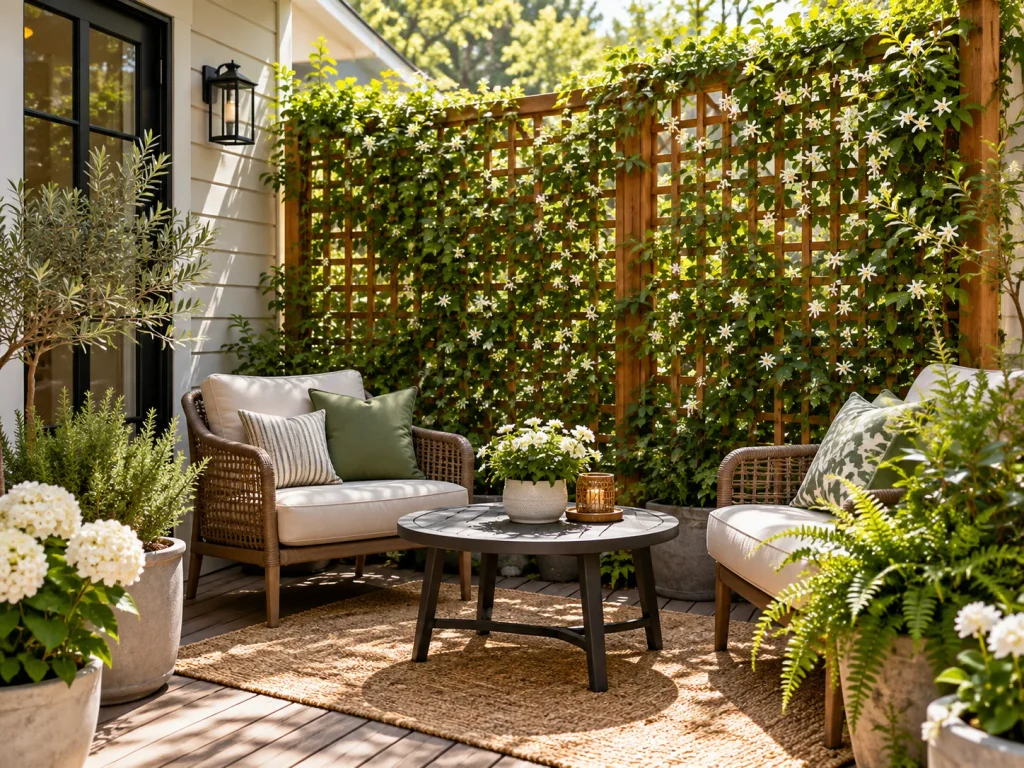
Grow Climbing Plants on a Trellis
Perennial vines like Clematis or Climbing Hydrangea turn wooden lattice panels into lush green walls with a very small ground footprint. Keep in mind that heavy woody vines—such as American Wisteria (Wisteria frutescens)—become heavy over time. They require sturdy, post-anchored structures or pergolas rather than light timber slats.
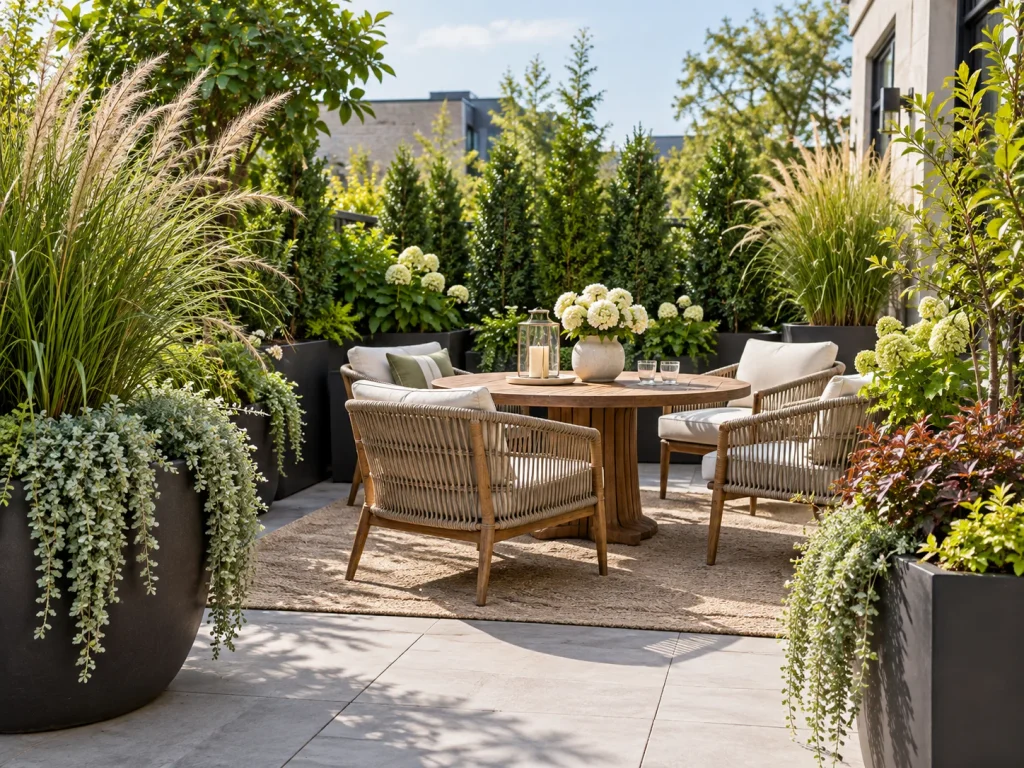
Arrange Large Potted Plants Around Your Patio
Large containers filled with tall grasses or container-friendly shrubs offer immediate screening for rented homes or paved concrete patios. Select planters with adequate drainage holes, and ensure tall containers are heavy enough to stay upright in strong winds. Position your pots before filling them with heavy potting soil, as large planters become difficult to move once filled and watered (University of Minnesota Extension).
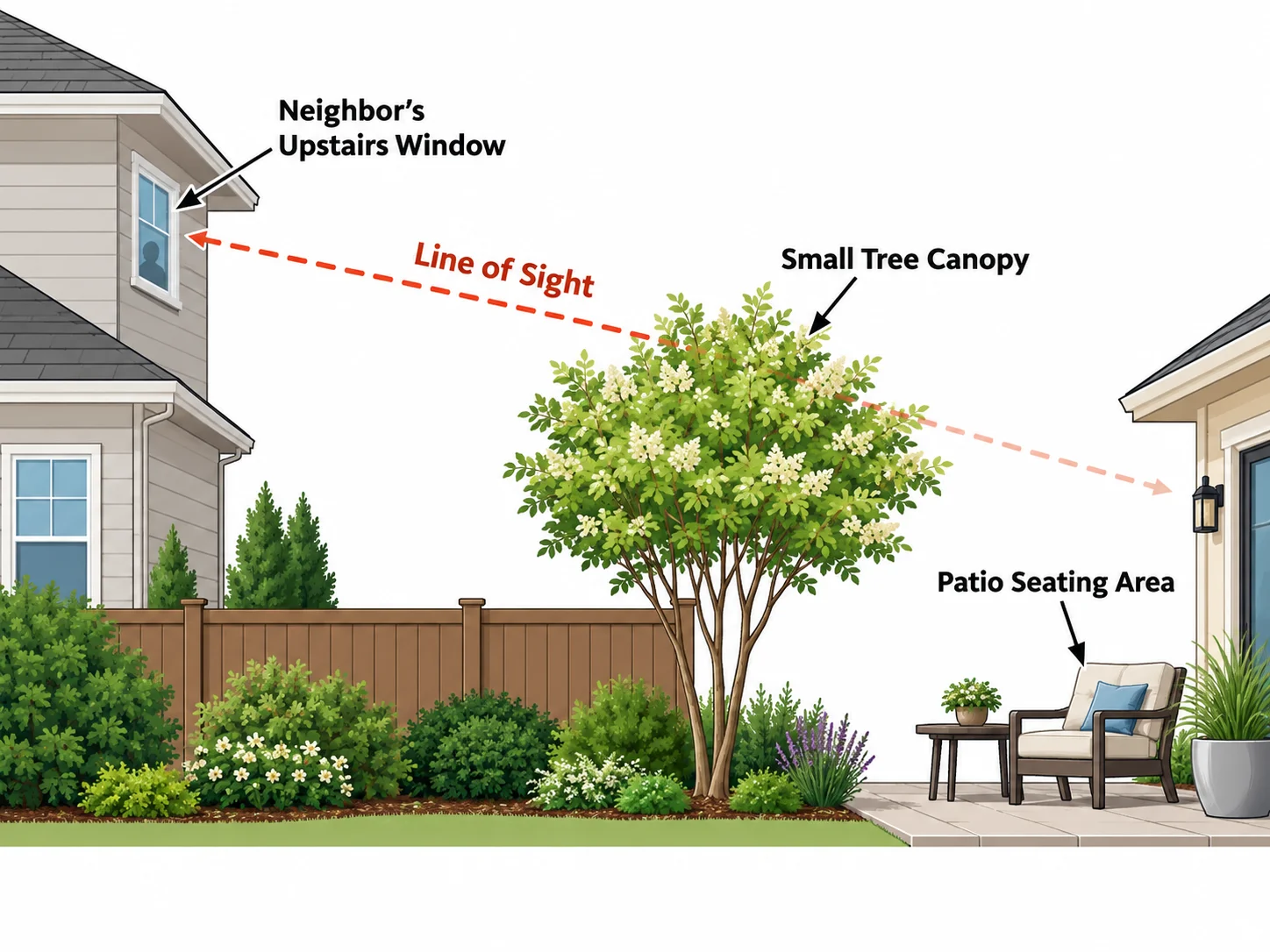
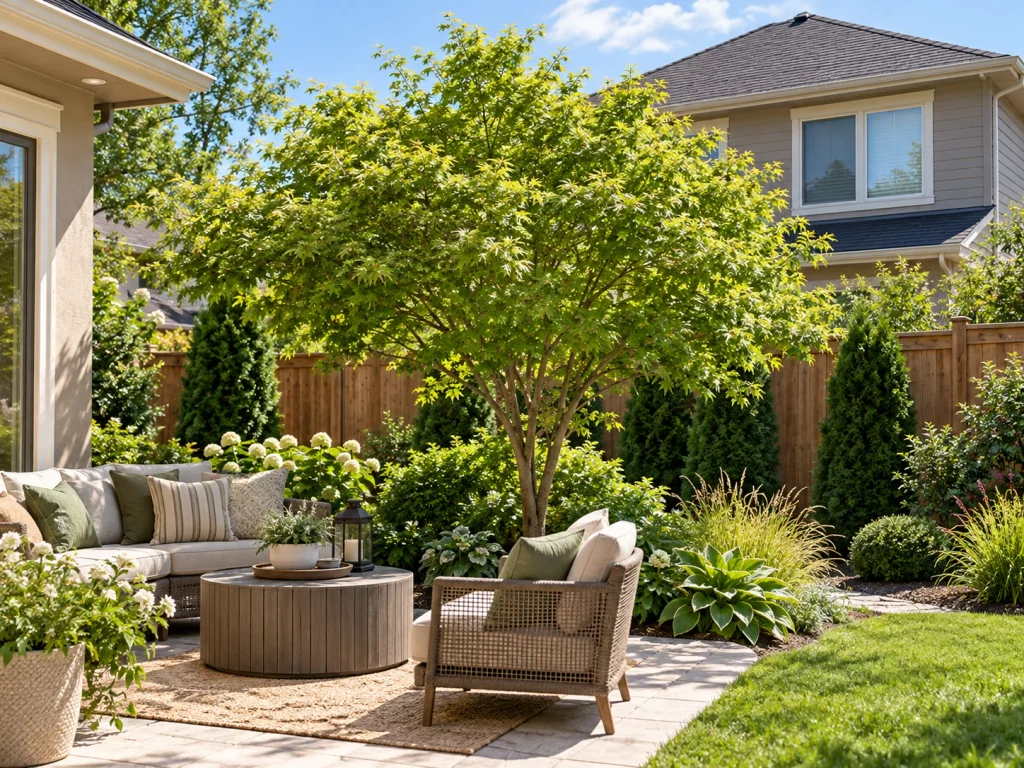
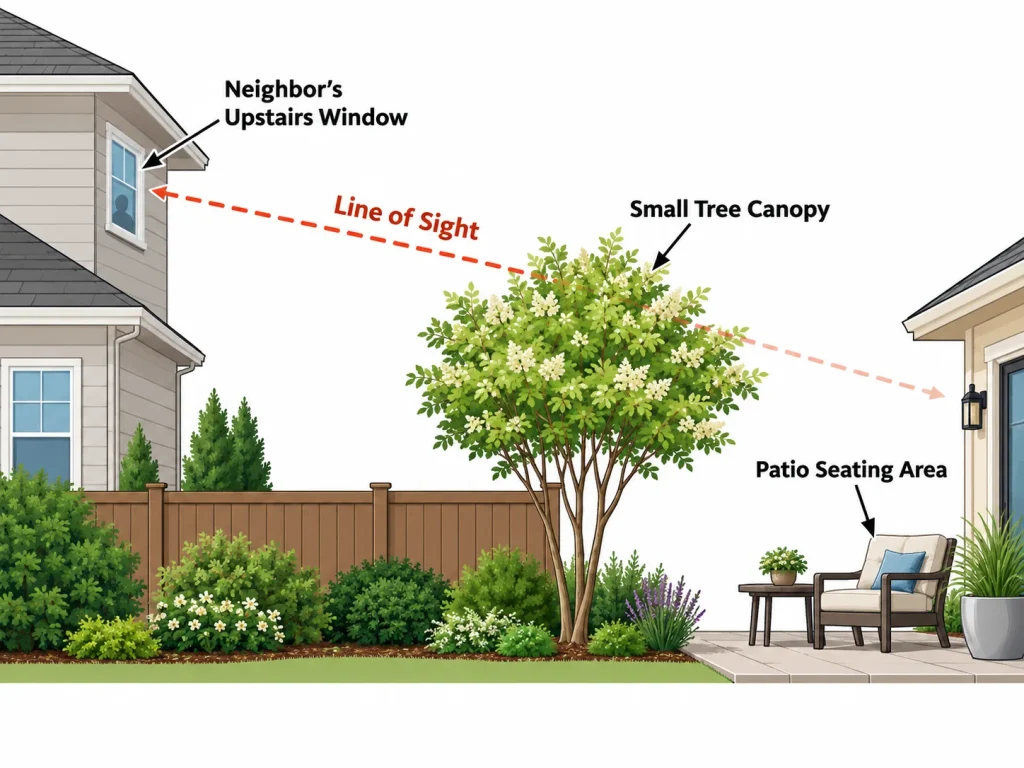
Use Small Trees to Block Views From Upstairs Windows
A ground-level fence cannot block sightlines from a neighbor’s second-story window. Small ornamental trees with higher branching—such as Serviceberry (Amelanchier) or Dogwood—place a leaf canopy right in that elevated sightline. A tree closer to your patio may block an upstairs view more effectively than one along the property line. Check the sightline first, and consider how the canopy will spread as the tree matures.
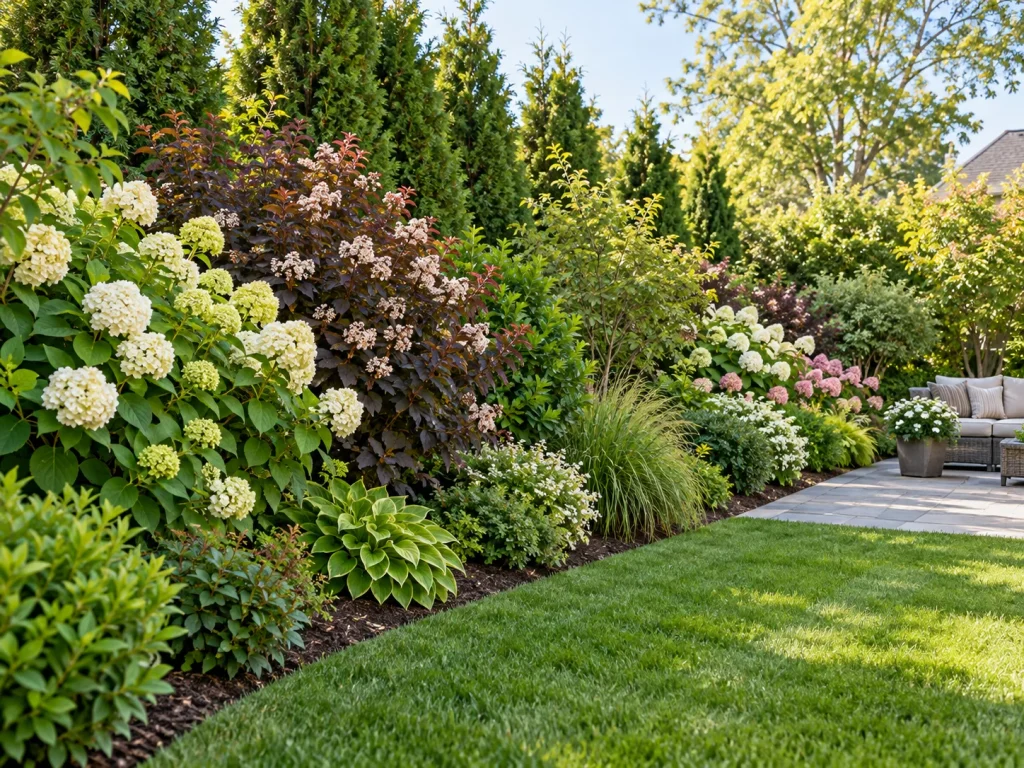
Layer Shrubs in Front of an Existing Fence
If a 6-foot fence leaves you feeling slightly exposed, plant medium-sized broadleaf or flowering shrubs directly in front of it. This breaks up the hard wooden surface, adds visual depth, and extends privacy coverage above the top rail as the branches mature.
Create a Flowering Shrub Border
Flowering shrubs like Panicle Hydrangeas (Hydrangea paniculata) or native Ninebark (Physocarpus opulifolius) add seasonal color while softening property edges. They offer dense foliage during spring and summer when you spend the most time outside, though they will drop their leaves in late fall.
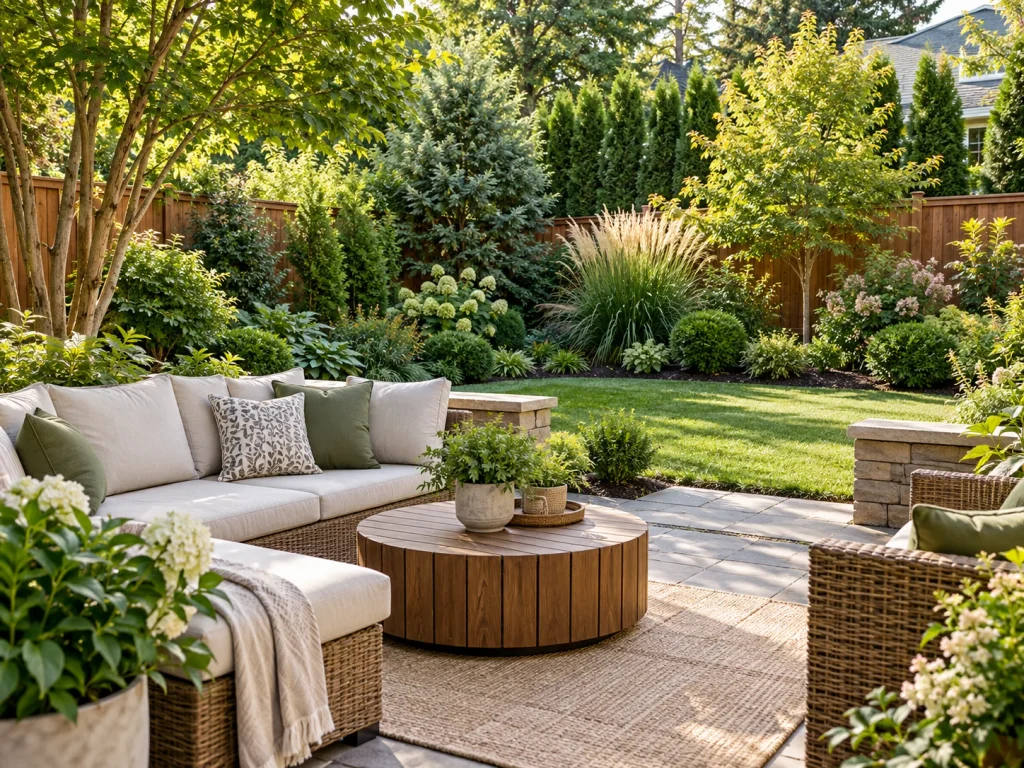
Surround Your Favorite Sitting Spot Instead of the Whole Yard
Enclosing an entire property perimeter is costly and often unnecessary. Focus your budget on your high-use areas—such as a dining table, fire pit, or lounge chairs. Enclosing a small seating area requires far fewer plants and concentrates your privacy planting where you actually spend the most time.
2. Start With the View You Want to Block
Before buying plants, determine exactly where your privacy gaps are. Plant placement matters more than sheer quantity.
Test Your Sightlines Before Buying
Mark the proposed planting area with two stakes, then hold up a temporary screen or lightweight fabric to see how much of the view it blocks. Check from your usual sitting position before deciding where to plant. A quick test prevents you from planting a full row in the wrong location.
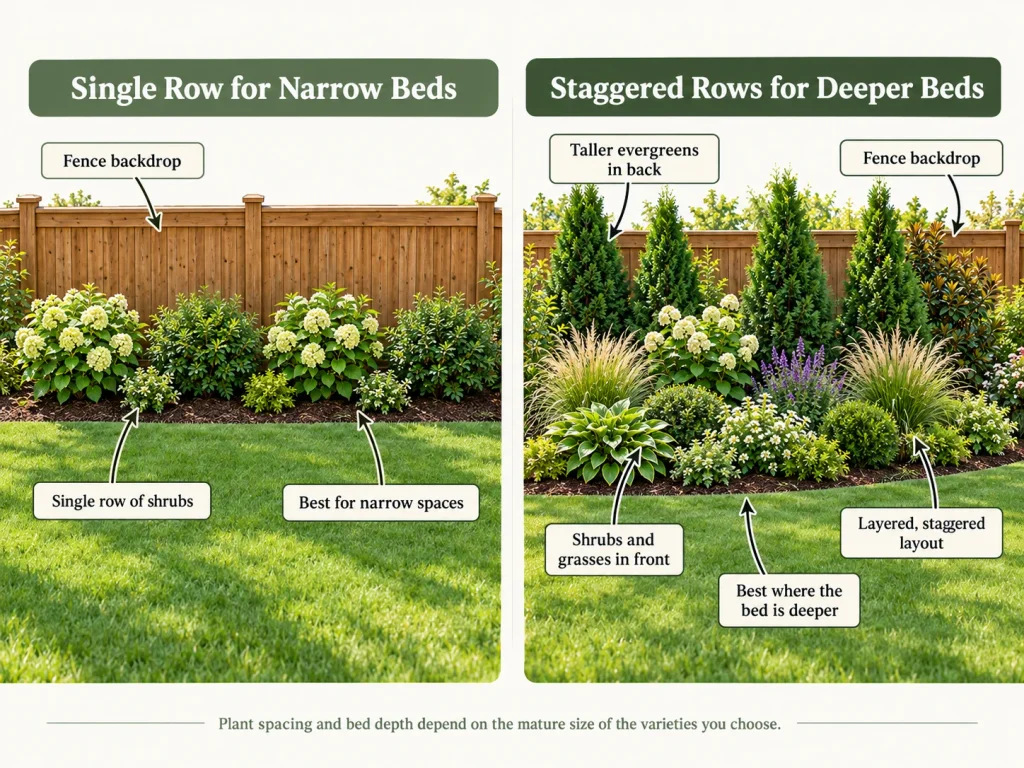
Layering vs. Single-Row Placement
Combining different heights creates a natural look, but your layout should match your available space:
- Narrow Planting Beds: If your bed is slim, do not force two rows of shrubs into it. A single row of well-spaced plants grows healthier and looks better over time (Clemson University Cooperative Extension).
- Deep Planting Beds: Where space allows, stagger plants in a zig-zag pattern across two rows. Place taller evergreens in the back and shorter flowering shrubs or grasses in front.
3. What Works for Small Yards, Low Fences, and Upstairs Neighbors?
Different backyard layouts present unique privacy challenges. Here is how to adapt your approach:
Small Yards and Tight Patios
Avoid large trees that swallow up floor space. In a small yard, consider narrow-growing shrubs, sturdy planters, or trellises with climbing vines. Choose the planting bed width based on the mature size and growing needs of the plants you select.
Low Property Fences
Do not tear down a sound 4-foot or 6-foot fence. Layer native deciduous or evergreen shrubs along the inside edge. Their upper branches extend privacy coverage above the existing fence line while softening the hard boundary.
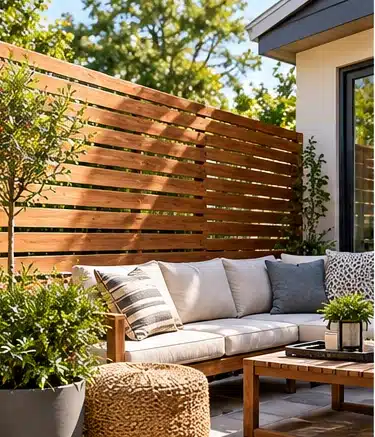
If your existing fence has gaps or needs replacing, solid vinyl privacy fence panels can provide immediate ground-level screening while shrubs soften the boundary as they grow.
Exposure From Second-Story Windows
Instead of planting a tall perimeter hedge along the property line, plant a small ornamental tree with a spreading canopy closer to your patio. Positioning overhead branches near your seating area intercepts high sightlines without requiring a towering tree wall along your property line.
4. Choosing Plants That Fit Your Yard
Selecting plants requires matching their natural characteristics to your specific site conditions.
Judge Density at Eye Level, Not Just Total Height
Do not judge a privacy plant by its total potential height alone. A plant reaching 8 feet tall might have sparse lower foliage, leaving your seating area completely exposed at eye level. Check how dense the foliage is at the specific height where you need screening.
Regional Options to Consider
- Evergreens for Year-Round Cover: American Arborvitae (Thuja occidentalis), Inkberry Holly (Ilex glabra), Eastern Redcedar (Juniperus virginiana).
- Deciduous Screening Shrubs: Arrowwood Viburnum (Viburnum dentatum), Ninebark (Physocarpus opulifolius), Panicle Hydrangea (Hydrangea paniculata). (Note: Winterberry Holly is a valuable native shrub for berry interest, though it grows slowly compared to standard screening shrubs).
- Grasses & Alternatives: Native Switchgrass (Panicum virgatum), sterile hybrids like ‘Karl Foerster’ Feather Reed Grass, or Little Bluestem (a shorter native grass reaching 2–4 feet, best for low borders or layered foregrounds rather than high visual screening). (Avoid invasive species like Miscanthus sinensis / Maiden Grass in areas where it escapes into native habitats).
- Vines for Sturdy Structures: Clematis, American Wisteria (Wisteria frutescens), Virginia Creeper.
| Plant Type | Best For | Year-Round Screening? | Maintenance Level | Space Needed |
| Evergreens | Property borders & main screens | Yes, depending on foliage density | Low to Moderate | Moderate to Large |
| Deciduous Shrubs | Seasonal color & natural borders | Spring through Autumn | Moderate | Moderate |
| Ornamental Grasses | Modern patio edges & soft screens | Seasonal; varies by species and climate | Very Low | Compact |
| Climbing Vines | Trellises & tight side yards | Mostly Seasonal | Moderate | Minimal Ground Space |
Note: Plant behavior and invasive status vary across US regions. Always verify local suitabilities with your state’s University Extension Service before buying.
5. What to Do While Your Privacy Plants Grow
Living privacy screens take time to mature. While your permanent plants fill in, combine these temporary and cost-effective strategies:
- Mix Container Sizes: Buy a few larger 3-gallon or 5-gallon shrubs for critical sightlines, filling secondary spots with smaller 1-gallon plants that gradually fill in over time.
- Add Temporary Screen Panels: Install simple wooden trellis panels or bamboo screens behind young shrubs. They supply immediate cover while live plants establish.
- Fill Gaps With Fast Annuals: Plant tall annuals like Sunflowers, Cosmos, or Cannas in open spaces between young shrubs for immediate summer coverage.
6. A Few Things to Check Before Planting
To avoid costly mistakes, run through this checklist before buying materials:
- Sunlight & Climate: Measure how much direct sun your site gets daily, and confirm plants match your local USDA Hardiness Zone.
- Mature Spread: Space plants according to their mature width, not their pot size at purchase. Crowding plants causes lower leaves to drop from lack of light.
- Winter Coverage: If you need privacy in winter, place evergreens where they block the most important views. Use flowering shrubs or ornamental grasses in spots where seasonal coverage is enough.
- Deer Activity: If deer visit your yard, check regional deer-resistance ratings (University of Maryland Extension). Even resistant plants may suffer damage when young, so temporary fencing may be required.
- Call 811 Before Digging: Before digging holes for trees or structural posts, contact 811 in the US to mark underground utility lines. Also check for private irrigation lines or overhead utility wires.
7. Keeping Your Privacy Plants Healthy
Proper planting depth and watering during the establishment phase protect your investment:
- Establishment Watering Schedule: Newly planted shrubs need regular moisture while building root networks (University of Minnesota Extension):
- Weeks 1–2: Water daily.
- Weeks 3–12: Water every 2 to 3 days.
- After 12 Weeks: Water weekly until established.(Adjust watering based on rainfall, soil drainage, and temperature).
- Plant at the Correct Depth: Dig your hole 2 to 3 times wider than the root ball, but keep it shallow enough so the root flare (where the trunk widens at the soil line) rests at or slightly above ground level (OSU Extension Service). Backfill with native soil rather than heavily amending the hole, encouraging roots to spread outward.
- Pruning: Prune lightly to maintain shape and remove dead wood. Avoid harsh lower-branch trimming on evergreens, as bare wood near the base rarely regrows.
Start With the Spot That Needs Privacy Most
Creating a private outdoor space does not require transforming your entire property at once. Take a seat on your patio, identify the single sightline that bothers you most, and place a few well-chosen plants or container planters right in that path. Starting small allows you to build an effective, budget-friendly living screen over time.

1 thought on “How to Create Privacy in Your Backyard With Plants: 10 Easy Ideas”
Comments are closed.