Ever walked into a resort in Seminyak or Ubud and felt an instant wave of calm? That relaxed, grounded atmosphere is a hallmark of modern Bali-inspired decor.
While some tropical approaches favor vibrant motifs or casual wicker, Balinese-inspired design balances raw architectural textures with calm, earth-toned minimalism. Whether you are decorating a suburban house or a city apartment, this guide breaks down how to bring Bali-inspired natural textures into modern domestic spaces.

Traditional Balinese Architecture vs. Modern Resort Style
To apply this style thoughtfully, it helps to distinguish between traditional Balinese architectural principles and the modern resort aesthetic popularized globally.
Traditional Balinese home design is guided by Tri Hita Karana—a cultural philosophy emphasizing harmony among people, nature, and the spiritual realm, which is recognized in UNESCO cultural landscape documentation. Within this philosophical framework, traditional homes and residential compounds are planned according to Asta Kosala Kosali, an ancient system of architectural guidelines governing spatial layout, orientation, and building proportions. These traditional compounds feature open-air pavilions (bale), intricate wood carvings, dark teak timber, and stone gateways (candi bentar or kori agung).
What most interior enthusiasts recognize today as “Bali style” is a modern hybrid: it pairs traditional Balinese craftsmanship with modern minimalist resort design.
| Feature | Traditional Balinese Architecture | Modern Bali-Inspired Resort Style |
| Structure | Open-air pavilions (Bale), stone courtyards | Flexible indoor–outdoor layouts |
| Woodwork | Dark teak, ornate hand-carvings | Light-to-medium teak, live-edge, clean silhouettes |
| Color Palette | Deep terracotta, dark wood, gold accents | Warm off-whites, oat beige, soft rattan, leafy greens |
| Overall Vibe | Daily living integrated with ritual and cultural traditions | Spa-like, uncluttered, residential retreat |
Adapting Island Openness to Enclosed Homes
In homes with central HVAC and enclosed walls, you can emulate island openness by maximizing natural light, choosing low-profile furniture to preserve sightlines, and introducing breathable, natural materials.
Essential Materials and Maintenance Guidelines
The difference between a generic tropical look and a Balinese-inspired palette lies in the material combinations, craftsmanship, and spatial composition.
Teak and Suar Wood
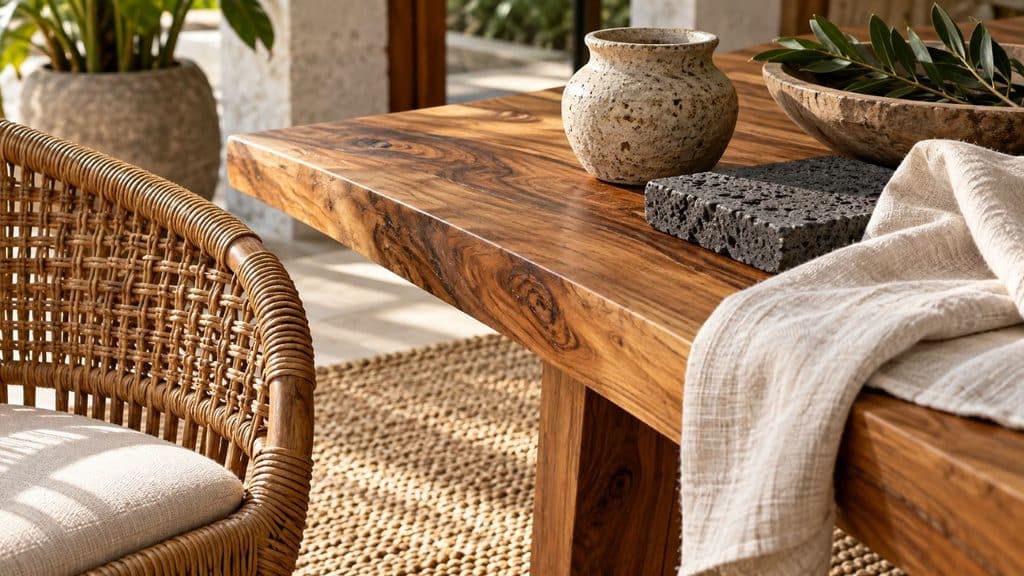
Wood forms the foundation of Balinese decor. Teak is prized for its strength and rich grain, while Suar wood is famous for dramatic live-edge dining and coffee tables.
- Care Tip: Solid wood responds to changes in indoor humidity, especially during winter heating seasons. Rather than relying on a single oil or wax, follow the manufacturer’s specific finish care instructions, avoid placing solid wood furniture directly next to heating vents, and maintain steady indoor humidity levels to minimize wood movement.
Woven Textures: Rattan, Bamboo, Jute, and Seagrass
Woven accents add tactile warmth without visual clutter.
- Rattan & Bamboo: Best reserved for accent chair frames, bed headboards, and pendant light shades.
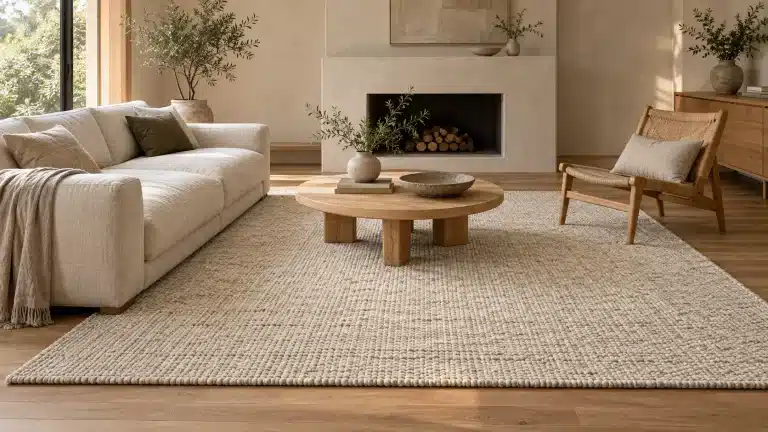
- Jute & Seagrass: Excellent for flat-weave area rugs that anchor living spaces.
Stone and Terrazzo
Volcanic basalt, river stone, and terrazzo introduce an organic, grounded feeling.
- Care Tip: Maintenance varies depending on whether you are using natural stone or manufactured terrazzo. Use gentle, pH-neutral non-acidic cleaners, wipe away standing water promptly, and consult manufacturer guidelines to determine specific care and sealing requirements.
Color Palettes and Layered Lighting
Earthy Neutral Palette
Instead of loud tropical colors, modern Bali-inspired spaces rely on quiet earth tones:
- Base: Warm alabaster, sandy oat, cream, and warm terracotta.
- Accents: Deep foliage greens from live plants, muted olive, and antique brass fixtures.
Diffused, Low-Level Lighting
Relying only on harsh overhead lighting can make the room feel less restful. Build a layered lighting scheme using woven rattan or bamboo pendant shades that cast soft, patterned shadows. Pair them with warm-toned bulbs (2700K) and floor lamps positioned at eye level.
Balinese Living Room Ideas
A Balinese-inspired living room should feel airy, grounded, and unhurried.
- Layout for Small Spaces: If you have a small living room, skip bulky outdoor-style daybeds. Choose a streamlined sofa in an off-white linen blend, and pair it with a single open-frame rattan accent chair.
- Coffee Table Anchor: A live-edge Suar wood table or a low-slung teak coffee table acts as a strong natural focal point.
- Windows: Sheer linen drapes filter natural light beautifully during the day. However, because sheer fabrics offer limited privacy at night, pair them with discreet woven roller shades or blinds if privacy is required.
Balinese Bedroom Ideas
Turn your bedroom into a calm sanctuary by focusing on clean lines and natural bedding.
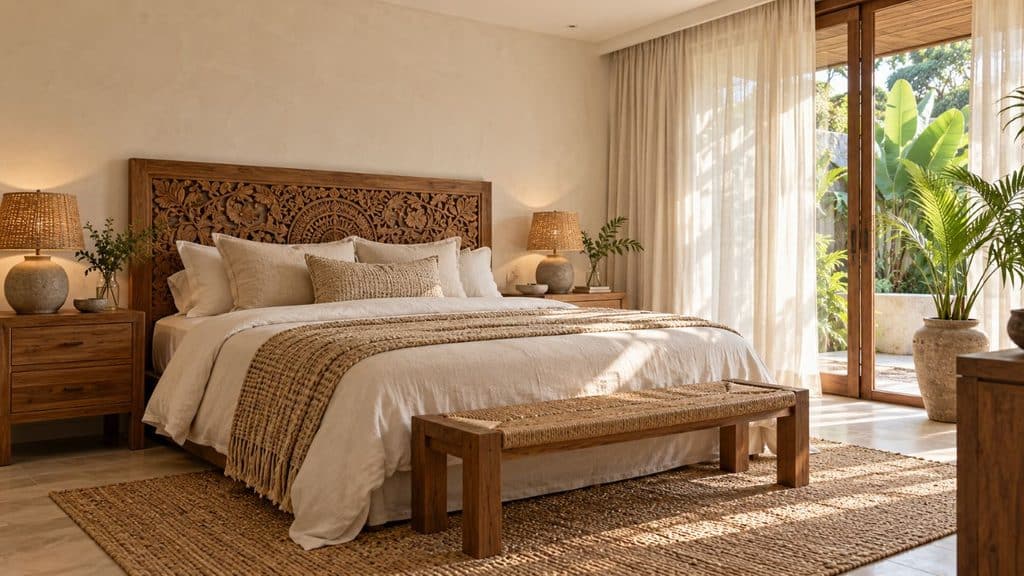
- Headboard Alternatives: Four-poster canopy beds look stunning, but they can overwhelm standard eight-foot ceilings. If space or height is limited, use a carved teak headboard or hang a woven tapestry behind a standard bed frame.
- Bedding: Use breathable, unbleached linen or organic cotton in soft cream or warm beige. Layer with a woven throw at the foot of the bed.
- Lighting: Place twin woven table lamps on either side of the bed to create a warm, inviting glow.
Resort-Inspired Bathroom Ideas
Bathrooms are ideal for recreating a spa-like retreat through stone and greenery.

- Stone Vessel Sink: Replacing a standard ceramic basin with a river stone or terrazzo vessel sink immediately elevates the space.
- Plant Selection by Light and Moisture: Always assess your bathroom’s actual natural light levels and ventilation before selecting plants, as light exposure varies significantly even in rooms with windows.
- Low-Light Tolerant Species: Snake plants and ZZ plants tolerate lower light levels and drier soil better than most species. While well-suited for bathrooms with limited window exposure, they still require some ambient daylight to maintain healthy growth over time.
- Moderate-Light & High-Humidity Plants: Pothos adapts easily to moderate indirect light and flexible humidity levels, making it ideal for shelves. Boston ferns thrive in medium indirect light paired with consistently humid conditions.
- Bright-Light Tropicals: Bird of Paradise demands bright indirect to direct sunlight—making it suitable only for spacious bathrooms with large, sun-drenched windows.
- Note: In windowless bathrooms that lack natural sunlight, install a dedicated grow light or opt for high-quality artificial greenery, as no living plant survives long-term in complete darkness.
Practical Implementation: Purchasing Roadmap and Renter Solutions
Transforming a space does not require an immediate, full-scale renovation. Following a phased purchasing plan keeps your budget under control.
Step-by-Step Purchasing Priority
- Phase 1: Start with Small Changes
- Swap out cold overhead bulbs for warm 2700K LEDs.
- Add 2–3 indoor potted plants in woven basket planters.
- Introduce small decorative accents like stoneware or wooden trays.
- Phase 2: Textures & Textiles
- Add a large jute or seagrass area rug to ground the room.
- Upgrade window treatments to sheer linen drapes combined with privacy blinds.
- Introduce small teak or rattan accent tables.
- Phase 3: Core Investment Pieces
- Invest in solid teak living room seating or a live-edge coffee table.
- Upgrade to a stone vessel sink or a custom carved headboard.
Renter-Friendly Solutions
If you are renting and cannot alter walls or fixtures:
- Use freestanding floor lamps or table lamps with woven rattan shades to achieve a warm ambient glow without altering electrical wiring. If hanging lightweight pendant fixtures, ensure you use proper ceiling hardware rated for the lamp’s weight and verify your lease terms.
- Place large jute rugs over wall-to-wall carpeting to quickly introduce natural texture.
- Use freestanding teak towel ladders or bamboo racks in the bathroom instead of drilling wall shelves.
Final Thoughts
Designing a Bali-inspired home is less about filling a room with tropical souvenirs and more about choosing durable, natural materials that age gracefully. By balancing warm woods, woven fibers, and simple indoor greenery, you can create a quiet, comfortable retreat tailored to everyday living.